Next-Generation Ceramics: Unlocking Superior Properties for Industry

PRODUCT PARAMETERS
Description
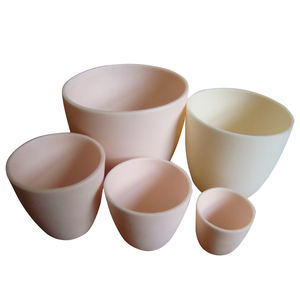
Overview of Quartz Ceramic Crucible for Melting Platinum Gold Silver and Copper
Quartz ceramics, also known as fused silica ceramics or re-bonded quartz products, are a high-performance advanced ceramic material. Unlike traditional clay-based ceramics, they are not made by sintering clay, but rather from high-purity fused silica (silicon dioxide, SiO₂) that is crushed, shaped, and then sintered at high temperatures.
Their core appeal lies in their unique combination of the excellent properties of fused silica glass (such as extremely low thermal expansion coefficient and excellent thermal shock stability) and the structural strength and versatility of ceramics (they can be made into crucibles, rollers, and irregularly shaped parts), overcoming the limitations of fused silica glass in terms of difficulty in manufacturing large sizes and complex shapes, and its high cost.
Quartz ceramics perform exceptionally well in harsh environments involving high temperatures, rapid temperature changes, and chemical corrosion, and are widely used in solar photovoltaics (crucibles for polycrystalline silicon ingot furnaces), semiconductors, aerospace, metallurgy and casting, the glass industry, and laboratories.
Main Characteristics of Quartz Ceramic Crucible for Melting Platinum Gold Silver and Copper
Excellent Thermal Shock Stability: They have an extremely low thermal expansion coefficient, generating almost no thermal stress during rapid temperature changes, and can withstand rapid cooling from extremely high temperatures to room temperature without cracking.
Extremely High Temperature Resistance and Thermal Stability: They can be used continuously at temperatures of 1100°C – 1350°C, and can even withstand higher temperatures for short periods. They do not soften or deform at high temperatures and maintain good dimensional stability.
Excellent Chemical Inertness and Corrosion Resistance: Except for hydrofluoric acid and hot concentrated phosphoric acid, they have strong resistance to most acids, salt solutions, and molten metals (such as aluminum, copper, gold, silver, and platinum), making them ideal melting and containment vessels.
Low Thermal Conductivity and Good Electrical Insulation: They have low thermal conductivity, making them excellent thermal insulation materials. They also maintain good electrical insulation properties at high temperatures.
High Purity and Low Contamination Risk: Made from high-purity quartz sand, they do not contaminate the high-purity molten metals or semiconductor materials they come into contact with, ensuring process cleanliness.
Moderate Mechanical Strength: Compared to most engineering ceramics, their mechanical strength at room temperature is relatively low; they are brittle materials. However, their strength is sufficient under their designed operating conditions (high-temperature insulation, thermal shock resistance). Its strength can be improved by optimizing the formula and manufacturing process.
Specifications of Quartz Ceramic Crucible for Melting Platinum Gold Silver and Copper
Here are the specifications for our quartz ceramic crucibles designed particularly for melting platinum, gold, silver, and copper. These crucibles provide dependable efficiency for rare-earth element applications. They are crafted from high-purity fused quartz material. This makes certain marginal contamination risk during your melts. The quartz structure offers excellent thermal stability. Crucibles hold up against temperatures approximately 1700 ° C (3092 ° F). This fits platinum and other high-melting-point steels flawlessly.
Chemical inertness is a key attribute. The crucible material will not respond with liquified platinum, gold, silver, or copper. This preserves metal pureness and prevents undesirable alloying. Crucibles display superior resistance to thermal shock. They take care of quick heating and cooling down cycles well. This decreases breaking possibilities contrasted to other ceramic types. A smooth inner surface finish is typical. This helps with easy liquified metal flow and streamlines putting. It also assists crucible cleaning after use.
Crucible sizes are offered to match different set quantities. Common abilities vary from 5 grams to a number of kilograms. Criterion shapes include tall round styles. These are optimal for induction melting arrangements. Crucibles are ready for prompt usage. No unique pre-treatment is necessary prior to very first shooting. Their durability makes sure a much longer useful lifespan. This offers good worth with time. Take care of crucibles very carefully. Prevent mechanical impacts to avoid breakage. Store them in a tidy, dry area when not in use. These crucibles fulfill the requiring requirements of precious metal refining, casting, and research laboratory work.
Applications of Quartz Ceramic Crucible for Melting Platinum Gold Silver and Copper
Quartz ceramic crucibles are essential tools for melting precious metals like platinum, gold, silver, and copper. These crucibles use distinct advantages crucial for high-temperature applications. Their high purity is a major advantage. This purity prevents contamination of the useful steel melt. You obtain cleaner, better results. Pollutants from the crucible itself will not spoil your job.
Heat resistance is one more crucial strength. Quartz ceramic withstands severe temperature levels quickly. Melting platinum needs very high warmth. These crucibles handle it without damaging down. They additionally stand up to thermal shock well. Unexpected temperature changes won’t break them quickly. This makes them reliable for duplicated home heating and cooling cycles.
Chemical inertness is essential too. The product does not respond with liquified steels. This means no unwanted chain reaction take place. Your molten platinum, gold, silver, or copper remains pure. The crucible itself remains intact. It will not liquify or disintegrate in the thaw.
Quartz ceramic crucibles are perfect for platinum melting. Platinum’s high melting point needs robust products. These crucibles meet that demand. They are likewise outstanding for gold. Gold pureness have to be kept. Silver melting benefits from their inert nature. Copper applications find them sturdy and resilient.
Their non-wetting surface area helps as well. Molten metal does not stick excessively to the crucible walls. This makes putting much easier. It additionally streamlines cleansing after use. Much less steel is squandered clinging to the container.
Longevity is a practical advantage. Quartz ceramic crucibles last longer than lots of options. They withstand deterioration and wear. This suggests fewer replacements are required. It conserves money gradually. Handling is straightforward. These crucibles supply a reputable option for precious metal processing.

Company Profile
Synthetic-chemical focus on the research and development, production and sales of ceramic products, serving the electronics, ceramics, chemical and other industries. Since its establishment in 2015, the company has been committed to providing customers with the best products and services, and has become a leader in the industry through continuous technological innovation and strict quality management.
Our products includes but not limited to Aluminum Nitride, Aluminum Oxide, Boron Carbide, Boron Nitride, Ceramic Crucible, ect. If you are interested in any type of these, please feel free to contact us.

Payment Methods
T/T, Western Union, Paypal, Credit Card etc.
Shipment Methods
By air, by sea, by express, as customers request.
5 FAQs of Quartz Ceramic Crucible for Melting Platinum Gold Silver and Copper
Here are answers to common questions about quartz ceramic crucibles for melting platinum, gold, silver, and copper.
What is a quartz ceramic crucible?
It is a container made for melting metals. Quartz ceramic is a special material. It is very pure. This purity prevents contamination of your precious metals. Clean metal is important.
How hot can these crucibles get?
These crucibles handle extreme temperatures well. They are suitable for melting platinum, gold, silver, and copper. Platinum requires very high heat. Quartz ceramic crucibles withstand these temperatures. They resist cracking from sudden temperature changes.
Do these crucibles react with the metals?
Quartz ceramic is chemically inert. It does not react with platinum, gold, silver, or copper. This means your melted metal stays pure. You avoid unwanted impurities. Clean melts are crucial.
Why choose quartz ceramic over other materials?
Graphite crucibles can sometimes add carbon. Clay crucibles might introduce other impurities. Quartz ceramic avoids these problems. It offers superior purity. Your results are better.
How long does a quartz ceramic crucible last?
Its lifespan depends on use. Careful handling extends its life. Avoid sudden extreme temperature shocks. Do not use tools that scratch the inside. With good care, it lasts for many melts. It is a durable tool.
REQUEST A QUOTE
RELATED PRODUCTS
Customized Push Pull Metal Shelf Marble Quartz Ceramic Tile Rack
Factory Quartz Limestone Coal Ceramic Cement Grinding Mill
Inert Gas Atmosphere Furnace with Quartz Alumina Ceramic Tube
Diamond Saw Blade for Marble Granite Quartz Limestone Ceramic
High Quality White Quartz Sand for Ceramic Decoration and Glass