Next-Generation Ceramics: Unlocking Superior Properties for Industry

PRODUCT PARAMETERS
Description
Overview of High Purity Fused Quartz for Ceramic Casting and Metallurgy
Quartz ceramics, also known as fused silica ceramics or re-bonded quartz products, are a high-performance advanced ceramic material. Unlike traditional clay-based ceramics, they are not made by sintering clay, but rather from high-purity fused silica (silicon dioxide, SiO₂) that is crushed, shaped, and then sintered at high temperatures.
Their core appeal lies in their unique combination of the excellent properties of fused silica glass (such as extremely low thermal expansion coefficient and excellent thermal shock stability) and the structural strength and versatility of ceramics (they can be made into crucibles, rollers, and irregularly shaped parts), overcoming the limitations of fused silica glass in terms of difficulty in manufacturing large sizes and complex shapes, and its high cost.
Quartz ceramics perform exceptionally well in harsh environments involving high temperatures, rapid temperature changes, and chemical corrosion, and are widely used in solar photovoltaics (crucibles for polycrystalline silicon ingot furnaces), semiconductors, aerospace, metallurgy and casting, the glass industry, and laboratories.
Main Characteristics of High Purity Fused Quartz for Ceramic Casting and Metallurgy
Excellent Thermal Shock Stability: They have an extremely low thermal expansion coefficient, generating almost no thermal stress during rapid temperature changes, and can withstand rapid cooling from extremely high temperatures to room temperature without cracking.
Extremely High Temperature Resistance and Thermal Stability: They can be used continuously at temperatures of 1100°C – 1350°C, and can even withstand higher temperatures for short periods. They do not soften or deform at high temperatures and maintain good dimensional stability.
Excellent Chemical Inertness and Corrosion Resistance: Except for hydrofluoric acid and hot concentrated phosphoric acid, they have strong resistance to most acids, salt solutions, and molten metals (such as aluminum, copper, gold, silver, and platinum), making them ideal melting and containment vessels.
Low Thermal Conductivity and Good Electrical Insulation: They have low thermal conductivity, making them excellent thermal insulation materials. They also maintain good electrical insulation properties at high temperatures.
High Purity and Low Contamination Risk: Made from high-purity quartz sand, they do not contaminate the high-purity molten metals or semiconductor materials they come into contact with, ensuring process cleanliness.
Moderate Mechanical Strength: Compared to most engineering ceramics, their mechanical strength at room temperature is relatively low; they are brittle materials. However, their strength is sufficient under their designed operating conditions (high-temperature insulation, thermal shock resistance). Its strength can be improved by optimizing the formula and manufacturing process.
Specifications of High Purity Fused Quartz for Ceramic Casting and Metallurgy
High purity merged quartz is important for requiring ceramic casting and metallurgical processes. It uses exceptional performance under severe heat and rough chemical settings. This product consists almost totally of silicon dioxide (SiO2). The purity degree commonly surpasses 99.95%. This high purity minimizes undesirable communications with molten metals or ceramic materials. Contaminations can create issues. High pureness integrated quartz prevents this problem. It offers a stable, inert surface for important applications. Thermal shock resistance is an essential advantage. Merged quartz takes care of fast temperature level changes quite possibly. It doesn’t break quickly when warmed or cooled swiftly. This is critical in shops and metal processing. The material likewise has an extremely low coefficient of thermal growth. It broadens extremely little when heated. This dimensional stability avoids warping or breaking throughout thermal cycles. Chemical inertness is another crucial property. Integrated quartz resists strike from most acids, bases, and molten metals. It will not pollute sensitive thaws. This inertness guarantees product pureness. Physical buildings are well defined. Density is around 2.2 g/cm ³. Hardness is high on the Mohs scale. This gives excellent resistance to abrasion. The material is offered in different kinds. Tubes, rods, plates, and custom shapes prevail. Transparency levels vary. Clear fused quartz enables aesthetic tracking of melts. Nontransparent qualities supply different cost or thermal profiles. Certain grades suit specific furnace or casting demands. Surface area top quality is managed. Smooth surfaces avoid adherence issues. Dimensional resistances are precise for design usages. This material is the dependable option for high-performance ceramic molds. It is vital for precision metal spreading. Merged quartz makes sure consistent, top notch results in extreme problems.
Applications of High Purity Fused Quartz for Ceramic Casting and Metallurgy
High pureness integrated quartz is a special product. It has fantastic value in ceramic casting and metallurgy. Its one-of-a-kind properties solve challenging troubles in these fields. This material is very pure. It contains virtually no contaminations. This purity is essential for lots of requiring usages. Integrated quartz takes care of extreme heat extremely well. It doesn’t soften or melt quickly. This makes it excellent for hot procedures. It likewise resists sudden temperature level modifications. Points do not break or break when heated or cooled quick. This material is chemically secure. It does not respond quickly with various other materials. Warm steels or chemicals won’t assault it a lot. This maintains the process clean.
In ceramic spreading, high purity fused quartz is outstanding for mold and mildews and cores. It develops very smooth surface areas on cast parts. This decreases completing job later on. The product launches the actors item easily. This stops sticking and damages. Integrated quartz mold and mildews last much longer than various other types. They hold up against lots of casting cycles. This saves money on mold substitute. The product doesn’t pollute the ceramic. The end product stays pure and solid. Production quality enhances dramatically.
Metallurgy relies heavily on high purity merged quartz. Crucibles made from this material are leading performers. They hold molten steels like steel, titanium, and unique alloys. These crucibles resist the extreme heat and chemical assault. They last longer than various other crucible products. This minimizes downtime and costs. Fused quartz cellular linings secure heaters and vessels. They shield equipment from hot, responsive thaws. This expands tools life. The product maintains the steel melt tidy. It stops unwanted contaminations from entering. This causes better metal products.

Company Profile
Synthetic-chemical focus on the research and development, production and sales of ceramic products, serving the electronics, ceramics, chemical and other industries. Since its establishment in 2015, the company has been committed to providing customers with the best products and services, and has become a leader in the industry through continuous technological innovation and strict quality management.
Our products includes but not limited to Aluminum Nitride, Aluminum Oxide, Boron Carbide, Boron Nitride, Ceramic Crucible, ect. If you are interested in any type of these, please feel free to contact us.

Payment Methods
T/T, Western Union, Paypal, Credit Card etc.
Shipment Methods
By air, by sea, by express, as customers request.
5 FAQs of High Purity Fused Quartz for Ceramic Casting and Metallurgy
Here are five common questions about High Purity Fused Quartz for Ceramic Casting and Metallurgy:
What is High Purity Fused Quartz? High Purity Fused Quartz is glass made only from silicon dioxide (SiO2). It is melted at very high temperatures. This process creates an exceptionally pure material. It is different from regular glass.
Why use it in Ceramic Casting and Metallurgy? This quartz offers outstanding resistance to heat and chemicals. These properties are crucial in high-temperature processes. It helps create molds and tools that last longer. It improves the quality of cast metals and ceramics.
How hot can it get before it softens? High Purity Fused Quartz withstands very high temperatures. Its softening point is over 1600 degrees Celsius. This is much higher than many other materials. It doesn’t melt easily. It performs well in furnaces and kilns.
Is it resistant to chemicals? Yes, it shows excellent chemical resistance. Acids and bases have little effect on it. Molten metals and slags also don’t easily attack it. This stability protects tools and molds. It prevents contamination of materials.
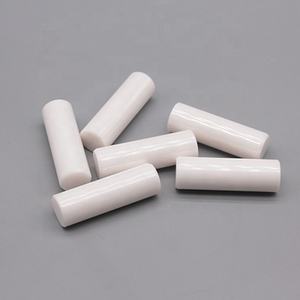
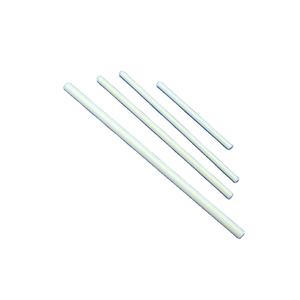
What shapes or forms does it come in? Manufacturers offer it in various useful forms. These include tubes, rods, plates, and custom crucibles. It can also be machined into specific parts. You can get it cut to your required size and shape.
REQUEST A QUOTE
RELATED PRODUCTS
Corrosion Resistant Quartz Ceramic Crucible Boat for Metal Melting
ODM OEM Carbon Fiber Half White Ceramic Quartz Infrared Heat Lamp
Quartz Sample Catalog Ceramic Tile Stone Granite Sample Book
Low Energy Consumption Quartz Impact Crusher for Ceramic Materials
Holder Metal Flooring Stone Quartz Display Rack Ceramic Display Rack