Next-Generation Ceramics: Unlocking Superior Properties for Industry

PRODUCT PARAMETERS
Description
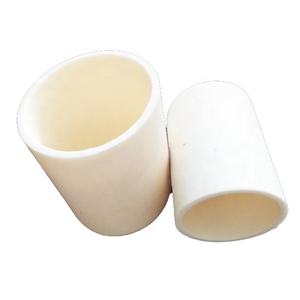
Overview of Laboratory Quartz Ceramic Crucible Clear Glass Crucible with Lid
Quartz ceramics, also known as fused silica ceramics or re-bonded quartz products, are a high-performance advanced ceramic material. Unlike traditional clay-based ceramics, they are not made by sintering clay, but rather from high-purity fused silica (silicon dioxide, SiO₂) that is crushed, shaped, and then sintered at high temperatures.
Their core appeal lies in their unique combination of the excellent properties of fused silica glass (such as extremely low thermal expansion coefficient and excellent thermal shock stability) and the structural strength and versatility of ceramics (they can be made into crucibles, rollers, and irregularly shaped parts), overcoming the limitations of fused silica glass in terms of difficulty in manufacturing large sizes and complex shapes, and its high cost.
Quartz ceramics perform exceptionally well in harsh environments involving high temperatures, rapid temperature changes, and chemical corrosion, and are widely used in solar photovoltaics (crucibles for polycrystalline silicon ingot furnaces), semiconductors, aerospace, metallurgy and casting, the glass industry, and laboratories.
Main Characteristics of Laboratory Quartz Ceramic Crucible Clear Glass Crucible with Lid
Excellent Thermal Shock Stability: They have an extremely low thermal expansion coefficient, generating almost no thermal stress during rapid temperature changes, and can withstand rapid cooling from extremely high temperatures to room temperature without cracking.
Extremely High Temperature Resistance and Thermal Stability: They can be used continuously at temperatures of 1100°C – 1350°C, and can even withstand higher temperatures for short periods. They do not soften or deform at high temperatures and maintain good dimensional stability.
Excellent Chemical Inertness and Corrosion Resistance: Except for hydrofluoric acid and hot concentrated phosphoric acid, they have strong resistance to most acids, salt solutions, and molten metals (such as aluminum, copper, gold, silver, and platinum), making them ideal melting and containment vessels.
Low Thermal Conductivity and Good Electrical Insulation: They have low thermal conductivity, making them excellent thermal insulation materials. They also maintain good electrical insulation properties at high temperatures.
High Purity and Low Contamination Risk: Made from high-purity quartz sand, they do not contaminate the high-purity molten metals or semiconductor materials they come into contact with, ensuring process cleanliness.
Moderate Mechanical Strength: Compared to most engineering ceramics, their mechanical strength at room temperature is relatively low; they are brittle materials. However, their strength is sufficient under their designed operating conditions (high-temperature insulation, thermal shock resistance). Its strength can be improved by optimizing the formula and manufacturing process.
Specifications of Laboratory Quartz Ceramic Crucible Clear Glass Crucible with Lid
This laboratory crucible is made from fused quartz. It is pure silica. It provides excellent high-temperature efficiency. It stands up to temperatures approximately 1100 ° C continually. Brief bursts can get to 1400 ° C. It takes care of thermal shock very well. Unexpected temperature level modifications will not break it quickly. The material is highly chemically inert. It resists strike from acids. It resists attack from molten salts. Only hydrofluoric acid and warm phosphoric acid reason damages. Its low thermal growth ensures security. This indicates regular outcomes experiment after experiment. The clear glass allows aesthetic monitoring. You can see the sample inside throughout heating. The included lid aids include samples. It minimizes warmth loss substantially. It stops contamination from the atmosphere. This lid fits firmly. It is additionally made from integrated quartz. Crucibles come in various dimensions. Usual dimensions are 10ml, 20ml, 30ml, 50ml. They are suitable for several laboratory applications. Use them for melting steels. Use them for calcining products. Utilize them for ashing examples. Deal with the crucible very carefully. Stay clear of sharp influences. Do not utilize it listed below 550 ° C unexpectedly after high warm. Tidy it with weaken acid or water. Stay clear of rough cleaners. Shop it securely when not in use.
Applications of Laboratory Quartz Ceramic Crucible Clear Glass Crucible with Lid
Laboratory quartz ceramic crucibles are essential devices. They are strong. They resist heat well. They take care of chemicals without problems. These crucibles feature covers. Covers keep things inside risk-free. Covers quit contamination. Lids assist manage the environment inside. These crucibles are see-through. This clear glass sight works. You can see responses take place inside. You can see examples thaw. You can keep an eye on processes without opening it.
Researchers use these crucibles for lots of tasks. One big use is melting products. They thaw metals. They melt glasses. They melt other substances needing high temperatures. The crucible holds up under this heat. It doesn’t break quickly. Another usage is chemical evaluation. Examples are heated up in the crucible. The warm breaks them down. This assists find out what the sample is made of. The clear sides let scientists see modifications. They see shade changes. They see stage modifications. This is valuable info.
Sample prep work is another essential job. Materials are often dried inside these crucibles. They are heated up to get rid of dampness. In some cases materials are ashed. Burning raw material leaves ash for research study. The lid assists here. It prevents samples from popping out. It keeps ash included. Growing crystals is one more application. Scientists thaw products in the crucible. They cool them slowly. Crystals develop inside. The clear sides enable seeing the crystal growth happen.
These crucibles operate in heating systems. They operate in stoves. They manage repeated home heating and cooling cycles. They do not deteriorate rapidly. Their security is trusted. This makes them helpful for everyday laboratory job. They are utilized throughout chemistry. They are used in products science. They are used in geology research study. They are a basic tool for high-temperature job. Their translucent nature adds additional worth for observation. They support accurate experiments in the laboratory.

Company Profile
Synthetic-chemical focus on the research and development, production and sales of ceramic products, serving the electronics, ceramics, chemical and other industries. Since its establishment in 2015, the company has been committed to providing customers with the best products and services, and has become a leader in the industry through continuous technological innovation and strict quality management.
Our products includes but not limited to Aluminum Nitride, Aluminum Oxide, Boron Carbide, Boron Nitride, Ceramic Crucible, ect. If you are interested in any type of these, please feel free to contact us.

Payment Methods
T/T, Western Union, Paypal, Credit Card etc.
Shipment Methods
By air, by sea, by express, as customers request.
5 FAQs of Laboratory Quartz Ceramic Crucible Clear Glass Crucible with Lid
What material are these crucibles?
These crucibles are made from quartz glass. Quartz glass is very pure silica. It offers high heat resistance. Quartz crucibles are clear. They let you see samples inside. This is useful for watching reactions.
How hot can they get?
These quartz crucibles handle high temperatures well. They can be used up to about 1100 degrees Celsius (2012 degrees Fahrenheit). Avoid sudden big temperature changes. This helps prevent cracking. Always heat and cool them slowly.
Why use the lid?
Always use the lid when heating. The lid helps contain samples. It stops spills and splashes. It reduces sample loss. The lid also protects against outside dust. Keep the lid on for safety and accuracy.
How do I clean them?
Cleaning is simple. Let the crucible cool down first. Handle hot crucibles carefully. Use tongs. Rinse with distilled water after use. For tougher residues, soak in warm soapy water. Avoid harsh chemicals unless needed. Dry completely before next use.
Are they safe with all chemicals?
Quartz crucibles resist many acids well. They handle strong acids like sulfuric or nitric acid okay. They also resist many other chemicals. Avoid strong alkalis like hot sodium hydroxide. Alkalis can damage quartz glass over time. Check chemical compatibility for your specific use.
REQUEST A QUOTE
RELATED PRODUCTS
New Design Ceramic Tile Stand Metal Sliding Quartz Stone Display Rack
Best Quartz Ceramic Fused Silica Roller
Good Quality Durable Quartz Coal Grinding Ceramic Ball Mill
4 Inch Dry Diamond Polishing Pad for Ceramic Tile Marble Granite Quartz
Powerful Polishing Chemicals for Quartz Tile and Ceramic Tile