Next-Generation Ceramics: Unlocking Superior Properties for Industry

PRODUCT PARAMETERS
Description
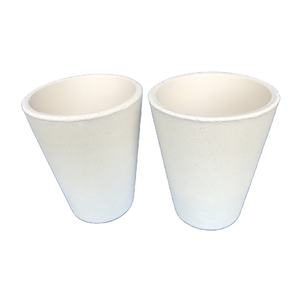
Overview of 99 Alumina Ceramic Crucible For Glassblowing And Metalworking
A Ceramic Crucible is a vessel designed to withstand extreme temperatures for melting, calcining, or reacting chemical substances. Advanced ceramic crucibles are engineered from high-purity materials like Alumina, Zirconia, Boron Nitride, or Magnesia, chosen for their ability to contain specific molten materials without contamination or failure.
Features of 99 Alumina Ceramic Crucible For Glassblowing And Metalworking
- Extreme Temperature Resistance: Can operate continuously from 1000°C to over 1800°C, depending on the material.
- High Purity & Chemical Inertness: Minimizes reaction with and contamination of the melt (metal, glass, salt, ash).
- Excellent Thermal Shock Resistance: (Grade-dependent) Can withstand rapid heating and cooling cycles.
- Variety of Compositions & Designs: Tailored for specific applications (e.g., BN for reactive metals, ZrO₂ for precious metals, MgO for basic slags).
- Durable & Reusable: High-quality crucibles can survive multiple cycles, providing long service life.
Specifications of 99 Alumina Ceramic Crucible For Glassblowing And Metalworking
This crucible is made from 99% alumina ceramic. It’s created for high-temperature work like glassblowing and metalworking. The product is extremely dense. This makes it solid. It takes care of extreme warmth well. You can use it securely as much as 1700 ° C. It does not melt or deform conveniently. It offers great thermal shock resistance. Abrupt temperature changes are much less most likely to cause cracks. This is very important when home heating or cooling down things promptly.
The crucible is chemically steady. It doesn’t react conveniently with molten glass or steels. This keeps your materials pure. It won’t include contaminations. This is essential for constant outcomes. The surface area is smooth inside. Luster doesn’t stick to it. Cleansing is much easier after use. You get less deposit buildup.
It has a high melting factor. This goes beyond many steels and glasses. It helps gold, silver, copper, and different glass solutions. The crucible stands up to wear. It lasts longer than less expensive alternatives. It deals with duplicated heating cycles well. You get good worth over time.
The form is standard. It fits usual heater configurations. It has a putting spout. Moving liquified material is managed. Manage it meticulously. Prevent dropping it. Alumina ceramic is hard. It can be brittle if knocked hard. Usage correct devices for managing when hot. Shop it safely when not being used.
Applications of 99 Alumina Ceramic Crucible For Glassblowing And Metalworking
99% alumina ceramic crucibles are important tools for high-temperature job. They handle intense heat exceptionally well. This makes them ideal for glassblowing and metalworking. These crucibles resist temperatures over 1700 ° C. This is much hotter than what melts glass or numerous steels. They are very solid as well. They don’t crack easily under thermal stress and anxiety. Quick home heating and cooling cycles are common in workshops. These crucibles can take it. Their pure alumina structure is chemically inert. It does not respond with molten materials inside. This is essential. You don’t desire pollutants spoiling your thaw. For glassblowers, purity is essential. Colored glass or clear glass requires consistency. An alumina crucible won’t include contaminants. Your glass stays true to its formula. Metalworkers utilize them for thawing various alloys. Rare-earth elements like silver or gold are commonly managed. Base steels like copper or aluminum are melted as well. The crucible won’t communicate with the molten metal. It maintains the metal clean. These crucibles last a very long time. They withstand many home heating cycles. This conserves money gradually. You replace them less typically. Their smooth surface area makes pouring very easy. Cleaning is less complex additionally. They are a reliable choice for requiring projects.

Company Profile
Synthetic-chemical focus on the research and development, production and sales of ceramic products, serving the electronics, ceramics, chemical and other industries. Since its establishment in 2015, the company has been committed to providing customers with the best products and services, and has become a leader in the industry through continuous technological innovation and strict quality management.
Our products includes but not limited to Aluminum Nitride, Aluminum Oxide, Boron Carbide, Boron Nitride, Ceramic Crucible, ect. If you are interested in any type of these, please feel free to contact us.

Payment Methods
T/T, Western Union, Paypal, Credit Card etc.
Shipment Methods
By air, by sea, by express, as customers request.
5 FAQs of 99 Alumina Ceramic Crucible For Glassblowing And Metalworking
Q: How hot can this crucible get?
A: This crucible handles very high heat. It works fine up to 1650°C (3000°F). That’s plenty hot for melting glass and many metals. Don’t push it hotter. Going beyond this limit risks damage. It could crack or break.
Q: How long will one crucible last?
A: Its lifespan changes. It depends on how you use it. The temperatures you reach matter. How often you heat it up and cool it down matters too. Proper handling helps it last longer. Expect several uses with careful operation. But it won’t last forever. It wears out eventually.
Q: Is this crucible fragile?
A: Alumina ceramic is strong. But it’s still a ceramic. It can break if you drop it. It can crack if it heats up too fast. It can crack if it cools down too fast. Handle it with care. Don’t bang it around. Avoid sudden temperature shocks.
Q: Can I melt any metal in it?
A: It works well with many common metals. Gold, silver, copper melt fine. It also handles glass frits well. But avoid highly corrosive materials. Some molten metals react badly with alumina. This reaction ruins the crucible. Check compatibility for your specific material first.
Q: How should I cool it down?
A: Let it cool slowly. This is very important. Never dunk a hot crucible in water. Don’t put it on a cold surface right away. Sudden cooling causes thermal shock. Thermal shock makes it crack. Place it in a warm area. Let the temperature drop gradually.
REQUEST A QUOTE
RELATED PRODUCTS
Zirconia Ceramic Tank Crucible for Grinding and Milling
High Temperature Calcium Stabilized Zirconia Ceramic Crucible
Standard 99.5 Alumina Refractory Melting Ceramic Crucible
High Purity TGA DSC DTA Alumina Ceramic Crucible Bowl for Casting
25ml To 100ml Ceramic White Fine Hole Gooch Crucible Customizable OEM