Next-Generation Ceramics: Unlocking Superior Properties for Industry

PRODUCT PARAMETERS
Description
Overview of Large Capacity Ceramic Ball Mill for Limestone Quartz and Cement
Quartz ceramics, also known as fused silica ceramics or re-bonded quartz products, are a high-performance advanced ceramic material. Unlike traditional clay-based ceramics, they are not made by sintering clay, but rather from high-purity fused silica (silicon dioxide, SiO₂) that is crushed, shaped, and then sintered at high temperatures.
Their core appeal lies in their unique combination of the excellent properties of fused silica glass (such as extremely low thermal expansion coefficient and excellent thermal shock stability) and the structural strength and versatility of ceramics (they can be made into crucibles, rollers, and irregularly shaped parts), overcoming the limitations of fused silica glass in terms of difficulty in manufacturing large sizes and complex shapes, and its high cost.
Quartz ceramics perform exceptionally well in harsh environments involving high temperatures, rapid temperature changes, and chemical corrosion, and are widely used in solar photovoltaics (crucibles for polycrystalline silicon ingot furnaces), semiconductors, aerospace, metallurgy and casting, the glass industry, and laboratories.
Main Characteristics of Large Capacity Ceramic Ball Mill for Limestone Quartz and Cement
Excellent Thermal Shock Stability: They have an extremely low thermal expansion coefficient, generating almost no thermal stress during rapid temperature changes, and can withstand rapid cooling from extremely high temperatures to room temperature without cracking.
Extremely High Temperature Resistance and Thermal Stability: They can be used continuously at temperatures of 1100°C – 1350°C, and can even withstand higher temperatures for short periods. They do not soften or deform at high temperatures and maintain good dimensional stability.
Excellent Chemical Inertness and Corrosion Resistance: Except for hydrofluoric acid and hot concentrated phosphoric acid, they have strong resistance to most acids, salt solutions, and molten metals (such as aluminum, copper, gold, silver, and platinum), making them ideal melting and containment vessels.
Low Thermal Conductivity and Good Electrical Insulation: They have low thermal conductivity, making them excellent thermal insulation materials. They also maintain good electrical insulation properties at high temperatures.
High Purity and Low Contamination Risk: Made from high-purity quartz sand, they do not contaminate the high-purity molten metals or semiconductor materials they come into contact with, ensuring process cleanliness.
Moderate Mechanical Strength: Compared to most engineering ceramics, their mechanical strength at room temperature is relatively low; they are brittle materials. However, their strength is sufficient under their designed operating conditions (high-temperature insulation, thermal shock resistance). Its strength can be improved by optimizing the formula and manufacturing process.
Specifications of Large Capacity Ceramic Ball Mill for Limestone Quartz and Cement
This big ceramic ball mill is constructed for heavy-duty grinding. It deals with difficult products like limestone, quartz, and concrete. The maker supplies high-volume outcome efficiently. Its core is a durable ceramic cylinder. This cyndrical tube turns continuously. Inside, ceramic grinding rounds squash the material. The cyndrical tube’s plus size means it holds a great deal of material simultaneously. This style improves grinding capacity dramatically. You obtain more processed product faster.
The mill uses high-quality ceramic cellular linings. These cellular linings stand up to wear remarkably well. They last a lot longer than conventional steel linings. This reduces downtime for substitutes. The ceramic spheres are also really tough. They grind products carefully without breaking down quickly. This keeps the grinding process constant. You get a consistent particle size in your result. Consistent results are essential for quality control.
Operation is straightforward. Feed your basic material right into one end. The rotation and the grinding spheres do the job. Processed material leaves smoothly at the various other end. Readjust the turning speed for different fineness needs. A slower rate offers a coarser grind. A faster speed delivers a finer powder. The motor provides reputable power. It drives the rotation efficiently and quietly. Safety and security features are integrated. These shield operators throughout usage and maintenance.
The mill’s framework is durable. It handles constant procedure easily. Tough bearings support the turning cylinder. This prevents vibration and makes certain security. Minimal vibration indicates less noise. It also expands the machine’s overall lifespan. Accessibility for cleaning and upkeep is straightforward. This maintains the mill running successfully day in day out. The big ability fits requiring manufacturing environments. It fulfills the demands of severe commercial grinding applications.
Applications of Large Capacity Ceramic Ball Mill for Limestone Quartz and Cement
Ceramic round mills with huge abilities are necessary devices for grinding difficult products. They utilize ceramic balls inside as opposed to steel rounds. This matters a great deal since steel rounds can leave tiny bits of metal in the ground product. That contamination is bad for numerous items. Ceramic spheres prevent this trouble completely. They are additionally challenging and wear down slowly.
These mills are wonderful for grinding sedimentary rock. Limestone needs to be ground extremely carefully for several uses. It is utilized in making points like concrete, paints, and plastics. A huge ceramic ball mill can grind a great deal of sedimentary rock at the same time. This makes production reliable. The great powder quality is consistent as well.
Quartz is an additional product usually ground in these mills. Quartz needs to be pure for glass production or electronic devices. Steel contamination from steel rounds would certainly destroy it. Ceramic rounds maintain the quartz tidy. They grind quartz successfully right into the fine powder needed.
Cement manufacturing depends greatly on grinding. Basic material like sedimentary rock and clinker need grinding before mixing. Ceramic sphere mills manage this well. They avoid iron contamination which deteriorates concrete. They additionally give the precise fragment dimension required for strong concrete. Their plus size enables cement plants to refine large batches constantly.
The capability to prevent contamination is a crucial advantage. It maintains the final product pure. This is important for high quality in many markets. Big ability means high output without compromising excellence or pureness. The ceramic balls last long, decreasing downtime and maintenance costs. They are a trustworthy choice for demanding grinding jobs.

Company Profile
Synthetic-chemical focus on the research and development, production and sales of ceramic products, serving the electronics, ceramics, chemical and other industries. Since its establishment in 2015, the company has been committed to providing customers with the best products and services, and has become a leader in the industry through continuous technological innovation and strict quality management.
Our products includes but not limited to Aluminum Nitride, Aluminum Oxide, Boron Carbide, Boron Nitride, Ceramic Crucible, ect. If you are interested in any type of these, please feel free to contact us.

Payment Methods
T/T, Western Union, Paypal, Credit Card etc.
Shipment Methods
By air, by sea, by express, as customers request.
5 FAQs of Large Capacity Ceramic Ball Mill for Limestone Quartz and Cement
What’s the capacity of this ceramic ball mill? This large capacity ceramic ball mill handles significant volumes of material. It’s built for demanding industrial grinding tasks. You can process large batches of limestone, quartz, or cement clinker efficiently. The exact capacity depends on the model specifications. Check the technical data sheet for precise figures.
What materials can this ball mill grind? It excels at grinding limestone, quartz, and cement clinker. The robust ceramic lining makes it suitable for these hard, abrasive substances. You won’t face issues with material contamination. The mill consistently delivers fine, uniform powder output. It reliably handles these common industrial minerals.
How does it improve grinding efficiency? The large capacity means less frequent reloading. Continuous operation saves time and energy. The ceramic grinding media provides superior impact and friction. This leads to faster particle size reduction. You achieve the desired fineness quicker than with smaller mills.
Can I control the final particle size? Yes, you have control over the fineness. Adjust the grinding time to get coarser or finer results. Use different sizes of ceramic grinding balls for better precision. The mill’s design allows for consistent size distribution. You get predictable and repeatable outcomes for your product.
Why choose ceramic lining over other materials? Ceramic linings resist wear much better than steel. This means a longer operational life for the mill. Ceramic doesn’t corrode or react with the processed minerals. Your final product stays pure and uncontaminated. Reduced maintenance downtime saves money over time.
REQUEST A QUOTE
RELATED PRODUCTS
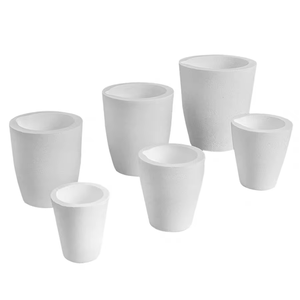
Quartz Ceramic Melting Dishes and Bowls for Platinum
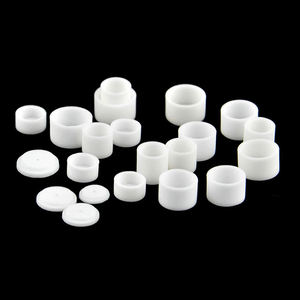
Best Quality Quartz Ramming Mass for the Ceramic Industry
Ceramic Tile Manufacturing Machine Stone Marble Quartz Machine
Ceramic Glass Wood Granite Marble Quartz Stone Tiles Cutting Machine
Ceramic Industry Foundry Silica Quartz Sand Per Ton