Next-Generation Ceramics: Unlocking Superior Properties for Industry

PRODUCT PARAMETERS
Description
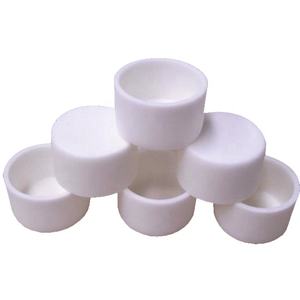
Overview of Lab Used Fused Silica Quartz Ceramic Crucible Cup
Quartz ceramics, also known as fused silica ceramics or re-bonded quartz products, are a high-performance advanced ceramic material. Unlike traditional clay-based ceramics, they are not made by sintering clay, but rather from high-purity fused silica (silicon dioxide, SiO₂) that is crushed, shaped, and then sintered at high temperatures.
Their core appeal lies in their unique combination of the excellent properties of fused silica glass (such as extremely low thermal expansion coefficient and excellent thermal shock stability) and the structural strength and versatility of ceramics (they can be made into crucibles, rollers, and irregularly shaped parts), overcoming the limitations of fused silica glass in terms of difficulty in manufacturing large sizes and complex shapes, and its high cost.
Quartz ceramics perform exceptionally well in harsh environments involving high temperatures, rapid temperature changes, and chemical corrosion, and are widely used in solar photovoltaics (crucibles for polycrystalline silicon ingot furnaces), semiconductors, aerospace, metallurgy and casting, the glass industry, and laboratories.
Main Characteristics of Lab Used Fused Silica Quartz Ceramic Crucible Cup
Excellent Thermal Shock Stability: They have an extremely low thermal expansion coefficient, generating almost no thermal stress during rapid temperature changes, and can withstand rapid cooling from extremely high temperatures to room temperature without cracking.
Extremely High Temperature Resistance and Thermal Stability: They can be used continuously at temperatures of 1100°C – 1350°C, and can even withstand higher temperatures for short periods. They do not soften or deform at high temperatures and maintain good dimensional stability.
Excellent Chemical Inertness and Corrosion Resistance: Except for hydrofluoric acid and hot concentrated phosphoric acid, they have strong resistance to most acids, salt solutions, and molten metals (such as aluminum, copper, gold, silver, and platinum), making them ideal melting and containment vessels.
Low Thermal Conductivity and Good Electrical Insulation: They have low thermal conductivity, making them excellent thermal insulation materials. They also maintain good electrical insulation properties at high temperatures.
High Purity and Low Contamination Risk: Made from high-purity quartz sand, they do not contaminate the high-purity molten metals or semiconductor materials they come into contact with, ensuring process cleanliness.
Moderate Mechanical Strength: Compared to most engineering ceramics, their mechanical strength at room temperature is relatively low; they are brittle materials. However, their strength is sufficient under their designed operating conditions (high-temperature insulation, thermal shock resistance). Its strength can be improved by optimizing the formula and manufacturing process.
Specifications of Lab Used Fused Silica Quartz Ceramic Crucible Cup
This crucible mug is created laboratory job. It handles high temperatures well. Merged silica quartz ceramic is the material. This product is extremely pure. It has almost no pollutants. That matters for experiments. Contamination can destroy outcomes. This cup maintains things tidy.
The cup comes in various sizes. You can choose the appropriate one for your needs. Little sizes hold simply a few milliliters. Bigger sizes hold numerous milliliters. The form is generally round. It has a level base. This layout assists with stability. It also aids in pouring.
It stands up to extremely high warmth. You can use it approximately regarding 1650 levels Celsius. That’s hotter than lots of various other porcelains. It warms up equally. It cools down slowly. This stops thermal shock. Abrupt temperature level modifications can crack weak products. This mug is tougher.
The product is chemically stable. It doesn’t respond easily with other compounds. Acids normally do not influence it. Bases are usually safe too. This makes it helpful for melting different products. You can utilize it with metals. You can use it with salts. You can use it with oxides.
Its surface is smooth inside. This helps protect against examples from sticking. Cleaning is simpler after use. It lasts a long time with proper treatment. The cup keeps its form. It doesn’t warp under heat. This integrity is necessary for repeat experiments. Labs depend on regular results.
Applications of Lab Used Fused Silica Quartz Ceramic Crucible Cup
This fused silica quartz ceramic crucible cup is a key device for numerous laboratory tasks. Its pure product handles very high warm well. It likewise stands up to chemical damage effectively. These attributes make it extremely helpful.
One main usage is melting metals. Labs thaw percentages of gold, silver, or platinum inside it. The crucible remains solid also at very high temperatures. It doesn’t break or damage quickly. This is far better than some other crucible products. It offers reliable results each time.
Dealing with hard chemicals is an additional job. Researchers utilize it for trying outs strong acids or bases. The merged silica will not respond with the majority of chemicals. This maintains the experiment pure. It prevents undesirable responses. You get accurate examination outcomes.
The crucible is crucial for semiconductor work too. Making computer chips requires severe purity. Integrated silica doesn’t include any kind of impurities. It keeps the silicon or various other products tidy. This is important for good chip quality.
Material screening under warm also utilizes this crucible. Scientist warmth samples to see how they transform. They inspect reactions or melting points. The crucible’s security sustains exact dimensions. It lasts through many heating cycles. This conserves money and time.
Its resistance to warmth shock is very important. Labs typically heat and awesome points promptly. The crucible handles this without troubles. Other porcelains could break under abrupt temperature modifications. Merged silica remains strong. This makes lab job more secure and much easier.

Company Profile
Synthetic-chemical focus on the research and development, production and sales of ceramic products, serving the electronics, ceramics, chemical and other industries. Since its establishment in 2015, the company has been committed to providing customers with the best products and services, and has become a leader in the industry through continuous technological innovation and strict quality management.
Our products includes but not limited to Aluminum Nitride, Aluminum Oxide, Boron Carbide, Boron Nitride, Ceramic Crucible, ect. If you are interested in any type of these, please feel free to contact us.

Payment Methods
T/T, Western Union, Paypal, Credit Card etc.
Shipment Methods
By air, by sea, by express, as customers request.
5 FAQs of Lab Used Fused Silica Quartz Ceramic Crucible Cup
What’s the highest temperature this crucible can handle?
These crucibles handle very high heat. They’re good for temperatures up to 1650°C. That’s about 3000°F. This makes them useful for many hot lab processes. They won’t melt or break easily at these temperatures. Always check the exact specs for your specific model.
What kind of lab work is this crucible good for?
You use these crucibles for melting stuff. They’re common for melting metals, glass, and certain chemicals. They work well in furnace applications. They’re also good for ash analysis. People use them for high-temperature sample prep too. They handle lots of different materials safely.
How tough is the fused silica quartz ceramic?
This material is very tough. It resists heat shock much better than regular porcelain. It also handles chemical attacks better. Acids and bases don’t damage it as much. This means the crucible lasts longer. You get more uses from it.
How is this different from other quartz crucibles?
This crucible is made from fused silica. That’s pure silicon dioxide. It’s different from fused quartz. Fused quartz has impurities. Fused silica has almost none. This gives it better purity. It also handles heat better. It’s less likely to react with your materials.
How do I clean the crucible after use?
Cleaning depends on what was inside. First, let it cool completely. For most residues, use dilute acids like HCl or HNO3. Sometimes strong alkalis like NaOH work. Soak the crucible in the cleaning solution. Rinse it very well with pure water afterwards. Make sure it’s totally dry before using it again.
REQUEST A QUOTE
RELATED PRODUCTS
New Quartz Flour for Glass Ceramic Paint Casting Filler
Outdoor Clear Quartz Tube Ceramic Halogen Infrared Heating Lamp Bulb
Hot ing Flat Ceramic Quartz Stone Slab Tile for Kitchen
250g Quartz Ceramic Crucible Bowl for Melting Gold and Silver
Factory Quartz Limestone Coal Ceramic Dry Cement Mill