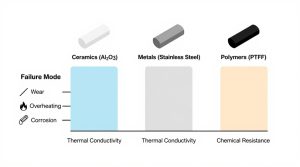
Next-Generation Ceramics: Unlocking Superior Properties for Industry

PRODUCT PARAMETERS
Description
Overview of Machinery for High Precision Grinding Ceramic Glass Quartz Rods
Quartz ceramics, also known as fused silica ceramics or re-bonded quartz products, are a high-performance advanced ceramic material. Unlike traditional clay-based ceramics, they are not made by sintering clay, but rather from high-purity fused silica (silicon dioxide, SiO₂) that is crushed, shaped, and then sintered at high temperatures.
Their core appeal lies in their unique combination of the excellent properties of fused silica glass (such as extremely low thermal expansion coefficient and excellent thermal shock stability) and the structural strength and versatility of ceramics (they can be made into crucibles, rollers, and irregularly shaped parts), overcoming the limitations of fused silica glass in terms of difficulty in manufacturing large sizes and complex shapes, and its high cost.
Quartz ceramics perform exceptionally well in harsh environments involving high temperatures, rapid temperature changes, and chemical corrosion, and are widely used in solar photovoltaics (crucibles for polycrystalline silicon ingot furnaces), semiconductors, aerospace, metallurgy and casting, the glass industry, and laboratories.
Main Characteristics of Machinery for High Precision Grinding Ceramic Glass Quartz Rods
Excellent Thermal Shock Stability: They have an extremely low thermal expansion coefficient, generating almost no thermal stress during rapid temperature changes, and can withstand rapid cooling from extremely high temperatures to room temperature without cracking.
Extremely High Temperature Resistance and Thermal Stability: They can be used continuously at temperatures of 1100°C – 1350°C, and can even withstand higher temperatures for short periods. They do not soften or deform at high temperatures and maintain good dimensional stability.
Excellent Chemical Inertness and Corrosion Resistance: Except for hydrofluoric acid and hot concentrated phosphoric acid, they have strong resistance to most acids, salt solutions, and molten metals (such as aluminum, copper, gold, silver, and platinum), making them ideal melting and containment vessels.
Low Thermal Conductivity and Good Electrical Insulation: They have low thermal conductivity, making them excellent thermal insulation materials. They also maintain good electrical insulation properties at high temperatures.
High Purity and Low Contamination Risk: Made from high-purity quartz sand, they do not contaminate the high-purity molten metals or semiconductor materials they come into contact with, ensuring process cleanliness.
Moderate Mechanical Strength: Compared to most engineering ceramics, their mechanical strength at room temperature is relatively low; they are brittle materials. However, their strength is sufficient under their designed operating conditions (high-temperature insulation, thermal shock resistance). Its strength can be improved by optimizing the formula and manufacturing process.
Specifications of Machinery for High Precision Grinding Ceramic Glass Quartz Rods
This equipment grinds ceramic, glass, and quartz poles. It accomplishes high precision. The spindle speed is vital. It runs very quick. Rates get to 10,000 RPM or higher. Broadband guarantees a fine surface coating. The motor power is strong. It drives the pin successfully. This power handles hard materials. Grinding pressures continue to be stable. The maker has accurate axis motions. The X, Y, and Z axes relocate precisely. Motions are managed by sphere screws. These screws decrease reaction. Placing accuracy is outstanding. It gets to micrometer degrees. Repeatability is likewise high. This means constant part quality. The control system is progressed. Operators use a CNC interface. Programs is straightforward. Establishing tasks fasts. The system enables fine changes. Operators modify criteria easily. Feed prices are adjustable. Depth of cut is controlled. Smooth procedure is vital. Resonance must be reduced. The machine base is inflexible. Heavy cast iron offers security. Inner parts are wetted. This lowers unwanted movement. Coolant systems are consisted of. They manage heat during grinding. Warmth can damage materials. Coolant maintains temperatures down. Fixturing holds rods firmly. Personalized chucks are offered. They accommodate different pole dimensions. Configuration times are minimized. Security features are incorporated. Guards secure the operator. Emergency quits are accessible. Upkeep is straightforward. Access factors are well placed. Lubrication is automated. Downtime is minimized. It additionally supplies automatic loading. This is an optional feature. It boosts throughput. The equipment handles delicate work. It grinds breakable rods efficiently.
Applications of Machinery for High Precision Grinding Ceramic Glass Quartz Rods
Equipment for high precision grinding ceramic glass quartz poles offers essential functions. These products are weak and tough to deal with. Specialized grinding equipments handle them properly. The outcomes are get rid of extremely tight tolerances and outstanding surface area finishes. Several industries require such precision parts.
The semiconductor industry counts heavily on these parts. Quartz rods ground precisely are utilized for wafer dealing with arms. They place silicon wafers precisely during processing. Ceramic elements are utilized in dimension devices. They make certain specific positioning within complex tools.
Medical device production uses these ground parts too. Surgical instruments frequently incorporate ceramic or quartz components. Precision grinding makes certain biocompatibility and smooth function. Implants and analysis tools also use these materials. High precision grinding meets rigorous clinical requirements.
Optical applications demand perfectly shaped components. Lenses, prisms, and laser elements are made from glass and quartz. Grinding makers create the called for facility shapes. Surface top quality is vital for clear light transmission. This is crucial for cams, projectors, and scientific instruments.
Aerospace and protection markets utilize these parts. Sensors and interaction systems need trustworthy parts. Quartz oscillators control timing specifically. Ceramic components hold up against high temperatures in engines. Accuracy grinding ensures these components execute dependably under tension.

Company Profile
Synthetic-chemical focus on the research and development, production and sales of ceramic products, serving the electronics, ceramics, chemical and other industries. Since its establishment in 2015, the company has been committed to providing customers with the best products and services, and has become a leader in the industry through continuous technological innovation and strict quality management.
Our products includes but not limited to Aluminum Nitride, Aluminum Oxide, Boron Carbide, Boron Nitride, Ceramic Crucible, ect. If you are interested in any type of these, please feel free to contact us.

Payment Methods
T/T, Western Union, Paypal, Credit Card etc.
Shipment Methods
By air, by sea, by express, as customers request.
5 FAQs of Machinery for High Precision Grinding Ceramic Glass Quartz Rods
What precision does this grinding machine achieve? Our machines grind to tolerances within 0.001mm. This level is crucial for ceramic, glass, and quartz rods. It ensures parts meet exact specifications. Consistent results are guaranteed.
Can this machine handle all ceramic types? Yes. The machine works on various ceramics. It handles alumina, zirconia, silicon carbide, and others. Glass types like borosilicate are no problem. Quartz rods are also processed effectively. Different materials require specific grinding parameters. Our machines accommodate these differences.
How much maintenance is needed? Regular upkeep is straightforward. Key components like spindles need lubrication checks. Belts and guides require periodic inspection. Cleaning grinding debris is essential daily. This prevents buildup affecting precision. Following the maintenance schedule ensures long machine life. Downtime is minimized.
Is the machine easy to operate? Operation is designed for efficiency. Training covers basic functions quickly. The control panel is intuitive. Setting grinding parameters is simple. Loading and unloading workpieces is user-friendly. Skilled operators achieve the best results. The learning curve is manageable.
What safety features protect operators? Operator safety is paramount. Machines include emergency stop buttons. Protective guards shield grinding areas. Interlock systems prevent unsafe operation. Safety sensors detect potential hazards. Always wear provided safety glasses. Following safety protocols prevents accidents.
REQUEST A QUOTE
RELATED PRODUCTS
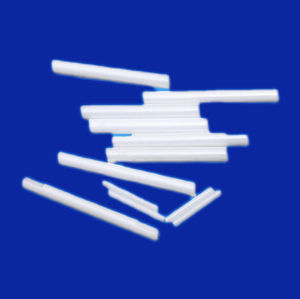
Quartz Shield Ceramic Crucible for Melting Gold and Silver Jewelry
Factory Quartz Limestone Coal Ceramic Cement Grinding Mill
Custom Exhibition Hall Ceramic Tiles Marble Quartz Display Rack Stand
Hot ing Onyx Coating Quartz Ceramic Coating for Cars
Infrared CNC Bridge Saw Cutting Machine for Quartz Stone Ceramic