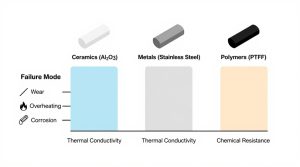
Next-Generation Ceramics: Unlocking Superior Properties for Industry

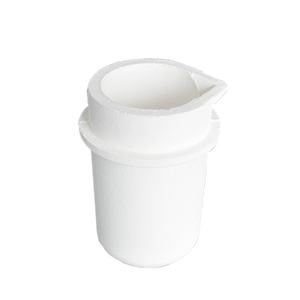
PRODUCT PARAMETERS
Description
Overview of Graphite Crucible with Quartz Sleeve for High Temperature Ceramics
Quartz ceramics, also known as fused silica ceramics or re-bonded quartz products, are a high-performance advanced ceramic material. Unlike traditional clay-based ceramics, they are not made by sintering clay, but rather from high-purity fused silica (silicon dioxide, SiO₂) that is crushed, shaped, and then sintered at high temperatures.
Their core appeal lies in their unique combination of the excellent properties of fused silica glass (such as extremely low thermal expansion coefficient and excellent thermal shock stability) and the structural strength and versatility of ceramics (they can be made into crucibles, rollers, and irregularly shaped parts), overcoming the limitations of fused silica glass in terms of difficulty in manufacturing large sizes and complex shapes, and its high cost.
Quartz ceramics perform exceptionally well in harsh environments involving high temperatures, rapid temperature changes, and chemical corrosion, and are widely used in solar photovoltaics (crucibles for polycrystalline silicon ingot furnaces), semiconductors, aerospace, metallurgy and casting, the glass industry, and laboratories.
Main Characteristics of Graphite Crucible with Quartz Sleeve for High Temperature Ceramics
Excellent Thermal Shock Stability: They have an extremely low thermal expansion coefficient, generating almost no thermal stress during rapid temperature changes, and can withstand rapid cooling from extremely high temperatures to room temperature without cracking.
Extremely High Temperature Resistance and Thermal Stability: They can be used continuously at temperatures of 1100°C – 1350°C, and can even withstand higher temperatures for short periods. They do not soften or deform at high temperatures and maintain good dimensional stability.
Excellent Chemical Inertness and Corrosion Resistance: Except for hydrofluoric acid and hot concentrated phosphoric acid, they have strong resistance to most acids, salt solutions, and molten metals (such as aluminum, copper, gold, silver, and platinum), making them ideal melting and containment vessels.
Low Thermal Conductivity and Good Electrical Insulation: They have low thermal conductivity, making them excellent thermal insulation materials. They also maintain good electrical insulation properties at high temperatures.
High Purity and Low Contamination Risk: Made from high-purity quartz sand, they do not contaminate the high-purity molten metals or semiconductor materials they come into contact with, ensuring process cleanliness.
Moderate Mechanical Strength: Compared to most engineering ceramics, their mechanical strength at room temperature is relatively low; they are brittle materials. However, their strength is sufficient under their designed operating conditions (high-temperature insulation, thermal shock resistance). Its strength can be improved by optimizing the formula and manufacturing process.
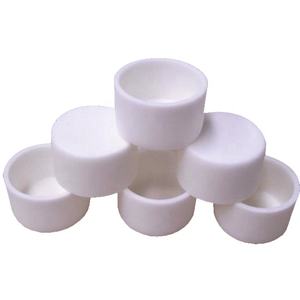
Specifications of Graphite Crucible with Quartz Sleeve for High Temperature Ceramics
Graphite Crucible with Quartz Sleeve– High-Temperature Performance for Ceramics
Product and Building and construction
This graphite crucible is made from high-purity, fine-grain graphite. The product offers strong resistance to thermal shock and preserves architectural stability even under quick temperature level modifications. An integrated quartz sleeve borders the crucible body. This sleeve safeguards the graphite from oxidation and direct contact with responsive atmospheres throughout firing.
Temperature Score
The crucible functions safely up to 1600 ° C( 2912 ° F)in inert or lowering atmospheres. With the quartz sleeve in position, it can deal with temporary exposure as much as 1700 ° C (3092 ° F). The quartz layer additionally helps in reducing contamination from heater components or gases.
Measurements and Capacity
Requirement sizes range from 50 mL to 2000 mL quantity. Wall density is uniform to ensure also warm distribution. External diameters differ from 50 mm to 150 mm, with elevations between 60 mm and 200 mm. Customized dimensions are available on request.
Trick Features
High thermal conductivity: Graphite transfers warmth quickly and evenly, which sustains constant ceramic sintering.
Oxidation security: The quartz sleeve serves as a barrier, decreasing graphite degradation in air-rich setups.
Chemical security: Withstands reaction with most steel oxides and ceramic powders made use of in high-temperature handling.
Recyclable design: With appropriate handling, the crucible can be utilized several times without splitting or deforming.
Handling Notes
Always pre-heat the crucible slowly before getting to height temperature. Avoid unexpected air conditioning after usage. Shop in a dry location to stop dampness absorption. Do not use in highly oxidizing atmospheres above 500 ° C without additional protective actions. Clean deposit delicately with a soft brush– never ever make use of water or rough devices.
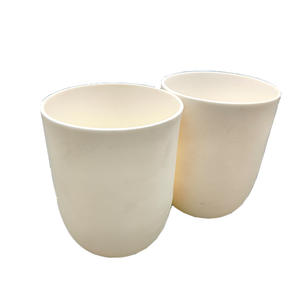
Applications of Graphite Crucible with Quartz Sleeve for High Temperature Ceramics
Applications of Graphite Crucible with Quartz Sleeve for High-Temperature Ceramics
Trustworthy Performance in Extreme Warmth
A graphite crucible coupled with a quartz sleeve is developed for high-temperature ceramic handling. This combination takes care of warm up to 1600 ° C without losing shape or stamina. The graphite core provides excellent thermal conductivity, while the quartz sleeve includes security versus chain reactions and physical wear.
Thawing and Casting Precision
This configuration is widely utilized to thaw and cast advanced ceramics like zirconia and alumina. The quartz sleeve prevents contamination from the crucible surface. That keeps the final product pure and constant. Users see less flaws and far better returns during production.
Sintering and Warmth Treatment
During sintering, uniform warmth circulation matters a whole lot. The graphite crucible spreads heat evenly across the ceramic set. The quartz sleeve guards delicate materials from straight call with carbon. This is essential when dealing with oxides that can react with graphite at high temperatures.
Research Laboratory and Industrial Use
Both research laboratories and producing plants count on this system. In laboratories, it sustains small-scale experiments needing clean, secure problems. In factories, it scales well for repeated cycles without frequent substitute. The design lasts longer than basic crucibles popular atmospheres.
Taking Care Of Responsive Products Securely
Some ceramic powders come to be reactive when warmed. The quartz layer works as a barrier. It stops unwanted reactions between the melt and the crucible wall surface. This feature makes the unit perfect for producing high-purity technological ceramics utilized in electronics, aerospace, and clinical tools.
The graphite crucible with quartz sleeve gives customers manage, sturdiness, and sanitation in one plan. It satisfies the tough demands of modern ceramic handling without concession.

Company Profile
Synthetic-chemical focus on the research and development, production and sales of ceramic products, serving the electronics, ceramics, chemical and other industries. Since its establishment in 2015, the company has been committed to providing customers with the best products and services, and has become a leader in the industry through continuous technological innovation and strict quality management.
Our products includes but not limited to Aluminum Nitride, Aluminum Oxide, Boron Carbide, Boron Nitride, Ceramic Crucible, ect. If you are interested in any type of these, please feel free to contact us.

Payment Methods
T/T, Western Union, Paypal, Credit Card etc.
Shipment Methods
By air, by sea, by express, as customers request.
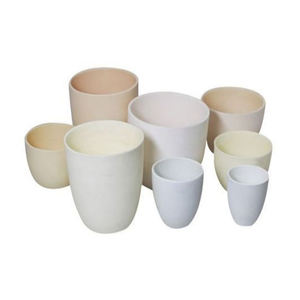
5 FAQs of Graphite Crucible with Quartz Sleeve for High Temperature Ceramics
Frequently Asked Questions: Graphite Crucible with Quartz Sleeve
What is a graphite crucible with quartz sleeve used for?
This crucible holds materials during high-temperature ceramic processes. The graphite body resists heat well. The outer quartz sleeve adds protection. It helps prevent contamination and extends the crucible’s life.
Why choose graphite with a quartz sleeve instead of plain graphite?
Plain graphite can react with some molten materials or gases. The quartz sleeve acts as a barrier. It reduces unwanted reactions. This setup keeps your ceramic batch cleaner and more consistent.
What temperatures can this crucible handle?
The graphite core works up to about 2,000°C in inert atmospheres. The quartz sleeve performs best below 1,200°C in air. For long-term use, stay within these limits. Going higher may damage the quartz layer.
How do I install or handle the crucible safely?
Always wear heat-resistant gloves. Avoid sudden temperature changes—they can crack the quartz. Place the crucible gently in the furnace. Do not drop it or strike it against hard surfaces. Thermal shock is the main cause of early failure.
Can I reuse this crucible many times?
Yes, if you use it correctly. Clean it after each use with soft tools—never metal scrapers. Store it in a dry place. Inspect the quartz sleeve before every use. If you see cracks or flaking, stop using it. A damaged sleeve offers no protection.
REQUEST A QUOTE
RELATED PRODUCTS
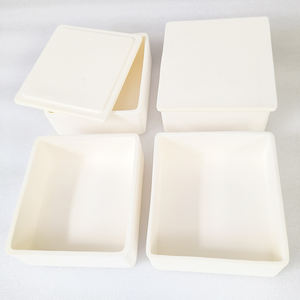
Metal Showroom Slab Granite Quartz Marble Ceramic Tile Display Rack
Hot ing Onyx Coating Quartz Ceramic Coating for Cars
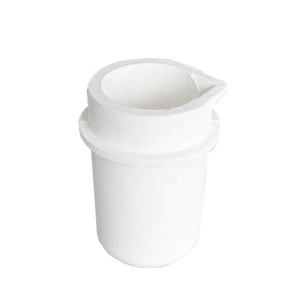
50ml Quartz Silica Ceramic Crucible Cylindrical Genre Crucible
Vacuum Brazed Diamond Grinding Wheel for Marble Ceramic Quartz
New Style Marble Slab Rack Stone Quartz Ceramic Tile Display Rack