Next-Generation Ceramics: Unlocking Superior Properties for Industry

PRODUCT PARAMETERS
Description
Overview of Stone Cutting Machine for Sintered Stone Ceramic Plate Quartz
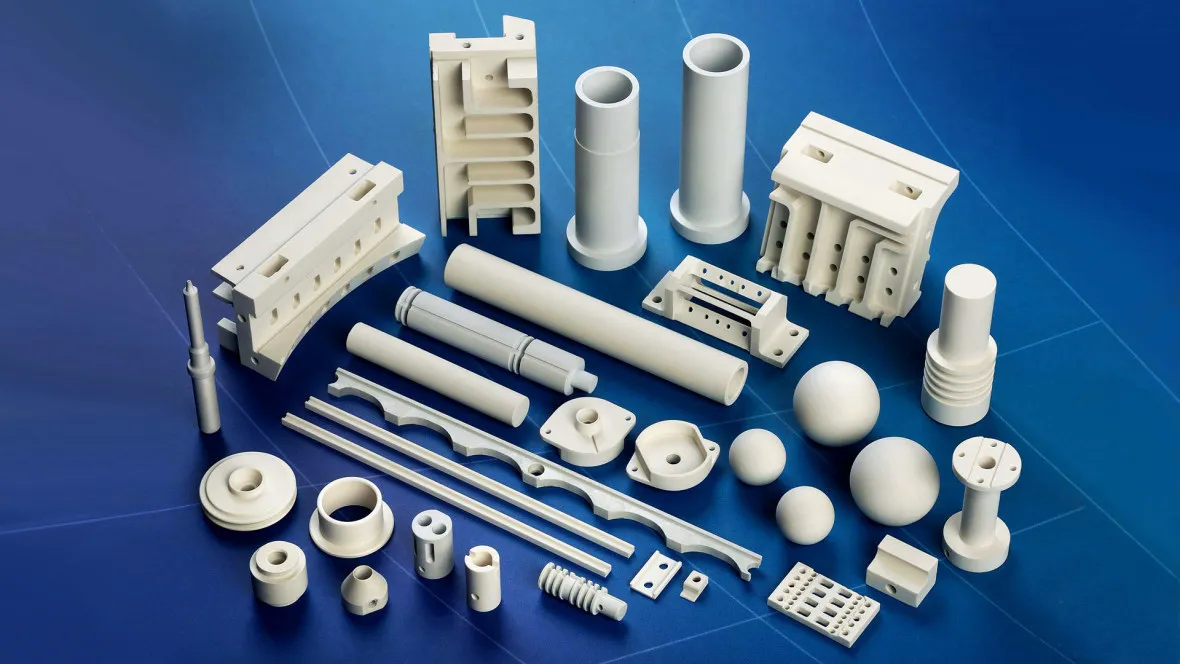
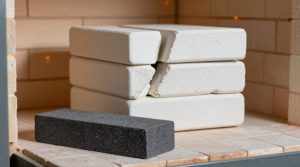
Quartz ceramics, also known as fused silica ceramics or re-bonded quartz products, are a high-performance advanced ceramic material. Unlike traditional clay-based ceramics, they are not made by sintering clay, but rather from high-purity fused silica (silicon dioxide, SiO₂) that is crushed, shaped, and then sintered at high temperatures.
Their core appeal lies in their unique combination of the excellent properties of fused silica glass (such as extremely low thermal expansion coefficient and excellent thermal shock stability) and the structural strength and versatility of ceramics (they can be made into crucibles, rollers, and irregularly shaped parts), overcoming the limitations of fused silica glass in terms of difficulty in manufacturing large sizes and complex shapes, and its high cost.
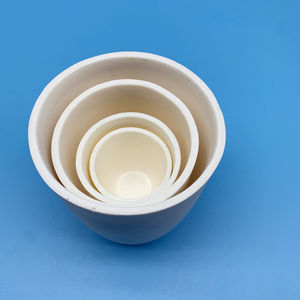
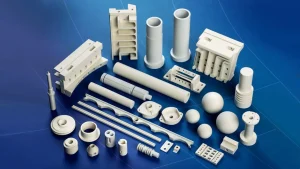
Quartz ceramics perform exceptionally well in harsh environments involving high temperatures, rapid temperature changes, and chemical corrosion, and are widely used in solar photovoltaics (crucibles for polycrystalline silicon ingot furnaces), semiconductors, aerospace, metallurgy and casting, the glass industry, and laboratories.
Main Characteristics of Stone Cutting Machine for Sintered Stone Ceramic Plate Quartz
Excellent Thermal Shock Stability: They have an extremely low thermal expansion coefficient, generating almost no thermal stress during rapid temperature changes, and can withstand rapid cooling from extremely high temperatures to room temperature without cracking.
Extremely High Temperature Resistance and Thermal Stability: They can be used continuously at temperatures of 1100°C – 1350°C, and can even withstand higher temperatures for short periods. They do not soften or deform at high temperatures and maintain good dimensional stability.
Excellent Chemical Inertness and Corrosion Resistance: Except for hydrofluoric acid and hot concentrated phosphoric acid, they have strong resistance to most acids, salt solutions, and molten metals (such as aluminum, copper, gold, silver, and platinum), making them ideal melting and containment vessels.
Low Thermal Conductivity and Good Electrical Insulation: They have low thermal conductivity, making them excellent thermal insulation materials. They also maintain good electrical insulation properties at high temperatures.
High Purity and Low Contamination Risk: Made from high-purity quartz sand, they do not contaminate the high-purity molten metals or semiconductor materials they come into contact with, ensuring process cleanliness.
Moderate Mechanical Strength: Compared to most engineering ceramics, their mechanical strength at room temperature is relatively low; they are brittle materials. However, their strength is sufficient under their designed operating conditions (high-temperature insulation, thermal shock resistance). Its strength can be improved by optimizing the formula and manufacturing process.
Specifications of Stone Cutting Machine for Sintered Stone Ceramic Plate Quartz
Stone Cutting Device Requirements for Sintered Rock, Ceramic Plate, and Quartz
Core Performance
Cutting ability: Deals with products up to 120 mm thick. Works well with sintered rock, ceramic pieces, and quartz surfaces.
Motor power: 7.5 kW industrial-grade motor. Delivers constant torque for tidy, specific cuts.
Blade size: Supports diamond blades from 300 mm to 400 mm in diameter. Makes sure adaptability for different job requirements.
Machine Framework
Structure: Durable steel construction. Developed to minimize resonance throughout operation.
Worktable: Stainless steel surface area with T-slots for safe and secure product clamping. Table size: 3200 mm × 2000 mm.
Activity system: Dual-axis manual sliding table. Smooth motion for accurate positioning.
Control & Security
Operation: Simple handwheel controls. Easy to learn and make use of. No facility user interfaces.
Security functions: Emergency stop button, blade guard, and water spray system to control dirt.
Air conditioning system: Integrated water pump with adjustable circulation. Maintains the blade cool and prolongs its life.
Technical Information and facts
Power supply: 380 V, 3-phase, 50/60 Hz.
Water storage tank capability: 80 litres. Sufficient for lengthy reducing sessions without refill.
Dimensions: 3500 mm (L) × 2200 mm (W) × 1800 mm (H).
Weight: Around 1800 kg. Secure on any type of strong workshop floor.
Product Compatibility
Developed for: Sintered stone, engineered quartz, porcelain slabs, and large-format ceramic plates.
Not appropriate for: Steels, wood, or soft plastics. Usage only with hard, breakable stone-type materials.
This maker satisfies day-to-day workshop needs with reputable performance and marginal maintenance.
Applications of Stone Cutting Machine for Sintered Stone Ceramic Plate Quartz
Applications of Stone Reducing Equipments for Sintered Stone, Ceramic Plates, and Quartz
Precision Reducing for Modern Surfaces
Rock cutting machines are developed to take care of difficult products like sintered rock, ceramic plates, and quartz. These materials are popular in kitchen areas, washrooms, and industrial rooms since they look excellent and last lengthy. The machine reduces them easily without damaging or splitting.
Why utilize a dedicated stone reducing machine?
Normal tools struggle with these thick surfaces. A specific machine uses ruby blades and stable stress to make smooth, exact cuts. This matters when you require exact sizes for kitchen counters, wall panels, or floor covering.
Versatile Use Across Projects
In home improvements, the machine shapes quartz pieces right into kitchen area counter tops or restroom vanities. For large structures, it reduces sintered rock into large panels for frontages or interior walls. Ceramic plates get cut to fit backsplashes or attribute walls. Each task requires clean edges and limited tolerances– something just a correct rock cutter delivers.
Taking Care Of Different Densities
These machines readjust conveniently. Slim ceramic floor tiles and thick quartz obstructs both cut well. Customers established the deepness and rate based on the product. Water-cooling systems maintain the blade cool and decrease dirt. This safeguards both the device and the workpiece.
Supporting Layout and Installation
Developers depend on these machines to bring complicated concepts to life. Curved sides, intermediaries for sinks, or personalized forms are all possible. Installers profit as well– components fit right the first time, conserving hours on site. Much less waste implies reduced prices and faster task completion.
The machine’s stability and control make it an essential device wherever top notch stone surface areas are utilized. It works quickly but remains accurate. That balance is why experts select it again and again.

Company Profile
Synthetic-chemical focus on the research and development, production and sales of ceramic products, serving the electronics, ceramics, chemical and other industries. Since its establishment in 2015, the company has been committed to providing customers with the best products and services, and has become a leader in the industry through continuous technological innovation and strict quality management.
Our products includes but not limited to Aluminum Nitride, Aluminum Oxide, Boron Carbide, Boron Nitride, Ceramic Crucible, ect. If you are interested in any type of these, please feel free to contact us.

Payment Methods
T/T, Western Union, Paypal, Credit Card etc.
Shipment Methods
By air, by sea, by express, as customers request.
5 FAQs of Stone Cutting Machine for Sintered Stone Ceramic Plate Quartz
Frequently Asked Questions About Stone Cutting Machines for Sintered Stone, Ceramic Plate, and Quartz
1. Can one machine cut sintered stone, ceramic plates, and quartz?
Yes. A good stone cutting machine handles all three materials. It uses a strong motor and a diamond blade made for hard surfaces. You just need to adjust the speed and feed rate based on the material.
2. What blade works best for these materials?
Use a high-quality diamond blade. Sintered stone and quartz are very hard. Ceramic plates can be brittle. A segmented or continuous-rim diamond blade gives clean cuts and lasts longer. Always match the blade to the material type.
3. Is water cooling necessary during cutting?
Yes. Water cooling keeps the blade from overheating. It also reduces dust and helps you get a smoother edge. Most professional machines include a water pump or misting system for this purpose.
4. How accurate is the cutting?
Modern machines offer high precision. Look for models with laser guides and digital rulers. These features help you measure and cut within 0.5 mm accuracy. Stable worktables and clamping systems also improve results.
5. What maintenance does the machine need?
Keep the machine clean after each use. Remove dust and slurry from rails and moving parts. Check the belt tension and blade alignment weekly. Lubricate moving parts as the manual says. Replace worn blades right away to avoid damage.
REQUEST A QUOTE
RELATED PRODUCTS
Vacuum Brazed Profiling Wheels for Marble Ceramic Quartz Applications
Leading Technology Ceramic Artificial Quartz for Stone Tabletop
High Quality Rotating Ceramic Quartz Granite Stone Display Rack
Ceramic Ball Mill for Quartz
Hot ing Onyx Coating Quartz Ceramic Coating for Cars