Next-Generation Ceramics: Unlocking Superior Properties for Industry

PRODUCT PARAMETERS
Description
Overview of Ceramic Liner Ball Mill for Quartz CE Certification
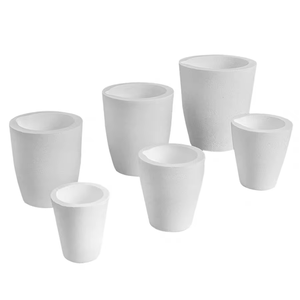
Quartz ceramics, also known as fused silica ceramics or re-bonded quartz products, are a high-performance advanced ceramic material. Unlike traditional clay-based ceramics, they are not made by sintering clay, but rather from high-purity fused silica (silicon dioxide, SiO₂) that is crushed, shaped, and then sintered at high temperatures.
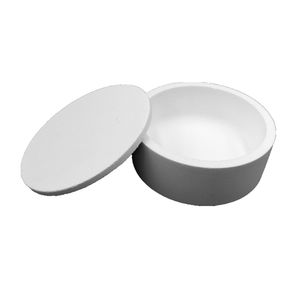
Their core appeal lies in their unique combination of the excellent properties of fused silica glass (such as extremely low thermal expansion coefficient and excellent thermal shock stability) and the structural strength and versatility of ceramics (they can be made into crucibles, rollers, and irregularly shaped parts), overcoming the limitations of fused silica glass in terms of difficulty in manufacturing large sizes and complex shapes, and its high cost.
Quartz ceramics perform exceptionally well in harsh environments involving high temperatures, rapid temperature changes, and chemical corrosion, and are widely used in solar photovoltaics (crucibles for polycrystalline silicon ingot furnaces), semiconductors, aerospace, metallurgy and casting, the glass industry, and laboratories.
Main Characteristics of Ceramic Liner Ball Mill for Quartz CE Certification
Excellent Thermal Shock Stability: They have an extremely low thermal expansion coefficient, generating almost no thermal stress during rapid temperature changes, and can withstand rapid cooling from extremely high temperatures to room temperature without cracking.
Extremely High Temperature Resistance and Thermal Stability: They can be used continuously at temperatures of 1100°C – 1350°C, and can even withstand higher temperatures for short periods. They do not soften or deform at high temperatures and maintain good dimensional stability.
Excellent Chemical Inertness and Corrosion Resistance: Except for hydrofluoric acid and hot concentrated phosphoric acid, they have strong resistance to most acids, salt solutions, and molten metals (such as aluminum, copper, gold, silver, and platinum), making them ideal melting and containment vessels.
Low Thermal Conductivity and Good Electrical Insulation: They have low thermal conductivity, making them excellent thermal insulation materials. They also maintain good electrical insulation properties at high temperatures.
High Purity and Low Contamination Risk: Made from high-purity quartz sand, they do not contaminate the high-purity molten metals or semiconductor materials they come into contact with, ensuring process cleanliness.
Moderate Mechanical Strength: Compared to most engineering ceramics, their mechanical strength at room temperature is relatively low; they are brittle materials. However, their strength is sufficient under their designed operating conditions (high-temperature insulation, thermal shock resistance). Its strength can be improved by optimizing the formula and manufacturing process.
Specifications of Ceramic Liner Ball Mill for Quartz CE Certification
Specifications of Ceramic Lining Sphere Mill for Quartz– CE Licensed
Layout and Building and construction
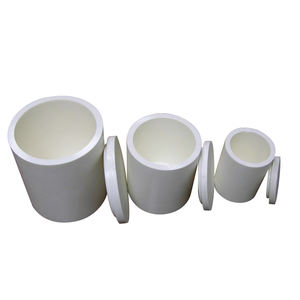
The ball mill makes use of a complete ceramic lining to stop contamination throughout quartz grinding. All wetted parts are made from high-purity alumina or zirconia ceramics. The covering is constructed from carbon steel with a durable structure. This design makes sure lengthy life span and secure operation.
Ability and Efficiency
Models vary from 50 liters to 5,000 litres in working quantity. The mill grinds quartz to great bits in between 1 and 10 microns. It goes for variable rates from 20 to 60 rpm. Power input matches the size– tiny devices use 5.5 kW, while large ones require as much as 200 kW.
Drive and Control System
A standard electrical motor drives the mill via a gear reducer. The control board includes start/stop buttons, speed adjustment, and overload defense. All electrical components meet CE safety and security standards. Optional functions consist of PLC control and remote monitoring.
Sealing and Feeding
The mill has dual mechanical seals to quit leakages and keep dirt out. Feed and discharge ports utilize flanged links for easy piping. Product goes into with a screw feeder or gravity hopper. Release can be set or continual, based upon individual requirements. Certification and Compliance Setup and Upkeep A ceramic lined sphere mill is perfect for grinding quartz. The inner lining is constructed from top notch alumina ceramic. This material resists wear and stops contamination. It keeps the quartz pure during handling. That is very important for sectors such as glass, electronic devices, and photovoltaic panels. Wear resistance: The ceramic lining lasts longer than steel or rubber linings. It deals with the hardness of quartz without damaging down rapidly. This type of ball mill functions well in mineral processing plants. It is likewise common in chemical manufacturing facilities and progressed product labs. Companies that make optical glass, semiconductors, or high-end ceramics rely upon it. The fine quartz powder it creates fulfills rigorous industry specifications. The ceramic floor tiles are easy to replace when required. Upkeep takes less time contrasted to conventional mills. Fewer closures indicate even more constant production. Operators discover it basic to run and clean. Every system is tested prior to shipping. Quality assurance checks make certain performance and security. The CE mark shows conformity with health and wellness, safety, and ecological rules. Users obtain a trustworthy machine that provides constant outcomes set after batch. Synthetic-chemical focus on the research and development, production and sales of ceramic products, serving the electronics, ceramics, chemical and other industries. Since its establishment in 2015, the company has been committed to providing customers with the best products and services, and has become a leader in the industry through continuous technological innovation and strict quality management.
This ball mill lugs CE accreditation. It fulfills EU Machinery Directive 2006/42/EC and Reduced Voltage Directive 2014/35/EU. Documents includes technical files, danger evaluation, and consistency affirmation. The equipment is tested before delivering to ensure risk-free procedure.
The system shows up pre-assembled where feasible. On-site installation calls for only structure bolts and power connection. Routine upkeep consists of inspecting seals, oiling gears, and evaluating ceramic tiles for wear. Extra components are readily available worldwide.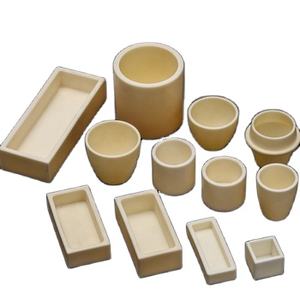
Applications of Ceramic Liner Ball Mill for Quartz CE Certification
Applications of Ceramic Lined Ball Mill for Quartz– CE Certified
Why Use a Ceramic Lined Sphere Mill?
Secret Functions for Quartz Handling
Purity security: No metal parts touch the quartz. This avoids iron or various other pollutants mixing right into the final product.
Smooth operation: The mill runs quietly and utilizes less power. Its style minimizes resonance and sound.
CE accredited: The equipment satisfies European security and top quality requirements. You can utilize it with self-confidence in controlled markets.Where It Is Made use of
Easy to Keep
Built for Dependability

Company Profile
Our products includes but not limited to Aluminum Nitride, Aluminum Oxide, Boron Carbide, Boron Nitride, Ceramic Crucible, ect. If you are interested in any type of these, please feel free to contact us.

Payment Methods
T/T, Western Union, Paypal, Credit Card etc.
Shipment Methods
By air, by sea, by express, as customers request.
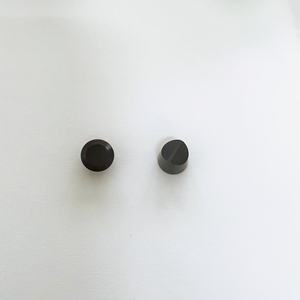
5 FAQs of Ceramic Liner Ball Mill for Quartz CE Certification
Frequently Asked Questions: Ceramic Liner Ball Mill for Quartz (CE Certified)
What is a ceramic liner ball mill used for?
This ball mill grinds quartz and other hard materials into fine powder. The ceramic lining protects the mill from wear and keeps the material pure. It works well in mining, chemicals, and ceramics.
Why choose a ceramic liner instead of metal?
Ceramic liners do not rust or contaminate the product. They last longer when grinding abrasive materials like quartz. Metal liners can mix tiny metal bits into the powder. Ceramic avoids this problem.
Is this ball mill CE certified?
Yes. The machine meets CE safety standards. This means it follows European rules for machinery safety. You can use it with confidence in many countries.
How do I maintain the ceramic liner ball mill?
Check the ceramic tiles regularly for cracks or chips. Keep the motor and gears clean and lubricated. Do not overload the mill. Follow the manual for daily and weekly checks. Good care helps the mill run smoothly for years.
Can it handle large production volumes?
Yes. These mills come in different sizes. Small models suit labs. Big ones work in factories. All types keep high grinding quality. Choose the right size based on your output needs. The design supports steady, long-hour operation.
REQUEST A QUOTE
RELATED PRODUCTS
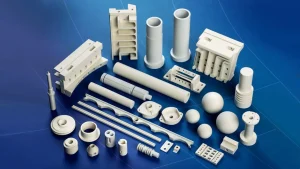
Hot ing Onyx Coating Quartz Ceramic Coating for Cars
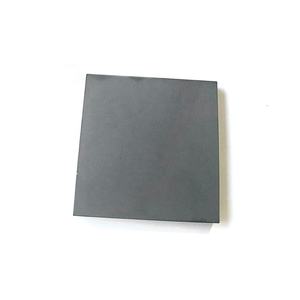
Customize Size Ceramic Tile Stone Sample Display Board Marble Quartz
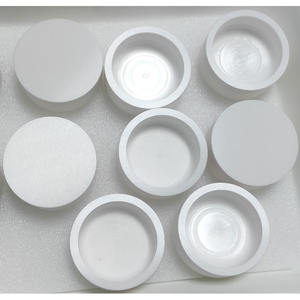
Whole High Quality Nano Ceramic Diamond Quartz Coating
Custom Exhibition Hall Ceramic Tiles Marble Quartz Display Rack Stand
4 Inch 3 Step Dry Diamond Polishing Pad for Ceramic Marble Quartz