Next-Generation Ceramics: Unlocking Superior Properties for Industry

PRODUCT PARAMETERS
Description
Overview of Factory Direct Casting Ceramic Refractory Glass Quartz Sand
Quartz ceramics, also known as fused silica ceramics or re-bonded quartz products, are a high-performance advanced ceramic material. Unlike traditional clay-based ceramics, they are not made by sintering clay, but rather from high-purity fused silica (silicon dioxide, SiO₂) that is crushed, shaped, and then sintered at high temperatures.
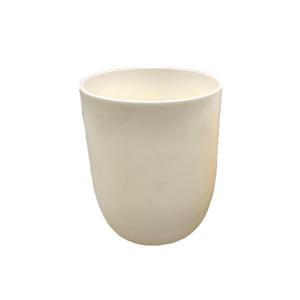
Their core appeal lies in their unique combination of the excellent properties of fused silica glass (such as extremely low thermal expansion coefficient and excellent thermal shock stability) and the structural strength and versatility of ceramics (they can be made into crucibles, rollers, and irregularly shaped parts), overcoming the limitations of fused silica glass in terms of difficulty in manufacturing large sizes and complex shapes, and its high cost.
Quartz ceramics perform exceptionally well in harsh environments involving high temperatures, rapid temperature changes, and chemical corrosion, and are widely used in solar photovoltaics (crucibles for polycrystalline silicon ingot furnaces), semiconductors, aerospace, metallurgy and casting, the glass industry, and laboratories.
Main Characteristics of Factory Direct Casting Ceramic Refractory Glass Quartz Sand
Excellent Thermal Shock Stability: They have an extremely low thermal expansion coefficient, generating almost no thermal stress during rapid temperature changes, and can withstand rapid cooling from extremely high temperatures to room temperature without cracking.
Extremely High Temperature Resistance and Thermal Stability: They can be used continuously at temperatures of 1100°C – 1350°C, and can even withstand higher temperatures for short periods. They do not soften or deform at high temperatures and maintain good dimensional stability.
Excellent Chemical Inertness and Corrosion Resistance: Except for hydrofluoric acid and hot concentrated phosphoric acid, they have strong resistance to most acids, salt solutions, and molten metals (such as aluminum, copper, gold, silver, and platinum), making them ideal melting and containment vessels.
Low Thermal Conductivity and Good Electrical Insulation: They have low thermal conductivity, making them excellent thermal insulation materials. They also maintain good electrical insulation properties at high temperatures.
High Purity and Low Contamination Risk: Made from high-purity quartz sand, they do not contaminate the high-purity molten metals or semiconductor materials they come into contact with, ensuring process cleanliness.
Moderate Mechanical Strength: Compared to most engineering ceramics, their mechanical strength at room temperature is relatively low; they are brittle materials. However, their strength is sufficient under their designed operating conditions (high-temperature insulation, thermal shock resistance). Its strength can be improved by optimizing the formula and manufacturing process.
Specifications of Factory Direct Casting Ceramic Refractory Glass Quartz Sand
Manufacturing Facility Direct Casting Ceramic Refractory Glass Quartz Sand– Product Specifications
Material Composition
This quartz sand is made from high-purity silica. It includes over 99.5% SiO ₂. The product is free from unsafe impurities like iron, alkali metals, and organic matter. This makes certain consistent efficiency in high-temperature applications.
Grain Dimension and Distribution
The sand is available in several grain dimensions. Typical alternatives consist of 20/40 mesh, 40/70 mesh, and 70/140 mesh. Custom sizing is likewise offered upon demand. Each batch undergoes strict testing to assure consistent particle circulation. This assists develop smooth, defect-free cast surfaces.
Thermal Features
It endures temperatures up to 1700 ° C(3092 ° F). The sand keeps structural stability also under rapid home heating and cooling cycles. Its low thermal expansion minimizes the danger of cracking during casting procedures.
Chemical Stability
The item shows outstanding resistance to acids and liquified steels. It does not react with a lot of spreading alloys, consisting of aluminum, copper, and steel. This makes it ideal for usage in foundries and accuracy investment casting.
Product packaging and Handling
Sand is packed in moisture-proof woven bags. Requirement weights are 25 kg or 50 kg per bag. Mass packaging in large bags (1000 kg) is also used. Store in a completely dry, covered area to prevent contamination or moisture absorption.
Quality Assurance
Every batch is checked internal prior to delivery. Examinations consist of chemical analysis, filter analysis, and loss on ignition (LOI). Certifications of Analysis (CoA) are provided with each order. Our production adheres to ISO 9001 standards to ensure integrity and traceability.
Applications
This quartz sand is widely used in ceramic shell mold and mildews, refractory linings, and glass production. It acts as an essential basic material in aerospace, vehicle, and industrial metal spreading markets. Its purity and uniformity assistance high-grade surface finishes and dimensional accuracy.
Applications of Factory Direct Casting Ceramic Refractory Glass Quartz Sand
Applications of Manufacturing Facility Direct Casting Ceramic Refractory Glass Quartz Sand
High-Temperature Industrial Furnaces
Casting ceramic refractory glass quartz sand is extensively utilized in high-temperature commercial furnaces. It handles severe warmth without breaking down. This makes it ideal for lining heating systems in steel, glass, and steel factories. The product keeps heat inside and protects heater wall surfaces from damages.
Shop Molding and Core Making
Shops utilize this quartz sand to create molds and cores for steel casting. Its fine grain framework offers smooth surface finishes on cast components. The sand additionally resists thermal shock during pouring. This decreases problems and boosts manufacturing quality.
Refractory Bricks and Forms
Manufacturers blend the sand right into refractory bricks and customized shapes. These products kilns, incinerators, and reactors. The quartz content increases strength and stability at heats. Bricks made with this sand last much longer and execute much better under anxiety.
Glass Production
Glass producers count on this product for container cellular linings and feeder parts. It does not react with liquified glass. That suggests less contaminations and clearer end products. The sand’s purity aids keep regular glass high quality in time.
Ceramic and Porcelain Production
In ceramic factories, the sand supports kiln furniture like shelves and setters. It stays stable during duplicated heating and cooling down cycles. This avoids warping or fracturing of delicate ceramic products throughout firing.
Specialized Applications
The sand also offers in aerospace, chemical processing, and power sectors. It functions well in settings where warm resistance and chemical inertness matter many. Engineers pick it when basic materials stop working under extreme conditions.

Company Profile
Synthetic-chemical focus on the research and development, production and sales of ceramic products, serving the electronics, ceramics, chemical and other industries. Since its establishment in 2015, the company has been committed to providing customers with the best products and services, and has become a leader in the industry through continuous technological innovation and strict quality management.
Our products includes but not limited to Aluminum Nitride, Aluminum Oxide, Boron Carbide, Boron Nitride, Ceramic Crucible, ect. If you are interested in any type of these, please feel free to contact us.

Payment Methods
T/T, Western Union, Paypal, Credit Card etc.
Shipment Methods
By air, by sea, by express, as customers request.
5 FAQs of Factory Direct Casting Ceramic Refractory Glass Quartz Sand
FAQs About Factory Direct Casting Ceramic Refractory Glass Quartz Sand
What is casting ceramic refractory glass quartz sand?
This sand is a high-purity material made from natural quartz. It can handle very high temperatures without breaking down. Foundries use it to make molds and cores for metal casting. Its heat resistance and chemical stability make it ideal for demanding industrial applications.
Why buy directly from the factory?
Buying straight from the factory cuts out middlemen. This means lower prices and better quality control. You also get faster response times and consistent supply. The factory can customize grain size and purity to match your needs.
What industries use this quartz sand?
It is widely used in steel, iron, aluminum, and copper foundries. It also serves in glass manufacturing and precision investment casting. Any process that needs reliable, high-temperature mold material can benefit from this sand.
How is the quality of the sand ensured?
Every batch goes through strict testing. We check silica content, particle size distribution, and impurity levels. Only sand that meets our standards gets shipped. Our production follows international quality guidelines.
Can I get samples before placing a large order?
Yes. We offer free samples so you can test the sand in your own process. Just tell us your required specifications. Once you confirm the sample works well, we can move forward with bulk production and delivery.
REQUEST A QUOTE
RELATED PRODUCTS
High Quality Corrosion Resistant Quartz High Temperature Ceramic
Portable Granite Marble Quartz Stone Ceramic Tile Cutting Machine
Used Small Scale Mini Ceramic Ball Mill for Quartz Rock Silica Sand
Vacuum Brazed Profiling Wheels for Marble Ceramic Quartz Applications
High Purity Fused Quartz Ceramic Cylindrical Crucible