Next-Generation Ceramics: Unlocking Superior Properties for Industry

PRODUCT PARAMETERS
Description
Overview of Boron Nitride Ceramic Plate Disc High Temperature Resistance
Boron Nitride (BN) exists in multiple polymorphs, with Hexagonal Boron Nitride (h-BN) being the most common ceramic form. Often called “white graphite” due to its similar layered, lubricious structure, it is distinguished by its exceptional thermal stability, electrical insulation, and chemical inertness, even at extreme temperatures.
Features of Boron Nitride Ceramic Plate Disc High Temperature Resistance
- High Thermal Conductivity & Excellent Electrical Insulation: Unique combination that allows it to conduct heat like a metal but insulate like a ceramic.
- Outstanding Thermal Shock Resistance: Can be heated and cooled rapidly without cracking.
- Natural Lubricity: Exhibits low friction and anti-stick properties, even at high temperatures.
- Chemically Inert: Resists wetting by and reaction with most molten metals, slags, and glasses.
- Machinable: Unlike most advanced ceramics, h-BN in its solid form can be machined to precision tolerances using conventional carbide tooling.
Specifications of Boron Nitride Ceramic Plate Disc High Temperature Resistance
Specifications of Boron Nitride Ceramic Plate Disc – High Temperature Resistance
Material and Composition
This ceramic plate disc is made from high-purity hexagonal boron nitride (h-BN). The material contains over 99% BN, which gives it excellent thermal stability and electrical insulation. It does not contain any binders or additives that could lower performance at high temperatures.
Temperature Performance
Strong heat resistance is a key feature. The plate can work continuously in air up to 1000°C. In inert atmospheres like nitrogen or argon, it stays stable even beyond 2000°C. It will not melt, deform, or crack under normal high-heat conditions.
Thermal and Electrical Properties
The disc shows very low thermal expansion. This means it keeps its shape when heated or cooled quickly. Its thermal conductivity is moderate—enough to spread heat evenly but not so high that it causes unwanted heat transfer. Electrically, it acts as an insulator. Even at high temperatures, it blocks current flow effectively.
Mechanical and Chemical Behavior
Boron nitride is soft compared to other ceramics, so it can be machined easily without special tools. Despite this, it holds up well under mechanical stress at elevated temperatures. It resists attack from most molten metals, slags, and acids. However, it should not be used with strong oxidizing agents above 800°C.
Common Uses
People use this plate disc in high-temperature furnaces, semiconductor manufacturing, and lab equipment. It works well as an insulator, spacer, or support fixture where heat and purity matter. Because it does not react with many materials, it helps keep processes clean and consistent.
Available Sizes and Tolerances
Standard discs come in diameters from 10 mm to 300 mm, with thicknesses between 1 mm and 20 mm. Custom sizes are also possible. Dimensional tolerance is typically ±0.1 mm, and surface finish can be smooth or machined to specific roughness levels.
Applications of Boron Nitride Ceramic Plate Disc High Temperature Resistance
Applications of Boron Nitride Ceramic Plate Discs
High-Temperature Performance You Can Rely On
Boron nitride ceramic plate discs handle extreme heat without breaking down. They stay stable even when temperatures go above 1,000°C. This makes them ideal for jobs where other materials would fail.
Use in Semiconductor Manufacturing
These discs work well inside semiconductor production tools. They support wafers during high-temperature processes like annealing or diffusion. Because boron nitride does not react with most chemicals, it keeps the silicon clean and prevents contamination.
Crucial in Vacuum and Inert Atmospheres
In vacuum furnaces or environments filled with inert gas, metal parts can stick together or warp. Boron nitride plates act as separators or supports. Their non-wetting surface stops molten metals from sticking. This is especially useful when working with aluminum, gallium, or lithium.
Thermal Management in Electronics
Even though boron nitride is a ceramic, it conducts heat well while blocking electricity. Engineers use these plates as insulating heat spreaders in power electronics. They help move heat away from sensitive parts without causing short circuits.
Mold Release and Crucible Liners
Glass and metal manufacturers line molds or crucibles with boron nitride discs. The material’s smooth surface lets finished products slide out easily. It also resists thermal shock, so it won’t crack when heated or cooled quickly.
Laboratory and Research Settings
Scientists choose boron nitride plates for high-temperature experiments. They hold samples during testing or act as insulating layers in custom setups. The material stays pure and does not interfere with results.
These applications show why boron nitride ceramic plate discs are trusted wherever heat, purity, and reliability matter.

Company Profile
Synthetic-chemical focus on the research and development, production and sales of ceramic products, serving the electronics, ceramics, chemical and other industries. Since its establishment in 2015, the company has been committed to providing customers with the best products and services, and has become a leader in the industry through continuous technological innovation and strict quality management.
Our products includes but not limited to Aluminum Nitride, Aluminum Oxide, Boron Carbide, Boron Nitride, Ceramic Crucible, ect. If you are interested in any type of these, please feel free to contact us.

Payment Methods
T/T, Western Union, Paypal, Credit Card etc.
Shipment Methods
By air, by sea, by express, as customers request.
5 FAQs of Boron Nitride Ceramic Plate Disc High Temperature Resistance
Frequently Asked Questions About Boron Nitride Ceramic Plate Discs
What is a boron nitride ceramic plate disc?
A boron nitride ceramic plate disc is a flat, round part made from boron nitride. This material looks like plastic but can handle very high heat. It stays stable and strong even when other materials melt or break down.
Why choose boron nitride over other ceramics?
Boron nitride has excellent heat resistance. It works well up to 1000°C in air and even higher in inert atmospheres. It also does not conduct electricity, resists thermal shock, and does not stick to molten metals or glass. These features make it better than many standard ceramics for tough jobs.
Where are these discs used?
These discs are common in labs, electronics, and metal processing. People use them as insulators, supports for heating elements, crucible lids, and spacers in high-temperature furnaces. Their non-wetting surface helps with handling molten materials cleanly.
Can the disc crack under sudden temperature changes?
No. Boron nitride handles fast heating and cooling very well. It has low thermal expansion, so it does not expand or shrink much with temperature swings. This means it rarely cracks from thermal shock, unlike many other ceramics.
Is the disc easy to machine or shape?
Yes. Even though it is a ceramic, boron nitride is soft enough to be cut, drilled, or ground with standard tools. You can shape it into custom sizes or add holes without special equipment. Just avoid heavy impacts, as it can chip if struck hard.
REQUEST A QUOTE
RELATED PRODUCTS
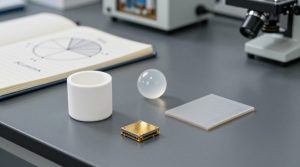
High Temperature Boron Nitride Ceramic Structure
Boron Nitride Ceramic Side Dam for Steel Thin Strip Casting
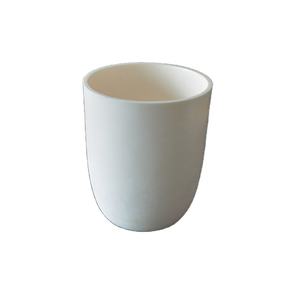
Boron Nitride Ceramics Graphite Electrode Insulate Tube
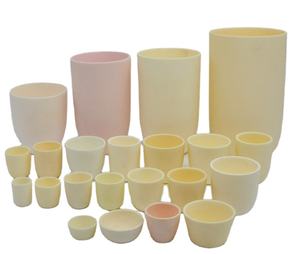
High Quality Boron Nitride Ceramics for Efficiency
Boron Nitride Insulating Ceramics for Plasma Jet Furnace