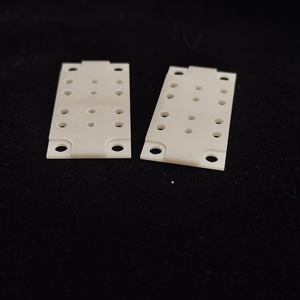
Next-Generation Ceramics: Unlocking Superior Properties for Industry

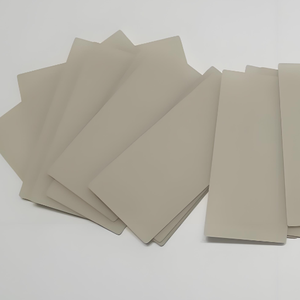
PRODUCT PARAMETERS
Description
Overview of Aluminum Nitride Powder as Filler in Plastics to Improve Thermal Conductivity
Aluminum Nitride (AlN) is a premier technical ceramic engineered for exceptional thermal management and electrical insulation. Its standout feature is its very high thermal conductivity, rivaling that of metals like beryllium oxide but without the toxicity, making it the material of choice for high-power and high-frequency electronic applications.
Features of Aluminum Nitride Powder as Filler in Plastics to Improve Thermal Conductivity
- Very High Thermal Conductivity: Excellent heat dissipation (140-180 W/mK), critical for managing thermal loads in electronics.
- Electrical Insulator: Superior dielectric properties and high electrical resistivity.
- Coefficient of Thermal Expansion (CTE) Matching Silicon: Closely matches the CTE of silicon chips, minimizing thermal stress in semiconductor packaging.
- Non-Toxic: A safe alternative to toxic beryllium oxide (BeO) ceramics.
- Good Mechanical Strength: Possesses adequate strength and hardness for structural support in electronic packages.
Specification of Aluminum Nitride Powder as Filler in Plastics to Improve Thermal Conductivity
Aluminum Nitride Powder as a Filler for Thermally Conductive Plastics
Why Use Aluminum Nitride?
Plastics are light and easy to shape, but they do not move heat well. This limits their use in electronics, LED lighting, and power systems where heat must escape quickly. Adding aluminum nitride (AlN) powder solves this problem. AlN has high thermal conductivity—much better than most ceramic fillers—and it is also electrically insulating. That means it helps pull heat away without causing short circuits.
Key Features of Our AlN Powder
Our aluminum nitride powder is made for use in plastics like epoxy, silicone, polyamide, and PPS. It has:
– High purity: Over 99% AlN content to ensure consistent performance
– Fine particle size: Average diameter between 1–5 microns for smooth mixing and even dispersion
– Low oxygen content: Less than 1% to prevent thermal degradation during processing
– Spherical morphology: Round particles improve flow and reduce viscosity in the final compound
These traits help manufacturers get better thermal paths inside plastic parts without hurting mechanical strength or processability.
How It Works in Plastic Compounds
When mixed into a polymer matrix, AlN particles form networks that let heat travel faster through the material. Even at moderate loadings—typically 30% to 60% by weight—the composite shows a big jump in thermal conductivity. At the same time, electrical insulation stays strong, which is critical for safety in electronic housings and heat sinks.
The powder blends well with standard compounding equipment. No special handling is needed beyond basic moisture control, since AlN can react slightly with water over time. Store it in a dry place and use it within recommended shelf life for best results.
This filler gives engineers a reliable way to design cooler-running, longer-lasting plastic components for demanding thermal management tasks.
Applications of Aluminum Nitride Powder as Filler in Plastics to Improve Thermal Conductivity
Aluminum Nitride Powder as a Filler in Plastics
Why Use Aluminum Nitride?
Plastics are light and easy to shape, but they do not move heat well. This limits their use in electronics, LED lights, and other parts that get hot. Adding aluminum nitride (AlN) powder helps solve this problem. AlN is a ceramic material that carries heat very well—much better than most plastics.
How It Works
When mixed into plastic, aluminum nitride forms paths for heat to travel through. These paths let heat move away from sensitive parts faster. The plastic stays cooler and works better for longer. Unlike some metal fillers, AlN does not conduct electricity. This makes it safe to use in electronic devices where electrical insulation matters.
Key Benefits
– High thermal conductivity: AlN moves heat efficiently without raising the weight too much.
– Electrical insulation: It keeps electricity from flowing where it should not.
– Stable performance: AlN resists heat and chemicals, so the plastic stays strong over time.
– Fine particle size: Modern AlN powders are very small and mix evenly into plastic resins.
Manufacturers add AlN powder during standard plastic processing steps like injection molding or extrusion. The amount used depends on how much heat the final part must handle. Even small amounts can make a big difference.
Common Uses
You will find AlN-filled plastics in many high-tech products:
– Heat sinks and housings for power electronics
– LED lamp bases and reflectors
– Connectors and circuit boards that need cooling
– Automotive sensors and control units
These applications need materials that stay cool, stay safe, and last long. Aluminum nitride powder gives plastic the right balance of properties to meet those needs.

Company Profile
Synthetic-chemical. focus on the research and development, production and sales of ceramic products, serving the electronics, ceramics, chemical and other industries. Since its establishment in 2015, the company has been committed to providing customers with the best products and services, and has become a leader in the industry through continuous technological innovation and strict quality management.
Our products includes but not limited to Aluminum Nitride, Aluminum Oxide, Boron Carbide, Boron Nitride, Ceramic Crucible, ect. If you are interested in any type of these, please feel free to contact us.

Payment Methods
T/T, Western Union, Paypal, Credit Card etc.
Shipment Methods
By air, by sea, by express, as customers request.
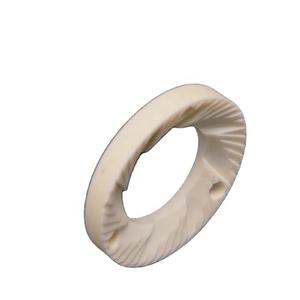
5 FAQs of Aluminum Nitride Powder as Filler in Plastics to Improve Thermal Conductivity
Aluminum Nitride Powder as Filler in Plastics – Top 5 FAQs
What is aluminum nitride powder used for in plastics?
Aluminum nitride (AlN) powder is added to plastics to help them move heat better. Many regular plastics trap heat. Adding AlN lets the plastic spread heat faster. This is useful in electronics, LED lights, and car parts where heat control matters.
Why choose aluminum nitride over other fillers?
AlN has high thermal conductivity but does not conduct electricity. That’s a big plus. Some fillers like metals boost heat flow but also carry electric current, which can cause short circuits. AlN avoids this risk. It also stays stable at high temperatures and works well with many types of plastic.
How much AlN powder should be added to plastic?
The right amount depends on the plastic type and the needed performance. Usually, 10% to 30% by weight gives good results. Too little may not help much. Too much can make the plastic hard to shape or brittle. Always test small batches first.
Does AlN affect the plastic’s mechanical strength?
It can. Adding filler often changes how strong or flexible the plastic is. In some cases, AlN improves stiffness. In others, it may reduce impact resistance. The final effect depends on particle size, how well it mixes, and the base plastic used.
Is aluminum nitride safe to handle?
AlN powder is generally safe when handled properly. However, fine powders can irritate eyes, skin, or lungs. Use gloves, goggles, and a mask when working with it. Keep it dry—moisture can cause it to release ammonia gas. Store in sealed containers away from water.
REQUEST A QUOTE
RELATED PRODUCTS
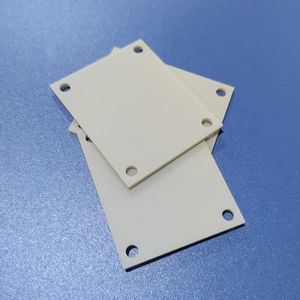
High Performance Aluminum Nitride Ceramics for Custom Manufacturing Solutions
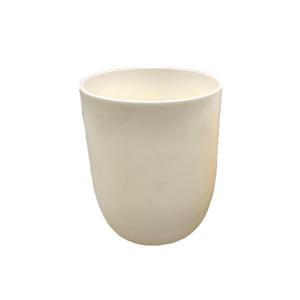
High Quality Customized Aluminum Nitride Ceramic Plate for Optical Applications
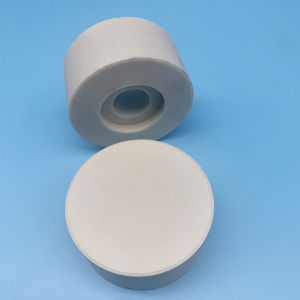
High Thermal Conductivity Polished Aluminum Nitride Plate Ceramic Substrate
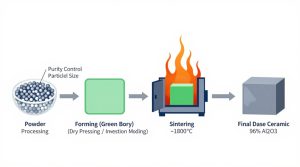
Hot Pressing Boron Nitride Ceramic Burning Plate for Aluminum Nitride Substrate Production
99.99% High Purity Aluminum Nitride Ceramics by Gravel Molding and Machining