Next-Generation Ceramics: Unlocking Superior Properties for Industry

PRODUCT PARAMETERS
Description
Overview of High Precision Boron Nitride Structural Ceramics
Boron Nitride (BN) exists in multiple polymorphs, with Hexagonal Boron Nitride (h-BN) being the most common ceramic form. Often called “white graphite” due to its similar layered, lubricious structure, it is distinguished by its exceptional thermal stability, electrical insulation, and chemical inertness, even at extreme temperatures.
Features of High Precision Boron Nitride Structural Ceramics
- High Thermal Conductivity & Excellent Electrical Insulation: Unique combination that allows it to conduct heat like a metal but insulate like a ceramic.
- Outstanding Thermal Shock Resistance: Can be heated and cooled rapidly without cracking.
- Natural Lubricity: Exhibits low friction and anti-stick properties, even at high temperatures.
- Chemically Inert: Resists wetting by and reaction with most molten metals, slags, and glasses.
- Machinable: Unlike most advanced ceramics, h-BN in its solid form can be machined to precision tolerances using conventional carbide tooling.
Specifications of High Precision Boron Nitride Structural Ceramics
High Precision Boron Nitride Structural Ceramics– Technical Specifications
Material Structure
These porcelains are made from high-purity hexagonal boron nitride (h-BN). The boron nitride content is usually over 99%. Additives are kept to a minimum to preserve thermal and electric performance.
Physical Qualities
Density: 2.1– 2.3 g/cm ³.
Solidity: 2 on the Mohs scale.
Color: White or beige.
Porosity: Much less than 5%, depending on the grade.
The product is lightweight yet solid for its course. It equipments conveniently without splitting, that makes it excellent for complex shapes.
Thermal Efficiency
Maximum Usage Temperature Level: As much as 1000 ° C in air, over 2000 ° C in inert atmospheres.
Thermal Conductivity: 30– 60 W/m · K (alongside pressing instructions).
Thermal Development Coefficient: ~ 2 × 10 ⁻⁶/ ° C (from 25 ° C to
800 ° C). Boron nitride remains stable under quick temperature adjustments. It stands up to thermal shock much better than most porcelains.
Electric Features
Dielectric Stamina: > 30 kV/mm.
Quantity Resistivity: > 10 ¹⁴ Ω · centimeters at room temperature level.
Dielectric Consistent: 3.5– 4.0 (at 1 MHz).
It works as an exceptional electric insulator even at heats. This makes it useful in electronic devices and high-voltage applications.
Mechanical Toughness
Flexural Toughness: 60– 100 MPa.
Compressive Stamina: 200– 300 MPa.
While not as tough as alumina or silicon carbide, it supplies great stamina for non-load-bearing structural parts. Its lubricity decreases wear in relocating parts.
Chemical Resistance
Boron nitride does not react with most liquified steels, including aluminum, zinc, and iron. It additionally withstands attack from acids, antacid, and several commercial gases. Nonetheless, it oxidizes gradually above 800 ° C in air.

Applications of High Precision Boron Nitride Structural Ceramics
Applications of High Accuracy Boron Nitride Structural Ceramics
Electronic Devices and Semiconductor Manufacturing
High precision boron nitride ceramics are extensively used in electronics. Their superb electrical insulation and thermal stability make them perfect for taking care of sensitive elements. In semiconductor manufacturing, these ceramics work as protecting parts in wafer handling tools. They withstand heats without flawing or releasing impurities. This aids preserve clean, steady problems during chip construction.
Aerospace and Defense Systems
These porcelains likewise play a key function in aerospace applications. They withstand extreme heat and mechanical anxiety. Elements like radomes, rocket nose cones, and thermal shields use boron nitride for its lightweight nature and resistance to thermal shock. The product maintains its shape and efficiency also under rapid temperature changes, which is crucial in trip systems.
Industrial Processing Equipment
In industrial settings, boron nitride structural ceramics work as liners, crucibles, and nozzles. They do not respond with liquified steels or hostile chemicals. This makes them ideal for steel casting, glass creating, and chemical vapor deposition processes. Their smooth surface minimizes sticking and alleviates cleaning, improving efficiency and item quality.
Medical and Scientific Instruments
Precision instruments in labs and medical tools gain from boron nitride’s purity and biocompatibility. It is utilized in X-ray tubes, laser elements, and example holders. The product does not conflict with delicate dimensions and stays secure under repeated sanitation. Its non-toxic nature guarantees safety and security in clinical environments.
Energy and Power Equipments
In power applications, these porcelains support high-temperature operations in fuel cells, atomic power plants, and power electronic devices. They offer dependable insulation while managing warmth effectively. Their sturdiness under radiation and harsh conditions expands tools life and reduces upkeep needs.

Company Profile
Synthetic-chemical focus on the research and development, production and sales of ceramic products, serving the electronics, ceramics, chemical and other industries. Since its establishment in 2015, the company has been committed to providing customers with the best products and services, and has become a leader in the industry through continuous technological innovation and strict quality management.
Our products includes but not limited to Aluminum Nitride, Aluminum Oxide, Boron Carbide, Boron Nitride, Ceramic Crucible, ect. If you are interested in any type of these, please feel free to contact us.

Payment Methods
T/T, Western Union, Paypal, Credit Card etc.
Shipment Methods
By air, by sea, by express, as customers request.
5 FAQs of High Precision Boron Nitride Structural Ceramics
Frequently Asked Questions About High Precision Boron Nitride Structural Ceramics
What makes boron nitride ceramics so special?
Boron nitride ceramics stand out because they handle extreme heat without breaking down. They also resist chemical attacks and do not conduct electricity. These traits make them ideal for tough industrial jobs where other materials fail.
Where are these ceramics commonly used?
You’ll find them in semiconductor manufacturing, aerospace parts, and high-temperature lab equipment. Their stability at high heat and electrical insulation properties suit precision applications like crucibles, insulators, and thermal management systems.
How precise can these components be made?
Modern machining lets us shape boron nitride ceramics to very tight tolerances—often within a few microns. This level of accuracy ensures reliable performance in sensitive setups, such as wafer handling tools or laser systems.
Are they brittle or easy to break?
Like most ceramics, boron nitride is hard but can crack under sharp impact. However, it has better thermal shock resistance than many alternatives. With proper design and handling, it lasts long even in demanding conditions.
Can you customize shapes and sizes?
Yes. We offer custom machining based on your drawings or specs. Whether you need simple blocks or complex geometries, we can produce parts that match your exact needs while keeping the material’s key benefits intact.
REQUEST A QUOTE
RELATED PRODUCTS
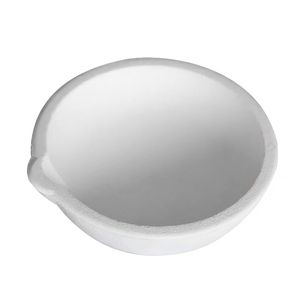
Boron Nitride Ceramic Crucible for Melting Glasses
Boron Nitride Composite Ceramic Hexagonal Parts
Hot Pressed Boron Nitride Ceramic Location Pin High Thermal Conductive
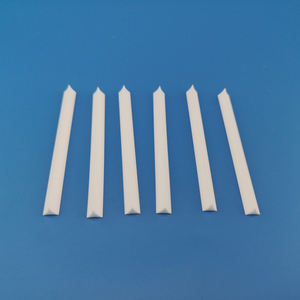
High Temperature Boron Nitride Ceramic Stick
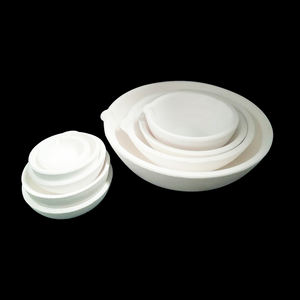
Boron Nitride Ceramics Evaporation Boats for Aluminium Metallizing