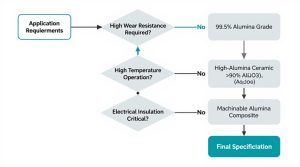
Next-Generation Ceramics: Unlocking Superior Properties for Industry

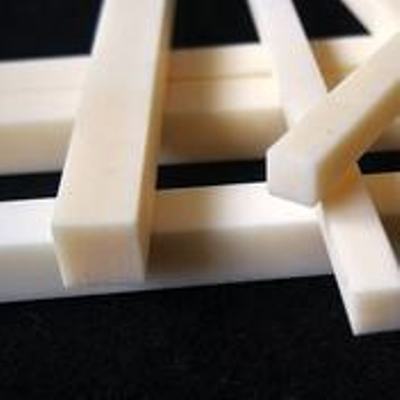
PRODUCT PARAMETERS
Description
Overview of 96%/99.6% Alumina (Al2O3) Ceramic Substrate for Thin/Thick Film Circuits
Alumina Ceramic, or Aluminum Oxide (Al₂O₃), is the most widely used and versatile advanced ceramic material. Known for its excellent balance of mechanical, thermal, and electrical properties, it is a cost-effective solution for a vast array of demanding industrial applications. Alumina components are produced in purity levels ranging from 85% to 99.9%, with properties enhancing as purity increases.
Features of 96%/99.6% Alumina (Al2O3) Ceramic Substrate for Thin/Thick Film Circuits
- High Hardness & Wear Resistance: Offers exceptional resistance to abrasion and mechanical wear.
- Excellent Electrical Insulation: Maintains high electrical resistivity even at elevated temperatures.
- Good Thermal Conductivity: (For a ceramic) effectively dissipates heat, especially in higher purity grades.
- High Compressive Strength: Capable of withstanding significant mechanical loads.
- Chemical Inertness: Highly resistant to corrosion from acids, alkalis, and molten metals.
- Cost-Effectiveness: Provides superior performance at a lower cost compared to many other technical ceramics.
Specifications of 96%/99.6% Alumina (Al2O3) Ceramic Substrate for Thin/Thick Film Circuits
Right here is the product web content regarding alumina ceramic substratums. Alumina ceramic substrates are special plates. These plates lug electronic circuits. They use either slim film or thick movie modern technology. The material is aluminum oxide. We offer 2 main types. One type has 96% alumina content. The various other kind has 99.6% alumina web content. Both types serve vital duties in electronics.
96% alumina substratums are very usual. They offer good performance. They set you back much less than the purer type. These substratums handle warm well. They relocate heat effectively. They are strong mechanically. They withstand damaging. They have great electric insulation. They stop power from dripping. The surface area is normally smooth. This level of smoothness helps make circuits. It enables specific printing or deposition.
99.6% alumina substratums are greater purity. They have better residential properties in general. They move warm also much better than 96% alumina. This is necessary for effective tools. They are more powerful mechanically. They resist use and harm much better. Their electric insulation transcends. They handle high voltages well. The surface is smoother than 96% alumina. This additional level of smoothness is vital for great lines. It is required for innovative circuit designs. The material increases and contracts less with temperature modifications. This dimensional security is crucial for integrity.
Both types stand up to chemical attack. They do not quickly rust. They work at high temperatures. They do not melt or weaken conveniently. The surface area finish is managed. It is determined in Ra values. This makes sure good bonding for metal layers. They collaborate with various metals. These consist of gold, silver, copper. This is crucial for making calls and traces. These substrates are made use of in lots of areas. Examples are power modules. They remain in crossbreed circuits. They offer in LED packaging. They operate in sensors. They are discovered in laser parts. They are important for requiring electronics. They give a secure base. This base supports complex wiring.
Applications of 96%/99.6% Alumina (Al2O3) Ceramic Substrate for Thin/Thick Film Circuits
Alumina ceramic substratums are essential products in electronics. They provide solid efficiency for slim film and thick movie circuits. Alumina, or Al2O3, comes generally in 96% and 99.6% purity qualities. Each quality matches different demanding applications. The high purity influences vital residential or commercial properties like thermal conductivity and stamina.
96% alumina is commonly used. It offers a great equilibrium of price and efficiency. This material works well for numerous standard thick film circuits. Believe resistors, capacitors, and crossbreed circuits. Its surface is smooth enough for accurate screen printing. It deals with the firing procedure accurately. Numerous customer electronics utilize circuits on 96% alumina boards. Automotive sensors commonly rely on them as well. They sustain severe under-hood problems.
99.6% alumina actions up the efficiency. It has greater purity. This means better thermal conductivity. Warm moves away from elements faster. Electrical insulation enhances considerably. The product is stronger mechanically. Its surface coating is smoother and much more regular. This state-of-the-art alumina is crucial for innovative thin film circuits. These circuits require ultra-precise deposition techniques. Semiconductor packaging uses 99.6% alumina substratums often. High-power modules depend upon them to handle warmth. RF and microwave parts take advantage of the steady dielectric residential properties. The product minimizes signal loss at high frequencies. LED plans utilize it since it doesn’t yellow and spreads out warm well. Medical devices choose it for dependability and biocompatibility. Aerospace applications demand its robustness.

Company Profile
Synthetic-chemical focus on the research and development, production and sales of ceramic products, serving the electronics, ceramics, chemical and other industries. Since its establishment in 2015, the company has been committed to providing customers with the best products and services, and has become a leader in the industry through continuous technological innovation and strict quality management.
Our products includes but not limited to Aluminum Nitride, Aluminum Oxide, Boron Carbide, Boron Nitride, Ceramic Crucible, ect. If you are interested in any type of these, please feel free to contact us.

Payment Methods
T/T, Western Union, Paypal, Credit Card etc.
Shipment Methods
By air, by sea, by express, as customers request.
5 FAQs of 96%/99.6% Alumina (Al2O3) Ceramic Substrate for Thin/Thick Film Circuits
What are alumina ceramic substrates?
Alumina ceramic substrates are flat plates made mostly from aluminum oxide (Al2O3). They form the base material for building thin or thick film circuits. These circuits are common in electronics.
Why use alumina ceramic for circuits?
Alumina ceramic works well for circuits needing high performance. It handles heat very effectively. It also has good electrical insulation properties. This stops electricity leaking where it shouldn’t. The material stays stable even when things get hot.
What key properties do they offer?
These substrates bring several important benefits. They transfer heat away from electronic components very efficiently. They are strong and rigid, providing a solid base. Alumina resists chemical attack well. It also expands very little when temperatures change.
Where are these substrates commonly used?
You find them in many power electronics and radio frequency (RF) devices. They are vital inside power modules controlling motors or converting power. RF components like filters and amplifiers often use them too. Automotive electronics and LED lighting rely on these substrates.
How does 96% vs. 99.6% purity matter?
The purity level changes performance. Higher purity (99.6% Al2O3) transfers heat even better. Its surface is smoother, important for fine circuit lines. It also gets stronger. However, 99.6% alumina costs more. 96% alumina offers good performance at a lower price for less demanding uses.
REQUEST A QUOTE
RELATED PRODUCTS
Zirconia-Gravel Crafted Alumina Ceramic Basket Gemstone
Low Sodium White Fused Corundum for Refractory
High Purity Square Alumina Ceramic Sheet for Sintering – 170x130x4.1mm
Low Maintenance, High Durability Custom Alumina Ceramic Shaft
Professional Choice for Catalyst Preparation: Alumina Microspheres