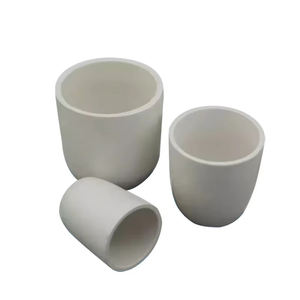
Next-Generation Ceramics: Unlocking Superior Properties for Industry

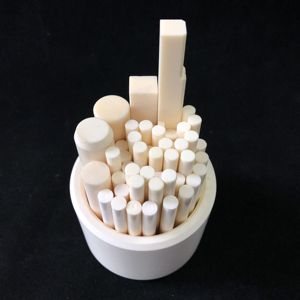
PRODUCT PARAMETERS
Description
Overview of Spherical Alumina Powder for Thermal Interface Materials (EMC, CCL)
Alumina Ceramic, or Aluminum Oxide (Al₂O₃), is the most widely used and versatile advanced ceramic material. Known for its excellent balance of mechanical, thermal, and electrical properties, it is a cost-effective solution for a vast array of demanding industrial applications. Alumina components are produced in purity levels ranging from 85% to 99.9%, with properties enhancing as purity increases.
Features of Spherical Alumina Powder for Thermal Interface Materials (EMC, CCL)
- High Hardness & Wear Resistance: Offers exceptional resistance to abrasion and mechanical wear.
- Excellent Electrical Insulation: Maintains high electrical resistivity even at elevated temperatures.
- Good Thermal Conductivity: (For a ceramic) effectively dissipates heat, especially in higher purity grades.
- High Compressive Strength: Capable of withstanding significant mechanical loads.
- Chemical Inertness: Highly resistant to corrosion from acids, alkalis, and molten metals.
- Cost-Effectiveness: Provides superior performance at a lower cost compared to many other technical ceramics.
Specifications of Spherical Alumina Powder for Thermal Interface Materials (EMC, CCL)
Specs of Round Alumina Powder for Thermal User Interface Products
Fragment Sizes And Shape
Round alumina powder functions a round bit shape. This shape aids the powder flow conveniently and load securely in thermal user interface products. The average fragment size varies from 0.5 to 40 micrometers. A narrow dimension circulation makes certain consistent performance during blending and application.
Thermal Conductivity
This powder provides high thermal conductivity, commonly between 28 and 35 W/m · K. Its round framework develops reliable heat transfer courses when utilized in epoxy molding compounds (EMC) or copper-clad laminates (CCL). Good thermal monitoring keeps digital gadgets great and trusted.
Pureness and Composition
The product is made of high-purity aluminum oxide (Al two O THREE), with pureness degrees over 99.9%. Reduced levels of contaminations like sodium, iron, and silica avoid unwanted reactions and maintain electrical insulation. This makes it risk-free for usage in sensitive electronic devices.
Density and Surface Area
Real thickness is about 3.95 g/cm ³. The particular surface remains reduced– typically under 5 m TWO/ g– many thanks to the smooth, rounded fragments. A low surface area minimizes resin demand in compounds, which aids lower total material costs.
Wetness and pH
Dampness content is kept below 0.1% to prevent problems throughout high-temperature processing. The powder has a neutral pH, commonly in between 6.5 and 7.5. This nonpartisanship sustains stable blending with usual polymer matrices and prevents corrosion in final products.
Applications
Round alumina powder is excellent for thermal user interface materials utilized in EMC and CCL production. It enhances warm dissipation in power components, LED bundles, and published circuit card. Its smooth surface area decreases wear on handling devices and ensures consistent filler diffusion.
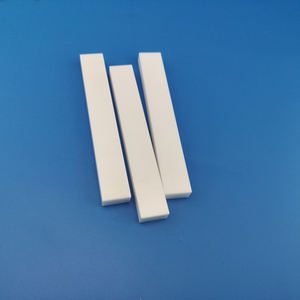
Applications of Spherical Alumina Powder for Thermal Interface Materials (EMC, CCL)
Applications of Spherical Alumina Powder in Thermal Interface Products
Why Spherical Alumina Works Well
Spherical alumina powder is extensively used in thermal interface products (TIMs) as a result of its unique form and properties. The round particles pack securely together. This creates a smooth surface that helps heat move rapidly and equally. Unlike irregular powders, spherical alumina lowers voids in between fragments. Less voids suggest far better thermal efficiency.
Use in EMC (Epoxy Molding Compounds)
In EMC, spherical alumina serves as a filler to enhance heat dissipation. Digital bundles produce heat during procedure. If this warm stays caught, it can damage components. Adding round alumina assists draw warm far from delicate parts. The powder also maintains the molding substance steady during manufacturing. It moves quickly right into mold and mildews without obstructing or clumping. This causes less issues and higher production yields.
Usage in CCL (Copper Clad Laminates)
Copper attired laminates are key products for published circuit boards. They require solid thermal administration to remain trusted. Round alumina is blended right into the resin layer of CCL to boost thermal conductivity. At the very same time, it preserves excellent electric insulation. This equilibrium is vital– electronics need to perform warm yet not electrical power where it’s not wanted. The smooth shape of the particles additionally helps keep the laminate flat and uniform. That makes it much easier to develop great circuit patterns on top.
Total Advantages
Round alumina powder enhances thermal efficiency without harming processability. It works well in both EMC and CCL since it blends efficiently, fills area successfully, and relocates warm effectively. Its regular size and shape give manufacturers predictable outcomes set after set. As gadgets obtain smaller sized and more powerful, managing warmth ends up being much more essential. Spherical alumina provides a functional remedy that fits today’s high-performance demands.

Company Profile
Synthetic-chemical focus on the research and development, production and sales of ceramic products, serving the electronics, ceramics, chemical and other industries. Since its establishment in 2015, the company has been committed to providing customers with the best products and services, and has become a leader in the industry through continuous technological innovation and strict quality management.
Our products includes but not limited to Aluminum Nitride, Aluminum Oxide, Boron Carbide, Boron Nitride, Ceramic Crucible, ect. If you are interested in any type of these, please feel free to contact us.

Payment Methods
T/T, Western Union, Paypal, Credit Card etc.
Shipment Methods
By air, by sea, by express, as customers request.
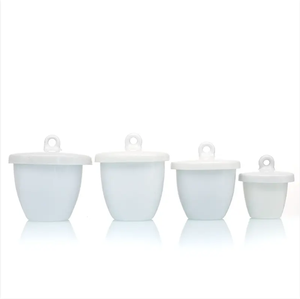
5 FAQs of Spherical Alumina Powder for Thermal Interface Materials (EMC, CCL)
Frequently Asked Questions About Spherical Alumina Powder for Thermal Interface Materials
What is spherical alumina powder used for?
Spherical alumina powder improves heat transfer in thermal interface materials. It is added to epoxy molding compounds (EMC) and copper-clad laminates (CCL) to help electronic devices stay cool. Its round shape lets it pack tightly, which boosts thermal performance without hurting electrical insulation.
Why choose spherical over irregular alumina?
Spherical particles flow better and fill space more evenly. This means you can add more powder into the material without making it too thick. Irregular shapes create gaps and raise viscosity, which makes processing harder. Round particles also reduce wear on equipment during mixing and molding.
Does it affect electrical properties?
No. Spherical alumina is an excellent electrical insulator. Even at high loading levels, it keeps the material non-conductive. This is critical for EMC and CCL applications where safety and reliability depend on strong dielectric strength.
How does particle size impact performance?
Smaller particles increase surface area, which can improve thermal contact but may raise viscosity. Larger particles lower viscosity but might leave small gaps. Many manufacturers use a mix of sizes to balance flow, packing density, and thermal conductivity.
Is spherical alumina compatible with standard manufacturing processes?
Yes. It works well with common methods like compression molding, transfer molding, and lamination. Its smooth surface and consistent shape help it blend easily into resins and pastes. This ensures stable production and consistent product quality across batches.
REQUEST A QUOTE
RELATED PRODUCTS
Ultrafine (<1μm) Alumina Microspheres for Micro-Nano Fabrication
High-Performance Alumina Ceramic Flange Pipe with Coil
95% Alumina Ceramic Mining Square Mosaic Tile with Dimples
Precision Machined 96%/99.6% Alumina (Al2O3) Ceramic Substrate Plate
Energy-Saving Alumina (Al2O3) Ceramic Sintering Tray