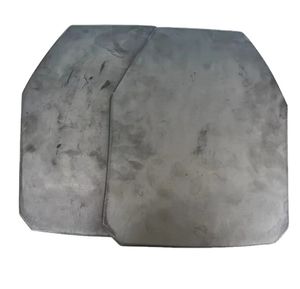
Next-Generation Ceramics: Unlocking Superior Properties for Industry

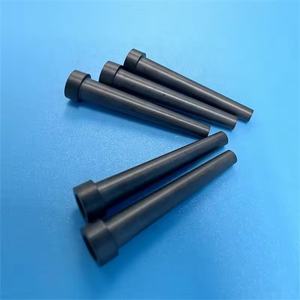
PRODUCT PARAMETERS
Description
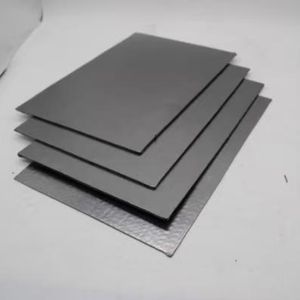
Overview of Hot Pressed Boron Carbide Ceramic for Nuclear Industry
Boron Carbide (B₄C) is an ultra-hard, lightweight ceramic renowned as one of the hardest man-made materials, second only to cubic boron nitride and diamond. This exceptional hardness, combined with its low density, makes it the premier choice for extreme armor and abrasive applications under demanding conditions.
Features of Hot Pressed Boron Carbide Ceramic for Nuclear Industry
- Extreme Hardness: One of the hardest known substances (~9.5 Mohs), offering superior wear and abrasion resistance.
- Very Low Density: Significantly lighter than metals and other armor ceramics like alumina and silicon carbide.
- High Neutron Absorption Cross-Section: Excellent at absorbing neutrons, making it vital for nuclear reactor control rods and shielding.
- Good Chemical Resistance: Inert to most acids and alkalis.
- High Melting Point: Maintains structural integrity at very high temperatures.
Specifications of Hot Pressed Boron Carbide Ceramic for Nuclear Industry
Hot pushed boron carbide ceramic is a crucial product for nuclear applications. It offers outstanding properties required for safety and performance. This material is made mainly from boron and carbon atoms. Its chemical formula is B4C. This structure gives it distinct capabilities.
Its hardness is extremely high. Boron carbide is just one of the hardest materials recognized. Only diamond and cubic boron nitride are harder. This solidity offers outstanding resistance to use and abrasion. Components last much longer also in extreme problems. Boron carbide is additionally extremely light-weight. It has a low details thickness. This helps in reducing the weight of nuclear assemblies.
Its most important attribute for nuclear usage is neutron absorption. Boron atoms capture neutrons effectively. This makes it best for managing nuclear reactions. It is used in control poles, closure poles, and neutron absorber plates. These parts manage reactor power degrees. They make certain safe shutdown during emergencies. Boron carbide additionally has great resistance to radiation damage. It keeps its properties under high neutron change. This is critical for long-lasting reliability.
The hot pushing production approach is key. Great boron carbide powder is pressed under high warmth and stress. This develops a thick, solid ceramic item. Warm pressed boron carbide has extremely low porosity. High density is necessary. It ensures consistent neutron absorption. It likewise improves mechanical strength and thermal security. These porcelains can take care of high temperatures found in activators.
Boron carbide components include pellets, cylinders, and plates. They suit certain reactor designs. The product holds up against the destructive reactor setting. It gives reputable lasting performance. Boron carbide ceramics are important for contemporary nuclear energy systems. They contribute dramatically to activator safety and security and control.
Applications of Hot Pressed Boron Carbide Ceramic for Nuclear Industry
Hot pushed boron carbide ceramic is a crucial product in nuclear applications. It is very difficult. It is likewise very light. These residential properties are useful. Yet its major value originates from one more function. Boron carbide absorbs neutrons highly. This makes it excellent for regulating nuclear responses. It stops the chain reaction effectively.
In nuclear reactors, boron carbide is frequently used in control rods. Control poles take care of the activator’s power degree. Workers place them into the activator core. They take in neutrons. This reduces the fission procedure. Employees can change the poles. This maintains the activator secure and secure. Boron carbide manages this job well. It lasts a very long time under radiation.
Boron carbide also serves as shielding. Radiation threatens. Safeguarding employees and equipment is crucial. Boron carbide obstructs neutrons. It is frequently incorporated with other materials. This creates reliable shields around activators or storage space locations. It assists contain radiation securely.
Another use remains in neutron detection instruments. These tools action neutron change. They are vital for keeping track of activator performance. Boron carbide can be part of these detectors. Neutrons connect with the boron atoms. This communication produces signals. These signals inform drivers about neutron degrees. Precise surveillance relies on dependable products. Boron carbide offers this dependability.
The material withstands rough problems. Heats inside activators prevail. Radiation levels are extreme. Boron carbide keeps its framework. It keeps taking in neutrons successfully. This lasting efficiency is important. Nuclear facilities need reliable elements. Hot pushed boron carbide ceramic provides this dependability. Its one-of-a-kind residential or commercial properties are unrivaled for certain nuclear jobs.

Company Profile
Synthetic-chemical focus on the research and development, production and sales of ceramic products, serving the electronics, ceramics, chemical and other industries. Since its establishment in 2015, the company has been committed to providing customers with the best products and services, and has become a leader in the industry through continuous technological innovation and strict quality management.
Our products includes but not limited to Aluminum Nitride, Aluminum Oxide, Boron Carbide, Boron Nitride, Ceramic Crucible, ect. If you are interested in any type of these, please feel free to contact us.

Payment Methods
T/T, Western Union, Paypal, Credit Card etc.
Shipment Methods
By air, by sea, by express, as customers request.
5 FAQs of Hot Pressed Boron Carbide Ceramic for Nuclear Industry
What is boron carbide ceramic used for in nuclear plants? It’s vital for radiation shielding. This material protects workers and equipment from dangerous radiation. You’ll find it in control rods and shielding blocks.
How does boron carbide stop radiation? It absorbs neutrons very well. Neutrons are a harmful type of radiation. Boron atoms catch these neutrons easily. This makes the environment safer.
Why pick boron carbide over other materials? It has a strong ability to absorb neutrons. Boron carbide is also very hard and tough. It lasts a long time in harsh conditions. This makes it a reliable choice.
Can boron carbide handle extreme heat? Yes, it handles high temperatures well. This is important in nuclear reactors. The material stays stable and doesn’t melt easily. It keeps working under intense heat.
How do we know boron carbide shielding is safe? We test it rigorously. Manufacturers check its quality and performance. Nuclear plants also perform regular inspections. These tests ensure it protects as expected.
REQUEST A QUOTE
RELATED PRODUCTS
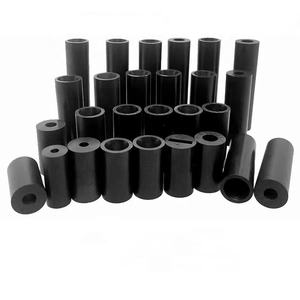
Chemically Stable Boron Carbide Ceramic Reinforcement
High Modulus Boron Carbide Single Curved Hexagon Plate
Metal Jacket High Hardness Boron Carbide Blasting Nozzles
Ultrapure High Strength Boron Carbide Square Plate
High Pressure Resistant Boron Carbide Sandblast Nozzle