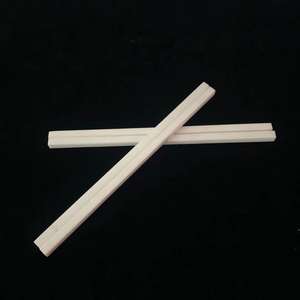
Next-Generation Ceramics: Unlocking Superior Properties for Industry

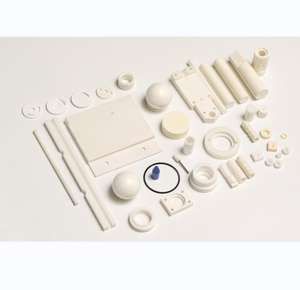
PRODUCT PARAMETERS
Description
Overview of Boron Nitride Ceramic Insulator High Temperature
Boron Nitride (BN) exists in multiple polymorphs, with Hexagonal Boron Nitride (h-BN) being the most common ceramic form. Often called “white graphite” due to its similar layered, lubricious structure, it is distinguished by its exceptional thermal stability, electrical insulation, and chemical inertness, even at extreme temperatures.
Features of Boron Nitride Ceramic Insulator High Temperature
- High Thermal Conductivity & Excellent Electrical Insulation: Unique combination that allows it to conduct heat like a metal but insulate like a ceramic.
- Outstanding Thermal Shock Resistance: Can be heated and cooled rapidly without cracking.
- Natural Lubricity: Exhibits low friction and anti-stick properties, even at high temperatures.
- Chemically Inert: Resists wetting by and reaction with most molten metals, slags, and glasses.
- Machinable: Unlike most advanced ceramics, h-BN in its solid form can be machined to precision tolerances using conventional carbide tooling.
Specifications of Boron Nitride Ceramic Insulator High Temperature
High-Temperature Boron Nitride Porcelain Insulator
Material and Structure
This insulator is made from high-purity boron nitride ceramic. The material has a hexagonal crystal structure, which provides it outstanding thermal security and electric insulation. It includes no binders or additives that could weaken efficiency at heats.
Temperature Resistance
The insulator functions accurately in settings approximately 2,000 ° C in inert environments. Also under extreme warm, it maintains its form and does not melt, crack, or break down. In air, it stays steady up to 1,000 ° C , making it appropriate for several industrial home heating applications.
Electric Properties
Boron nitride is a strong electrical insulator. Its quantity resistivity stays high also when temperature levels increase. This ensures constant efficiency in high-voltage and high-frequency systems. The dielectric strength is additionally great, which aids stop arcing or brief circuits.
Thermal Conductivity
Unlike many porcelains, boron nitride performs heat well while obstructing power. This combination allows the insulator to relocate heat away from delicate parts without developing electrical courses. Thermal conductivity reaches 30– 60 W/m · K , depending upon the grade and direction of the product.
Machinability and Form
The ceramic can be precision-machined into complex shapes like tubes, plates, poles, or custom components. It is soft sufficient to reduce with typical tools however strong sufficient to hold limited resistances during use. Completed components have smooth surface areas and sharp sides without damaging.
Chemical Security
It stands up to attack from molten steels, slags, and many harsh gases. It does not react with light weight aluminum, iron, or copper, also when these metals are liquid. This makes the insulator suitable for steel processing, semiconductor growth, and vacuum furnace configurations.
Secret Applications
Usual uses include crucibles, thermocouple protection tubes, plasma arc electrodes, and insulating supports in high-temperature heaters. It is additionally used in aerospace elements and lab tools where reliability under warm is vital.
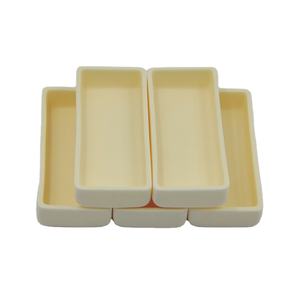
Applications of Boron Nitride Ceramic Insulator High Temperature
Applications of Boron Nitride Porcelain Insulators in High-Temperature Environments
Why Boron Nitride Attracts Attention
Boron nitride ceramic insulators take care of extreme warmth without breaking down. They remain steady even above 1,000 ° C. This makes them optimal for settings where most materials would stop working. Their thermal conductivity is low, so they obstruct warm transfer well. At the very same time, they withstand electrical present strongly, providing trusted insulation.
Use in Industrial Furnaces
These insulators are common inside high-temperature heaters. They support burner and different live components from steel structures. Due to the fact that boron nitride does not respond with molten metals or slags, it lasts longer in extreme heater problems. Upkeep expenses go down given that substitutes are required much less frequently.
Role in Semiconductor Manufacturing
Semiconductor manufacturing demands tidy, steady settings. Boron nitride insulators fit this requirement perfectly. They do not launch pollutants when heated up. Tools like wafer watercrafts, crucibles, and spacers usually utilize boron nitride components. These elements aid maintain exact temperature control and avoid electrical shorts throughout fragile processes.
Performance in Aerospace Systems
Aerospace applications require products that function under anxiety and warm. Boron nitride insulators safeguard sensing units and circuitry in jet engines and re-entry systems. They keep electrical signals clear while withstanding oxidation and thermal shock. Their lightweight nature also sustains fuel performance in airplane design.
Benefits Over Various Other Ceramics
Compared to alumina or zirconia, boron nitride uses much better machinability and thermal shock resistance. It can be shaped into complex types without breaking. Its surface stays smooth, decreasing endure relocating parts. Most significantly, it keeps its insulating power even when temperature levels rise. This dependability makes it a top selection anywhere warm and electrical power satisfy.

Company Profile
Synthetic-chemical focus on the research and development, production and sales of ceramic products, serving the electronics, ceramics, chemical and other industries. Since its establishment in 2015, the company has been committed to providing customers with the best products and services, and has become a leader in the industry through continuous technological innovation and strict quality management.
Our products includes but not limited to Aluminum Nitride, Aluminum Oxide, Boron Carbide, Boron Nitride, Ceramic Crucible, ect. If you are interested in any type of these, please feel free to contact us.

Payment Methods
T/T, Western Union, Paypal, Credit Card etc.
Shipment Methods
By air, by sea, by express, as customers request.
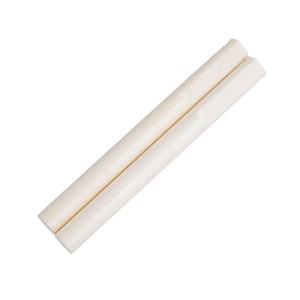
5 FAQs of Boron Nitride Ceramic Insulator High Temperature
Frequently Asked Questions: Boron Nitride Ceramic Insulator for High-Temperature Use
What is a boron nitride ceramic insulator?
A boron nitride ceramic insulator is made from boron nitride, a special material that stays stable at very high temperatures. It does not conduct electricity and can handle heat better than many other ceramics. This makes it ideal for use in extreme environments like furnaces or aerospace systems.
Why choose boron nitride over other ceramic insulators?
Boron nitride has excellent thermal stability and electrical insulation even above 1,000°C. It also resists thermal shock, meaning it won’t crack when temperature changes quickly. Unlike some ceramics, it remains non-reactive with molten metals and many chemicals, which adds to its reliability.
Can it be used in vacuum or inert atmospheres?
Yes. Boron nitride performs well in vacuum, nitrogen, argon, and other inert atmospheres. It does not outgas much and keeps its shape and properties under these conditions. That’s why it’s often used in semiconductor manufacturing and high-temperature lab equipment.
Is boron nitride easy to machine into custom shapes?
Yes. One advantage of boron nitride is that it can be machined using standard tools before final firing. This allows engineers to create complex parts like tubes, plates, or custom fixtures without needing expensive molds or processes.
How long does a boron nitride insulator last?
Its lifespan depends on the operating conditions. In clean, controlled high-temperature settings, it can last for years without degrading. It does not oxidize easily below 800°C in air, and in inert environments, it maintains performance even longer. Regular inspection helps ensure safe, continuous use.
REQUEST A QUOTE
RELATED PRODUCTS
Boron Nitride Ceramic Plate Fan Shaped
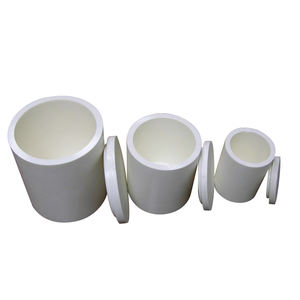
Boron Nitride Ceramic Plate Disc High Temperature Resistance
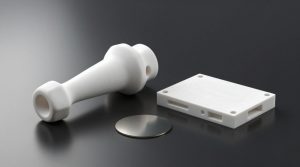
Boron Nitride Ceramic Parts High Thermal Conductivity Corrosion Resistance
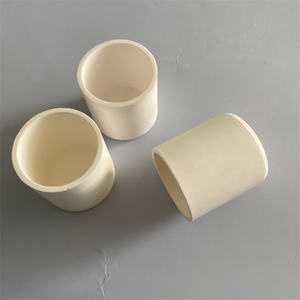
Custom Boron Nitride Ceramic Sagger Low Wear Rate
Custom Boron Nitride Ceramic Structural Parts for High Temperature Sintering