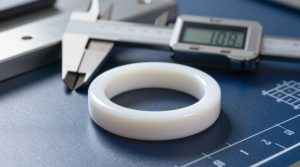
Next-Generation Ceramics: Unlocking Superior Properties for Industry

PRODUCT PARAMETERS
Description
Overview of Boron Nitride Ceramics Molding
Boron Nitride (BN) exists in multiple polymorphs, with Hexagonal Boron Nitride (h-BN) being the most common ceramic form. Often called “white graphite” due to its similar layered, lubricious structure, it is distinguished by its exceptional thermal stability, electrical insulation, and chemical inertness, even at extreme temperatures.
Features of Boron Nitride Ceramics Molding
- High Thermal Conductivity & Excellent Electrical Insulation: Unique combination that allows it to conduct heat like a metal but insulate like a ceramic.
- Outstanding Thermal Shock Resistance: Can be heated and cooled rapidly without cracking.
- Natural Lubricity: Exhibits low friction and anti-stick properties, even at high temperatures.
- Chemically Inert: Resists wetting by and reaction with most molten metals, slags, and glasses.
- Machinable: Unlike most advanced ceramics, h-BN in its solid form can be machined to precision tolerances using conventional carbide tooling.
Specifications of Boron Nitride Ceramics Molding
Specs of Boron Nitride Ceramics Molding
Product Make-up
Boron nitride porcelains are made generally from high-purity hexagonal boron nitride (h-BN). The product usually includes over 99% BN. Percentages of binders or sintering help might be added to support shaping and densification, however these are kept to a minimum to protect performance.
Physical Properties
These ceramics show exceptional thermal security. They remain solid also at temperature levels above 2000 ° C in inert ambiences. Their density usually varies from 1.8 to 2.1 g/cm FIVE, depending on the manufacturing approach. The shade is usually white or beige. Boron nitride ceramics are light-weight and easy to device into intricate shapes without cracking.
Thermal and Electric Qualities
Thermal conductivity is high along the pressing direction– frequently in between 30 and 60 W/m · K– however reduced vertical to it as a result of the layered crystal framework. They resist thermal shock quite possibly. Electrically, they work as strong insulators, with volume resistivity going beyond 10 ¹⁴ Ω · cm at area temperature. This makes them risk-free for usage near high-voltage parts.
Mechanical Performance
While not as hard as alumina or silicon carbide, boron nitride ceramics supply great machinability and moderate toughness. Flexural strength typically drops between 30 and 70 MPa. Their low coefficient of friction and non-wetting nature make them perfect for taking care of liquified metals like light weight aluminum or glass.
Common Forms and Resistances
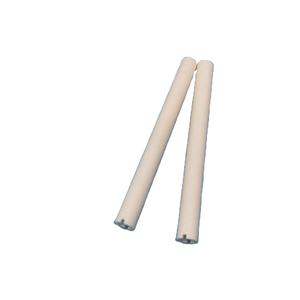
Standard built components consist of plates, poles, tubes, crucibles, and custom-made inserts. Dimensional tolerances typically stay within ± 0.1 mm for basic items. Tighter resistances are possible with post-machining. Surface surfaces can be smooth or textured based on application needs.
Environmental Resistance
Boron nitride ceramics do not react with the majority of acids, alkalis, or liquified salts. They continue to be secure in vacuum and inert gas atmospheres. Nevertheless, they oxidize gradually in air above 800 ° C, so long-term usage in oxygen-rich settings calls for safety measures.
Applications of Boron Nitride Ceramics Molding
Applications of Boron Nitride Ceramics Molding
High-Temperature Crucibles and Containers
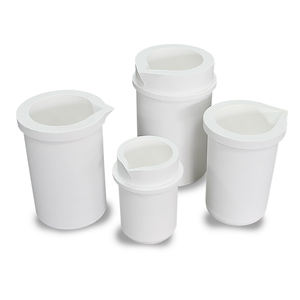
Boron nitride porcelains handle extreme warm without breaking down. They function well in crucibles utilized to melt metals like aluminum, zinc, and rare earth alloys. These ceramics do not react with liquified steel, so the end product stays pure. Their smooth surface area likewise makes it easy to pour out the liquid steel cleanly.
Mold And Mildew Linings for Precision Spreading
In accuracy casting, boron nitride mold and mildew liners aid shape complex components. The product releases castings easily due to the fact that it has low surface area energy. This decreases sticking and damage throughout removal. Components bring out fine information and smooth surfaces, which lowers added machining.
Insulators in Semiconductor Production
Boron nitride is electrically insulating however carries out warm well. This makes it perfect for usage in semiconductor production devices. It protects delicate elements from electrical disturbance while maintaining temperatures stable. Its pureness protects against contamination in cleanroom settings.
Nozzles and Parts for Glass Handling
Glass makers make use of boron nitride in nozzles, stirrers, and overviews. The ceramic stands up to moistening by molten glass, so it lasts longer than various other products. It also avoids introducing contaminations into the glass set, which helps maintain optical clearness and top quality.
Thermal Management in Aerospace Solutions
Aerospace systems require parts that stay solid under thermal stress. Boron nitride ceramics are light and steady at heats. They work as protecting supports or warm spreaders in sensors, radomes, and propulsion systems. Their efficiency stays consistent also during fast temperature adjustments.
Release Professionals and Coatings
Also as a finishing, boron nitride improves mold efficiency. Applied to metal or graphite mold and mildews, it produces a non-stick layer that holds up against duplicated heating cycles. This prolongs tool life and ensures regular part quality gradually. The covering is slim however reliable, adding little weight or mass.

Company Profile
Synthetic-chemical focus on the research and development, production and sales of ceramic products, serving the electronics, ceramics, chemical and other industries. Since its establishment in 2015, the company has been committed to providing customers with the best products and services, and has become a leader in the industry through continuous technological innovation and strict quality management.
Our products includes but not limited to Aluminum Nitride, Aluminum Oxide, Boron Carbide, Boron Nitride, Ceramic Crucible, ect. If you are interested in any type of these, please feel free to contact us.

Payment Methods
T/T, Western Union, Paypal, Credit Card etc.
Shipment Methods
By air, by sea, by express, as customers request.
5 FAQs of Boron Nitride Ceramics Molding
Frequently Asked Questions About Boron Nitride Ceramics Molding
What is boron nitride ceramics molding?
Boron nitride ceramics molding shapes boron nitride powder into solid parts. The process uses heat and pressure. It creates components that handle high temperatures and resist chemicals well.
Why choose boron nitride for molding?
Boron nitride stays stable at very high temperatures. It does not react with most metals or chemicals. It also conducts heat but blocks electricity. These traits make it ideal for demanding industrial uses.
What shapes can be made with this method?
You can mold simple blocks, tubes, plates, and custom parts. Complex geometries are possible too, but they may need special tooling. Design flexibility depends on the molding technique used.
How strong are molded boron nitride parts?
Molded boron nitride is not as hard as some other ceramics. Still, it offers good mechanical strength for high-heat applications. Its real advantage lies in thermal stability and chemical resistance, not impact toughness.
Are there different types of boron nitride for molding?
Yes. Hexagonal boron nitride (h-BN) is the most common type used in molding. It has a layered structure like graphite. This gives it excellent lubricity and thermal conductivity. Other forms exist but are less suited for standard molding processes.
REQUEST A QUOTE
RELATED PRODUCTS
Hot Pressing Boron Nitride Ceramic Insulating Disk Drilled
High Purity Boron Nitride Ceramic Disc for Industrial Applications
Boron Nitride Ceramic Heat Sink and Plate High Thermal Conductive
Boron Nitride Ceramics for Semiconductor Insulator
Hot Pressing Boron Nitride Ceramic Block Special Shaped