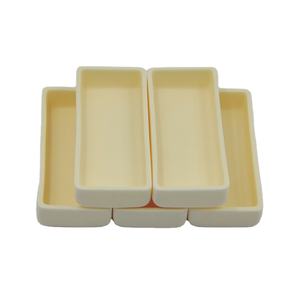
Next-Generation Ceramics: Unlocking Superior Properties for Industry

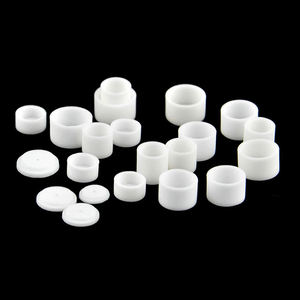
PRODUCT PARAMETERS
Description
Overview of High Temperature Boron Nitride Ceramic Plate for Industrial Applications
Boron Nitride (BN) exists in multiple polymorphs, with Hexagonal Boron Nitride (h-BN) being the most common ceramic form. Often called “white graphite” due to its similar layered, lubricious structure, it is distinguished by its exceptional thermal stability, electrical insulation, and chemical inertness, even at extreme temperatures.
Features of High Temperature Boron Nitride Ceramic Plate for Industrial Applications
- High Thermal Conductivity & Excellent Electrical Insulation: Unique combination that allows it to conduct heat like a metal but insulate like a ceramic.
- Outstanding Thermal Shock Resistance: Can be heated and cooled rapidly without cracking.
- Natural Lubricity: Exhibits low friction and anti-stick properties, even at high temperatures.
- Chemically Inert: Resists wetting by and reaction with most molten metals, slags, and glasses.
- Machinable: Unlike most advanced ceramics, h-BN in its solid form can be machined to precision tolerances using conventional carbide tooling.
Specifications of High Temperature Boron Nitride Ceramic Plate for Industrial Applications
High Temperature Boron Nitride Ceramic Plate– Industrial Grade Specs
Product Composition and Purity
Our boron nitride ceramic plates are made from high-purity hexagonal boron nitride (h-BN), typically over 99% pure. This makes certain excellent thermal security and chemical inertness. The material consists of minimal pollutants like boron oxide or metal residues, which helps keep performance in demanding atmospheres.
Thermal Performance
These plates withstand continual usage at temperatures as much as 1000 ° C in air and as much as 2800 ° C in inert atmospheres. They show extremely reduced thermal development, which indicates they stay dimensionally secure even under rapid heating or cooling down cycles. Their thermal conductivity is moderate– sufficient to spread warmth uniformly without conducting it too boldy.
Electric and Dielectric Characteristic
Boron nitride is a superior electrical insulator. Also at heats, it maintains strong dielectric toughness and volume resistivity. This makes the plates perfect for usage in high-voltage or RF applications where electrical seclusion is essential.
Mechanical Characteristics
The plates are machinable yet durable. They offer good compressive toughness and stand up to cracking under mechanical tension. While not as tough as alumina or silicon carbide, their self-lubricating surface minimizes wear during handling or setting up.
Chemical Resistance
These ceramics do not respond with many molten steels, slags, or acids. They stay steady when revealed to light weight aluminum, copper, zinc, and lots of glass structures. Nonetheless, they can deteriorate in strong oxidizing representatives over 800 ° C, so usage problems must be thought about.
Typical Industrial Uses
Typical applications consist of crucibles, insulators, heating system cellular linings, semiconductor wafer carriers, and plasma etch components. Their non-wetting surface and thermal shock resistance make them trusted in steel casting, glass processing, and high-temperature lab equipment.
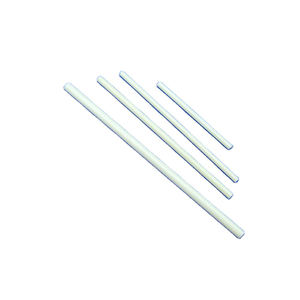
Applications of High Temperature Boron Nitride Ceramic Plate for Industrial Applications
High-Temperature Boron Nitride Porcelain Plates in Market
Warmth Resistance You Can Depend On
High-temperature boron nitride ceramic plates take care of severe heat without breaking down. They stay stable even above 2,000 ° C in inert ambiences. This makes them suitable for settings where regular materials would certainly melt or warp. Their thermal stability ensures constant efficiency under extreme problems.
Electric Insulation That Lasts
These plates work as strong electrical insulators. Also when warm, they block existing flow efficiently. This attribute is important in electronics making and high-voltage devices. Users rely on them to prevent short circuits and preserve safety and security during procedure.
Smooth Surface, Low Rubbing
Boron nitride has a normally unsafe surface area. It withstands sticking, which assists in metal casting and glass forming. Molten steels and warm glass slide off quickly, minimizing waste and cleansing time. The non-wetting building likewise extends the life of molds and tools.
Chemical Stability for Hard Settings
The plates do not react with the majority of acids, molten salts, or steels. They hold up well in destructive setups where various other ceramics stop working. This resistance makes them useful in chemical processing and semiconductor production, where pureness matters.
Light-weight Yet Sturdy
In spite of their stamina, boron nitride plates are lighter than many steel choices. This alleviates handling and installment in facility systems. Their mechanical strength sustains repeated thermal biking without splitting.
Common Industrial Makes Use Of
You’ll locate these plates in crucibles, furnace linings, and plasma arc nozzles. They serve as insulating spacers in burner and assistance components in sintering processes. Aerospace and protection fields additionally utilize them for thermal administration in high-stress components.

Company Profile
Synthetic-chemical focus on the research and development, production and sales of ceramic products, serving the electronics, ceramics, chemical and other industries. Since its establishment in 2015, the company has been committed to providing customers with the best products and services, and has become a leader in the industry through continuous technological innovation and strict quality management.
Our products includes but not limited to Aluminum Nitride, Aluminum Oxide, Boron Carbide, Boron Nitride, Ceramic Crucible, ect. If you are interested in any type of these, please feel free to contact us.

Payment Methods
T/T, Western Union, Paypal, Credit Card etc.
Shipment Methods
By air, by sea, by express, as customers request.
5 FAQs of High Temperature Boron Nitride Ceramic Plate for Industrial Applications
High Temperature Boron Nitride Ceramic Plate – Frequently Asked Questions
What is a high temperature boron nitride ceramic plate?
It is a flat piece made from boron nitride, a special ceramic material. This plate stays strong and stable even at very high temperatures—up to 2000°C in some cases. It does not melt, warp, or break easily under heat.
Why choose boron nitride over other ceramics?
Boron nitride has excellent thermal stability and electrical insulation. It also resists chemical attack from molten metals and slags. Unlike many ceramics, it won’t stick to most materials, making it ideal for molds, supports, and linings in harsh industrial settings.
Where are these plates commonly used?
They are used in metal casting, semiconductor manufacturing, and high-temperature furnaces. You’ll find them as crucible supports, insulating spacers, or protective barriers where heat resistance and non-reactivity are critical.
Can the plate handle rapid temperature changes?
Yes. Boron nitride ceramic plates have good thermal shock resistance. They can go from cold to hot quickly without cracking. This makes them reliable in processes that involve frequent heating and cooling cycles.
Is machining or custom shaping possible?
Absolutely. Even though it’s a ceramic, boron nitride is relatively soft compared to others like alumina. It can be cut, drilled, or shaped to fit specific equipment needs without requiring diamond tools in most cases. Just tell your supplier the size and shape you need.
REQUEST A QUOTE
RELATED PRODUCTS
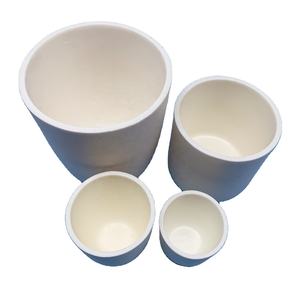
Boron Nitride Ceramic Tube Rod Plate Heat Sink Full
Boron Nitride Ceramic Shaft Rod for Geological Prospecting
Boron Nitride Ceramic Nozzles for Carbon Steel Melting
Boron Nitride Ceramic Spray Nozzle High Temperature Insulating
High Temperature Insulating Boron Nitride Ceramic Disc