Next-Generation Ceramics: Unlocking Superior Properties for Industry

PRODUCT PARAMETERS
Description
Overview of Hot Pressed Boron Nitride Ceramics
Boron Nitride (BN) exists in multiple polymorphs, with Hexagonal Boron Nitride (h-BN) being the most common ceramic form. Often called “white graphite” due to its similar layered, lubricious structure, it is distinguished by its exceptional thermal stability, electrical insulation, and chemical inertness, even at extreme temperatures.
Features of Hot Pressed Boron Nitride Ceramics
- High Thermal Conductivity & Excellent Electrical Insulation: Unique combination that allows it to conduct heat like a metal but insulate like a ceramic.
- Outstanding Thermal Shock Resistance: Can be heated and cooled rapidly without cracking.
- Natural Lubricity: Exhibits low friction and anti-stick properties, even at high temperatures.
- Chemically Inert: Resists wetting by and reaction with most molten metals, slags, and glasses.
- Machinable: Unlike most advanced ceramics, h-BN in its solid form can be machined to precision tolerances using conventional carbide tooling.
Specifications of Hot Pressed Boron Nitride Ceramics
Specs of Hot Pressed Boron Nitride Ceramics
Material Structure
Hot pressed boron nitride (HPBN) is made from high-purity hexagonal boron nitride powder. No additives or binders are made use of during production. This results in a dense, consistent structure with excellent thermal and electric buildings.
Physical Qualities
The density of HPBN usually varies from 2.0 to 2.1 g/cm SIX. Its hardness falls in between 2 and 3 on the Mohs range, making it soft adequate to equipment conveniently yet strong sufficient for demanding applications. The material appears white or off-white and keeps its shade also after long-term exposure to high temperatures.
Thermal Performance
HPBN handles warm quite possibly. It remains secure up to 2,000 ° C in inert ambiences and up to 1,000 ° C in air. Its thermal conductivity is anisotropic– greater parallel to the pressing direction (as much as 60 W/m ·K )and lower perpendicular to it (2– 30 W/m · K). The coefficient of thermal growth is low, around 1– 3 × 10 ⁻⁶/ K, which assists stop cracking under thermal cycling.
Electric and Chemical Behavior
This ceramic is an exceptional electrical insulator, also at elevated temperatures. Its dielectric strength goes beyond 15 kV/mm. HPBN withstands attack from the majority of liquified steels, slags, and acids. It does not respond with light weight aluminum, iron, or copper melts, making it optimal for crucibles and molds in metal handling.
Machinability and Creating
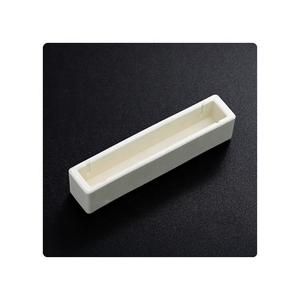
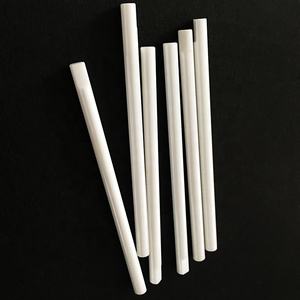
HPBN can be precision-machined right into intricate shapes like plates, tubes, poles, and custom parts. Requirement resistances of ± 0.05 mm are achievable without extra sintering. The material’s split framework permits clean cuts and smooth coatings using traditional tools.
Applications of Hot Pressed Boron Nitride Ceramics
Applications of Hot Pressed Boron Nitride Ceramics
High-Temperature Crucibles and Containers
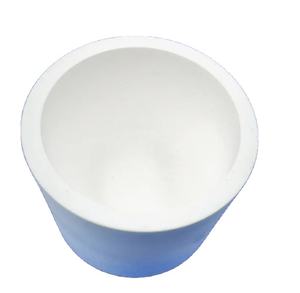
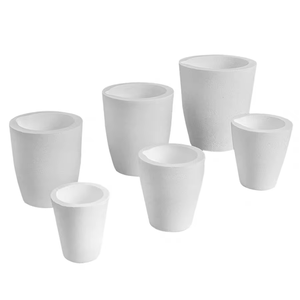
Hot pressed boron nitride porcelains take care of extreme heat without breaking down. They stay steady in temperature levels over 2,000 ° C. This makes them perfect for holding molten metals like light weight aluminum, zinc, and unusual planet alloys. Their non-wetting surface stops metal from sticking, so clean-up is very easy and contamination stays reduced.
Semiconductor Production Elements
These porcelains are electrically shielding yet perform heat well. That combination is unusual and useful in semiconductor production. Engineers use them for wafer chucks, diffusion tubes, and insulation parts inside heating systems. They do not launch bits or gases that can ruin sensitive processes.
Aerospace and Defense Parts
In aerospace systems, weight and performance matter a great deal. Hot pressed boron nitride is light yet strong at high temperatures. It functions well in radomes, thruster nozzles, and thermal defense systems. Its ability to stand up to thermal shock assists it endure quick home heating and cooling down cycles throughout flight.
Electrical Insulators in Rough Settings
Power electronics often run warm and face chemical exposure. Requirement insulators fall short under these conditions. Boron nitride porcelains keep working. They give reputable insulation in high-voltage tools, plasma gadgets, and commercial heaters. Their smooth surface likewise stands up to arcing and monitoring.
Mold and mildews and Needs Specialty Glass
Making optical or technical glass needs clean, precise mold and mildews. Hot pushed boron nitride offers a smooth, non-reactive surface. Glass does not stay with it, and the mold lasts much longer. This reduces waste and improves product high quality in lenses, fibers, and show glass manufacturing.

Company Profile
Synthetic-chemical focus on the research and development, production and sales of ceramic products, serving the electronics, ceramics, chemical and other industries. Since its establishment in 2015, the company has been committed to providing customers with the best products and services, and has become a leader in the industry through continuous technological innovation and strict quality management.
Our products includes but not limited to Aluminum Nitride, Aluminum Oxide, Boron Carbide, Boron Nitride, Ceramic Crucible, ect. If you are interested in any type of these, please feel free to contact us.

Payment Methods
T/T, Western Union, Paypal, Credit Card etc.
Shipment Methods
By air, by sea, by express, as customers request.
5 FAQs of Hot Pressed Boron Nitride Ceramics
Frequently Asked Questions About Hot Pressed Boron Nitride Ceramics
What is hot pressed boron nitride?
Hot pressed boron nitride is a high-performance ceramic made by heating and pressing boron nitride powder under controlled conditions. This process creates a dense, strong material with excellent thermal and electrical properties.
Why choose hot pressed over other forms of boron nitride?
Hot pressing gives the ceramic higher density and better mechanical strength than other methods like cold pressing or sintering alone. It also improves thermal conductivity and reduces porosity, making it more reliable in demanding applications.
Where are hot pressed boron nitride ceramics used?
These ceramics are common in aerospace, electronics, and metallurgy. They serve as insulators in high-temperature furnaces, crucibles for molten metal handling, and components in semiconductor manufacturing due to their stability and non-reactivity.
Can hot pressed boron nitride handle extreme temperatures?
Yes. It stays stable up to 2,000°C in inert atmospheres and does not melt or degrade easily. Its thermal shock resistance is also strong, so it can handle rapid temperature changes without cracking.
Is hot pressed boron nitride electrically conductive?
No. It acts as an electrical insulator even at very high temperatures. This makes it ideal for parts that must block current while managing heat, such as spacers, supports, or linings in electronic and thermal systems.
REQUEST A QUOTE
RELATED PRODUCTS
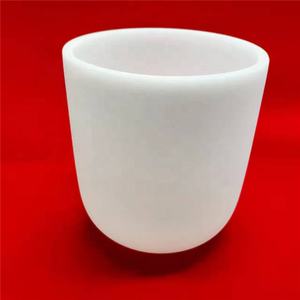
Hot Pressing Boron Nitride Ceramic Cylindrical Block Drilled
Hot Pressing Boron Nitride Ceramic Block Drilled
Boron Nitride Ceramic Bushing Low Thermal Expansion Threads
Excellent Machinability Boron Nitride Ceramic Hpbn Component
Ultra Smooth Boron Nitride Ceramic Plate for Precision Engineering