Next-Generation Ceramics: Unlocking Superior Properties for Industry

PRODUCT PARAMETERS
Description
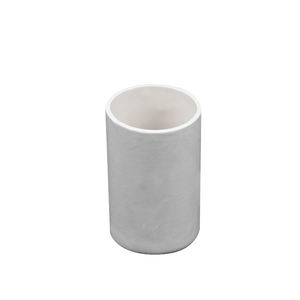
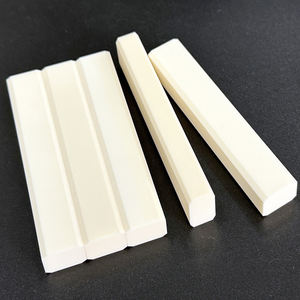
Overview of Hot Pressing Boron Nitride Ceramic Special Shaped Parts
Boron Nitride (BN) exists in multiple polymorphs, with Hexagonal Boron Nitride (h-BN) being the most common ceramic form. Often called “white graphite” due to its similar layered, lubricious structure, it is distinguished by its exceptional thermal stability, electrical insulation, and chemical inertness, even at extreme temperatures.
Features of Hot Pressing Boron Nitride Ceramic Special Shaped Parts
- High Thermal Conductivity & Excellent Electrical Insulation: Unique combination that allows it to conduct heat like a metal but insulate like a ceramic.
- Outstanding Thermal Shock Resistance: Can be heated and cooled rapidly without cracking.
- Natural Lubricity: Exhibits low friction and anti-stick properties, even at high temperatures.
- Chemically Inert: Resists wetting by and reaction with most molten metals, slags, and glasses.
- Machinable: Unlike most advanced ceramics, h-BN in its solid form can be machined to precision tolerances using conventional carbide tooling.
Specifications of Hot Pressing Boron Nitride Ceramic Special Shaped Parts
Specs of Hot Pressing Boron Nitride Porcelain Unique Shaped Components
Product Structure
These parts are made from high-purity hexagonal boron nitride (h-BN). The boron nitride web content is normally over 99%. No binders or additives are used during warm pushing. This guarantees excellent thermal and electric insulation residential or commercial properties.
Production Process
Warm pressing is the core method used to form these elements. Raw boron nitride powder is placed right into a graphite mold and mildew. It is after that heated under high stress in an inert ambience. This procedure produces thick, solid get rid of great grain structure and constant dimensions.
Trick Physical Residences
The completed parts show reduced thermal expansion and high thermal conductivity perpendicular to the pressing direction. They stand up to temperatures up to 2,000 ° C in inert settings. Their thickness typically ranges from 1.95 to 2.10 g/cm SIX. Mechanical strength improves due to the straightened microstructure developed during pushing.
Dimensional Accuracy and Tolerances
Special designed components can be machined to limited resistances. Requirement dimensional accuracy is ± 0.05 mm. For important applications, resistances can get to ± 0.01 mm after precision grinding. Complex geometries like nozzles, crucibles, insulators, and spacers are all possible.
Surface Complete
As-pressed surface areas typically have a roughness of Ra 1.6– 3.2 μm. Post-processing such as lapping or sprucing up can bring surface roughness to Ra 0.2 μm or much better. Smooth finishes help reduce particle shedding in cleanroom or semiconductor applications.
Electric and Chemical Efficiency
Boron nitride ceramics remain electrically insulating even at heats. They do not react with the majority of molten steels, salts, or slags. These components also withstand oxidation listed below 850 ° C and reveal outstanding dielectric stamina. Their non-wetting nature makes them ideal for managing responsive materials.
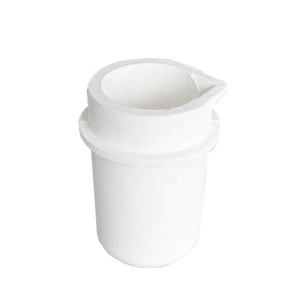
Applications of Hot Pressing Boron Nitride Ceramic Special Shaped Parts
Applications of Hot Pushing Boron Nitride Porcelain Special Shaped Components
High-Temperature Insulation Parts
Hot pushing boron nitride ceramic parts work well in severe warmth. They maintain their form and stamina also above 1,000 ° C. This makes them excellent for insulation in heaters, burner, and thermal guards. Their low thermal conductivity assists safeguard bordering devices from overheating.
Semiconductor Manufacturing Equipment
These unique shaped components are utilized inside semiconductor production equipments. They hold or sustain silicon wafers throughout high-temperature processes. Boron nitride does not respond with molten metals or gases, so it maintains the wafer surface area tidy. Its electrical insulation additionally prevents brief circuits during fabrication.
Steel Casting and Molding Aids
In steel casting, hot pressed boron nitride parts work as launch layers or molds. Molten light weight aluminum, zinc, and other non-ferrous metals do not stick to them. This minimizes issues and prolongs mold life. The material’s smooth surface area finish transfers directly to the final steel item.
Aerospace and Defense Equipments
Aerospace designers utilize these ceramics in radar windows and antenna elements. Boron nitride is transparent to electromagnetic waves but solid sufficient to endure flight tensions. It also resists thermal shock throughout quick temperature changes in high-speed trip or re-entry situations.
Laboratory and Analytical Equipment
Special designed boron nitride parts appear in crucibles, watercrafts, and sample owners for lab analysis. They tolerate aggressive chemicals and repeated home heating cycles without deteriorating. Scientists rely upon them for constant lead to X-ray fluorescence, plasma spectroscopy, and other high-precision tests.

Company Profile
Synthetic-chemical focus on the research and development, production and sales of ceramic products, serving the electronics, ceramics, chemical and other industries. Since its establishment in 2015, the company has been committed to providing customers with the best products and services, and has become a leader in the industry through continuous technological innovation and strict quality management.
Our products includes but not limited to Aluminum Nitride, Aluminum Oxide, Boron Carbide, Boron Nitride, Ceramic Crucible, ect. If you are interested in any type of these, please feel free to contact us.

Payment Methods
T/T, Western Union, Paypal, Credit Card etc.
Shipment Methods
By air, by sea, by express, as customers request.
5 FAQs of Hot Pressing Boron Nitride Ceramic Special Shaped Parts
Frequently Asked Questions About Hot Pressing Boron Nitride Ceramic Special Shaped Parts
What are hot pressing boron nitride ceramic parts used for?
These parts work well in high-temperature and high-vacuum environments. People use them in semiconductor manufacturing, aerospace components, and lab equipment. Their shape can be custom-made to fit special needs.
Why choose hot pressing over other methods?
Hot pressing gives the ceramic better density and strength. It also improves thermal conductivity and electrical insulation. This method helps create complex shapes with tight tolerances that other processes cannot achieve.
Can these parts handle extreme temperatures?
Yes. Boron nitride stays stable up to 2,000°C in inert atmospheres. It resists thermal shock and keeps its shape under rapid heating or cooling. That makes it reliable for demanding industrial uses.
Are custom shapes possible?
Absolutely. We design and produce parts based on your drawings or samples. Common custom shapes include nozzles, crucibles, insulators, and support fixtures. Each part meets exact size and performance requirements.
How long do these ceramic parts last?
Their service life is long because boron nitride resists wear, corrosion, and chemical attack. In clean, controlled settings, they can perform for years without losing function. Proper handling during installation also helps extend their life.
REQUEST A QUOTE
RELATED PRODUCTS
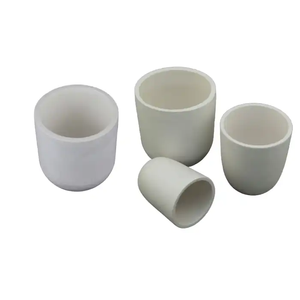
High Temperature Boron Nitride Ceramic Structure Special Shaped
Hot Pressing Boron Nitride Ceramic Machine Parts for Industry Cheap
Pyrolytic Boron Nitride Ceramic Part
Composite Boron Nitride Ceramics
Machinable Boron Nitride Ceramic Rod for Industrial Use