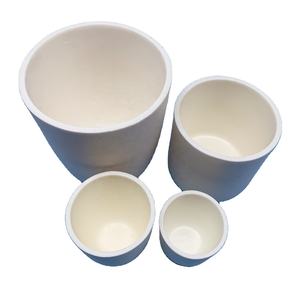
Next-Generation Ceramics: Unlocking Superior Properties for Industry

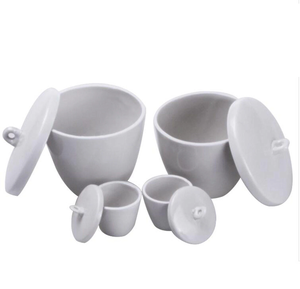
PRODUCT PARAMETERS
Description
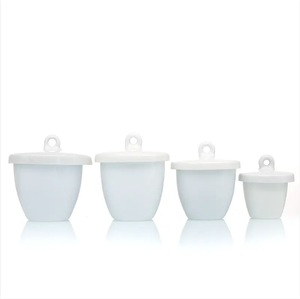
Overview of Custom Heat Resistant Alumina Ceramic and Quartz Crucible
A Ceramic Crucible is a vessel designed to withstand extreme temperatures for melting, calcining, or reacting chemical substances. Advanced ceramic crucibles are engineered from high-purity materials like Alumina, Zirconia, Boron Nitride, or Magnesia, chosen for their ability to contain specific molten materials without contamination or failure.
Features of Custom Heat Resistant Alumina Ceramic and Quartz Crucible
- Extreme Temperature Resistance: Can operate continuously from 1000°C to over 1800°C, depending on the material.
- High Purity & Chemical Inertness: Minimizes reaction with and contamination of the melt (metal, glass, salt, ash).
- Excellent Thermal Shock Resistance: (Grade-dependent) Can withstand rapid heating and cooling cycles.
- Variety of Compositions & Designs: Tailored for specific applications (e.g., BN for reactive metals, ZrO₂ for precious metals, MgO for basic slags).
- Durable & Reusable: High-quality crucibles can survive multiple cycles, providing long service life.
Specifications of Custom Heat Resistant Alumina Ceramic and Quartz Crucible
Custom Heat Resistant Alumina Ceramic and Quartz Crucible
Material Options
We offer two primary products for high-temperature applications: alumina ceramic and quartz. Alumina ceramic crucibles consist of 95% to 99.8% light weight aluminum oxide (Al ₂ O THREE). They handle temperature levels as much as 1750 ° C. Quartz crucibles are made from pure merged silica. They function well up to 1200 ° C and show excellent thermal shock resistance.
Trick Features
Both kinds resist chemical rust and stay stable in rough settings. Alumina crucibles are hard, solid, and ideal for melting steels or holding reactive materials. Quartz crucibles use high purity and low thermal expansion. They are perfect for semiconductor processing or laboratory utilize where contamination should be avoided.
Custom-made Capacities
We construct crucibles to your precise size and shape. Requirement abilities range from 5 ml to 5000 ml. Wall density commonly drops between 2 mm and 10 mm, based upon your needs. You can choose from typical forms like cylindrical, cone-shaped, or boat-style. We additionally sustain special layouts with custom openings, lids, or handles.
Surface Area Complete and Resistance
Internal and outer surface areas can be smooth or somewhat textured, depending on the application. Dimensional resistance is held within ± 0.1 mm to ± 0.5 mm. This ensures consistent performance and fit in automated or hands-on arrangements.
Manufacturing and High quality
Each crucible goes through rigorous quality checks. We check for cracks, thickness, and pureness prior to delivery. Our production procedure follows ISO requirements. Every set includes a product certification and test record.
Preparation and Product Packaging
Standard lead time is 7 to 15 working days. Rush orders might be offered. Items are crammed in protective foam and sturdy boxes to avoid damage during transportation.
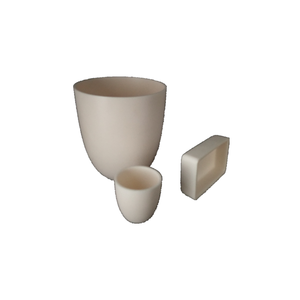
Applications of Custom Heat Resistant Alumina Ceramic and Quartz Crucible
Applications of Custom-made Warmth Resistant Alumina Ceramic and Quartz Crucibles
High-Temperature Material Processing
Alumina ceramic crucibles deal with extreme heat without breaking down. They work well in metal melting, glass manufacturing, and sintering processes. Their solid structure keeps them secure also above 1600 ° C. Users rely on them when pureness and longevity issue a lot of.
Semiconductor and Electronics Production
In chip and wafer production, contamination needs to be prevented. Quartz crucibles offer ultra-clean surface areas and stand up to responses with molten silicon. Their thermal stability ensures consistent results during crystal growth. Engineers pick them for their reliability in delicate atmospheres.
Lab and Research Usage
Researchers require containers that survive repeated home heating cycles. Both alumina and quartz crucibles meet this demand. Alumina withstands chemical assault from acids and bases. Quartz remains clear under thermal shock. These attributes make them perfect for example preparation, ash testing, and product analysis.
Specialized Industrial Applications
Custom shapes and sizes permit these crucibles to fit unique configurations. Aerospace companies use them for superalloy casting. Renewable energy companies depend on them in solar cell production. Their ability to keep form and efficiency at heats lowers downtime and waste.
Both products bring distinctive benefits. Alumina provides mechanical stamina and chemical inertness. Quartz gives optical quality and reduced thermal expansion. When basic labware stops working, these custom crucibles provide reliable performance. Customers obtain specific control over their high-heat processes without unexpected failings.

Company Profile
Synthetic-chemical focus on the research and development, production and sales of ceramic products, serving the electronics, ceramics, chemical and other industries. Since its establishment in 2015, the company has been committed to providing customers with the best products and services, and has become a leader in the industry through continuous technological innovation and strict quality management.
Our products includes but not limited to Aluminum Nitride, Aluminum Oxide, Boron Carbide, Boron Nitride, Ceramic Crucible, ect. If you are interested in any type of these, please feel free to contact us.

Payment Methods
T/T, Western Union, Paypal, Credit Card etc.
Shipment Methods
By air, by sea, by express, as customers request.
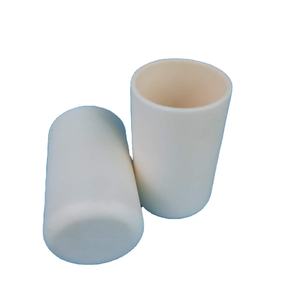
5 FAQs of Custom Heat Resistant Alumina Ceramic and Quartz Crucible
Frequently Asked Questions About Custom Heat Resistant Alumina Ceramic and Quartz Crucibles
What materials are these crucibles made from?
Our crucibles use high-purity alumina ceramic or fused quartz. Both materials handle extreme heat well. Alumina works up to 1700°C. Quartz handles up to 1200°C but offers better thermal shock resistance. You pick the material based on your process needs.
Can I get a custom size or shape?
Yes. We make crucibles in any size or shape you need. Just send us your drawing or specs. Common requests include tall cylinders, shallow dishes, or tubes with special openings. We match your exact requirements so the crucible fits your equipment and workflow.
How do these crucibles resist thermal shock?
Alumina ceramic has strong structure at high temps but can crack if heated or cooled too fast. Quartz handles sudden temperature changes better because it expands less when hot. For best results, heat and cool slowly. This keeps your crucible lasting longer.
Are they safe for reactive chemicals?
Both materials are chemically inert in most lab and industrial uses. Alumina resists acids and bases well, except hydrofluoric acid. Quartz also resists most acids but can react with strong alkalis at high heat. Always check chemical compatibility before use.
How long will a crucible last?
Life depends on how you use it. With proper heating cycles and no mechanical stress, alumina crucibles last hundreds of uses. Quartz lasts slightly less under heavy thermal cycling but still gives reliable performance. Avoid dropping or scraping the surface to prevent cracks.
REQUEST A QUOTE
RELATED PRODUCTS
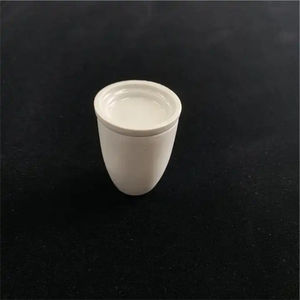
Ceramic Crucible for Melting Glass Raw Materials High Temperature
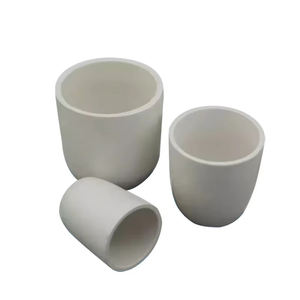
High Temperature High Purity MgO Magnesia Melting Ceramic Crucible
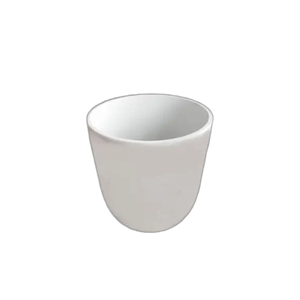
Custom Zirconia Ceramic Grinding Media Rods Bars Crucibles
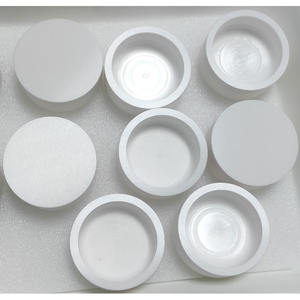
High Temperature Resistant 99 Aluminum Oxide Ceramic Cup Crucible Insulator
High Fracture Toughness Zirconia Oxide Ceramic Crucible and Ring