Next-Generation Ceramics: Unlocking Superior Properties for Industry

PRODUCT PARAMETERS
Description
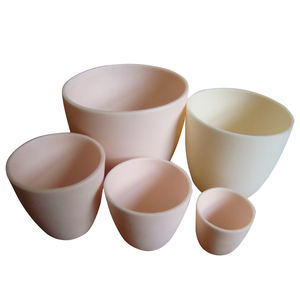
Overview of Factory Laboratory Metal Smelting Aluminum Oxide Ceramic Crucible
A Ceramic Crucible is a vessel designed to withstand extreme temperatures for melting, calcining, or reacting chemical substances. Advanced ceramic crucibles are engineered from high-purity materials like Alumina, Zirconia, Boron Nitride, or Magnesia, chosen for their ability to contain specific molten materials without contamination or failure.
Features of Factory Laboratory Metal Smelting Aluminum Oxide Ceramic Crucible
- Extreme Temperature Resistance: Can operate continuously from 1000°C to over 1800°C, depending on the material.
- High Purity & Chemical Inertness: Minimizes reaction with and contamination of the melt (metal, glass, salt, ash).
- Excellent Thermal Shock Resistance: (Grade-dependent) Can withstand rapid heating and cooling cycles.
- Variety of Compositions & Designs: Tailored for specific applications (e.g., BN for reactive metals, ZrO₂ for precious metals, MgO for basic slags).
- Durable & Reusable: High-quality crucibles can survive multiple cycles, providing long service life.
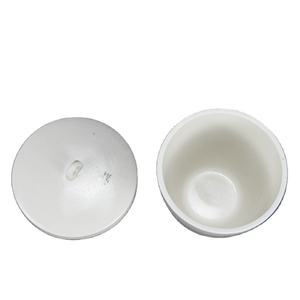
Specifications of Factory Laboratory Metal Smelting Aluminum Oxide Ceramic Crucible
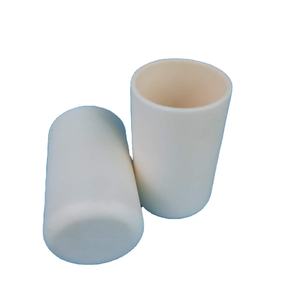
Factory & Laboratory Metal Smelting Aluminum Oxide Porcelain Crucible– Item Specs
Product and Structure
This crucible is made from high-purity aluminum oxide (Al two O TWO) ceramic. The material content is generally 99.5% or higher. This makes certain superb resistance to heats and chemical rust. It has no binders or additives that might pollute your examples throughout use.
Temperature level Resistance
The crucible can hold up against constant use at temperature levels up to 1700 ° C (3092 ° F). It stays secure even under fast home heating or cooling down cycles. This makes it ideal for melting, sintering, or ashing in demanding commercial or study atmospheres.
Physical Features
The crucible has a dense, non-porous framework. This avoids metal or slag penetration during smelting. Its firmness and mechanical toughness assist it stand up to fracturing or chipping under regular handling. Wall density is very carefully managed to balance warm retention and thermal shock resistance.
Readily Available Shapes And Sizes
We offer common cylindrical crucibles in numerous capacities– from 10 mL to 500 mL. Custom forms and dimensions are also offered upon request. Each unit includes a smooth interior surface to alleviate example elimination and cleansing.
Applications
This crucible is widely utilized in steel factories, materials testing labs, and scholastic research. It functions well with non-ferrous metals like light weight aluminum, copper, zinc, and rare-earth elements. It is also ideal for high-temperature chemical evaluation, consisting of XRF fusion and loss-on-ignition examinations.
Treatment and Handling
Always pre-heat the crucible gradually prior to full-temperature use. Avoid unexpected temperature level changes. Store in a completely dry place to stop moisture absorption. Handle with tidy tongs to avoid contamination or physical damage.
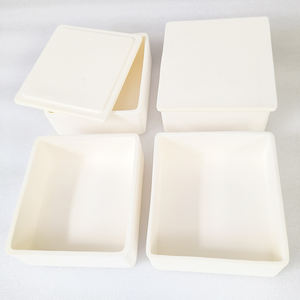
Applications of Factory Laboratory Metal Smelting Aluminum Oxide Ceramic Crucible
Applications of Factory & Research Laboratory Steel Smelting Aluminum Oxide Ceramic Crucibles
High-Temperature Metal Handling
Light weight aluminum oxide ceramic crucibles are commonly used in both commercial factories and research laboratories for melting and holding steels at very heats. These crucibles can deal with warm up to 1,700 ° C (3,092 ° F) without fracturing or warping. This makes them perfect for working with steels like gold, silver, copper, aluminum, and some alloys.
Secure and Chemically Inert
The material does not respond quickly with a lot of liquified steels or slags. This chemical stability avoids contamination of the melted steel. It likewise helps keep the crucible’s framework intact over lots of home heating cycles. Users get constant outcomes batch after batch.
Manufacturing Facility Production Usage
In metal shops and small-scale spreading shops, these crucibles support day-to-day operations. They fit well in induction heating systems, gas-fired kilns, and electric resistance heating units. Their resilience reduces downtime and replacement costs. Employees depend on them for secure, reliable melting throughout jewelry production, oral alloy prep work, or accuracy spreading.
Lab Research and Screening
In labs, researchers use these crucibles for example prep work, ash testing, and thermal analysis. The pure alumina composition makes sure no undesirable aspects get in examination samples. Researchers count on them for accurate, repeatable experiments entailing high-heat treatment or essential evaluation.
Easy Handling and Long Life
These crucibles are solid yet light-weight, which makes them easier to relocate when warm. Their smooth interior surface area allows liquified steel to pour easily. With appropriate care– like slow heating and cooling– they last much longer than graphite or clay alternatives. This conserves cash and boosts process in both manufacturing facility and laboratory settings.

Company Profile
Synthetic-chemical focus on the research and development, production and sales of ceramic products, serving the electronics, ceramics, chemical and other industries. Since its establishment in 2015, the company has been committed to providing customers with the best products and services, and has become a leader in the industry through continuous technological innovation and strict quality management.
Our products includes but not limited to Aluminum Nitride, Aluminum Oxide, Boron Carbide, Boron Nitride, Ceramic Crucible, ect. If you are interested in any type of these, please feel free to contact us.

Payment Methods
T/T, Western Union, Paypal, Credit Card etc.
Shipment Methods
By air, by sea, by express, as customers request.
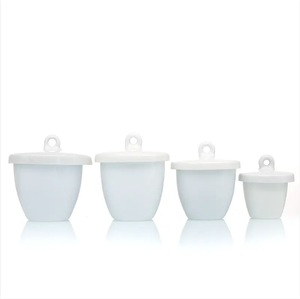
5 FAQs of Factory Laboratory Metal Smelting Aluminum Oxide Ceramic Crucible
Frequently Asked Questions About Aluminum Oxide Ceramic Crucibles
What is this crucible made of?
This crucible is made from high-purity aluminum oxide (Al₂O₃). It contains at least 99.5% alumina. This material gives the crucible strong heat resistance and good chemical stability.
What temperatures can it handle?
It can work safely at temperatures up to 1700°C (3092°F). It stays stable even under rapid heating or cooling. This makes it ideal for melting metals like gold, silver, copper, and some alloys in both factory and lab settings.
Why choose ceramic over metal crucibles?
Ceramic crucibles do not react with most molten metals or slags. Metal crucibles can contaminate samples or wear out faster. Aluminum oxide ceramic resists corrosion and keeps your melt clean.
How long will it last?
Lifespan depends on use. With proper handling—avoiding sudden temperature changes and physical shocks—it can last many melting cycles. Always let it cool slowly after use to prevent cracks.
Can I reuse it?
Yes. After each use, clean off any residue once the crucible has cooled. Do not use sharp tools that might scratch or chip the surface. A well-maintained crucible can be reused dozens of times without losing performance.
REQUEST A QUOTE
RELATED PRODUCTS
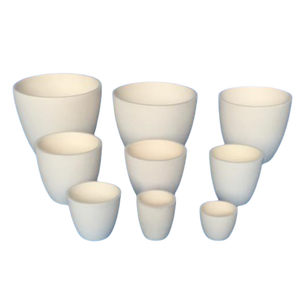
Dental Laboratory High Quality Ceramic Dental Lab Crucible
Unglazed Rectangular Alumina Ceramic Combustion Boat Laboratory Crucible
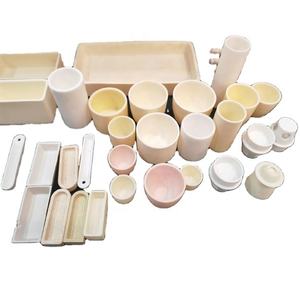
High Purity Alumina Ceramic Bowl Crucible for Thermal Analysis
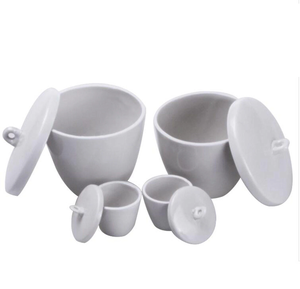
High Purity Aluminum Nitride Ceramic Crucible Round and Square Trays
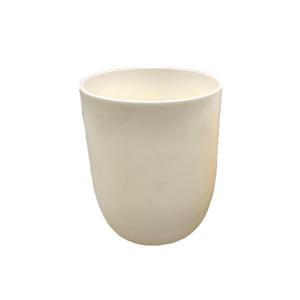
Custom Silicon Nitride Ceramic Crucible for Metal Melting Pot