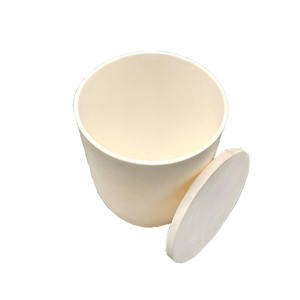
Next-Generation Ceramics: Unlocking Superior Properties for Industry

PRODUCT PARAMETERS
Description
Overview of High Temperature Ceramic Crucible For Aircraft Engine Turbine Molding
A Ceramic Crucible is a vessel designed to withstand extreme temperatures for melting, calcining, or reacting chemical substances. Advanced ceramic crucibles are engineered from high-purity materials like Alumina, Zirconia, Boron Nitride, or Magnesia, chosen for their ability to contain specific molten materials without contamination or failure.
Features of High Temperature Ceramic Crucible For Aircraft Engine Turbine Molding
- Extreme Temperature Resistance: Can operate continuously from 1000°C to over 1800°C, depending on the material.
- High Purity & Chemical Inertness: Minimizes reaction with and contamination of the melt (metal, glass, salt, ash).
- Excellent Thermal Shock Resistance: (Grade-dependent) Can withstand rapid heating and cooling cycles.
- Variety of Compositions & Designs: Tailored for specific applications (e.g., BN for reactive metals, ZrO₂ for precious metals, MgO for basic slags).
- Durable & Reusable: High-quality crucibles can survive multiple cycles, providing long service life.
Specifications of High Temperature Ceramic Crucible For Aircraft Engine Turbine Molding
High-Temperature Ceramic Crucible for Airplane Engine Generator Molding
Material and Make-up
This crucible is made from high-purity alumina-based ceramic. It has over 99% light weight aluminum oxide. The product offers solid resistance to thermal shock and chemical corrosion. No binders or ingredients damage its structure. This makes certain regular efficiency under severe conditions.
Temperature level Resistance
The crucible runs safely at temperatures approximately 1,800 ° C(3,272 ° F ). It preserves structural stability during duplicated heating and cooling cycles. Thermal development is very little, which stops breaking or contorting during turbine blade casting.
Measurements and Tolerance
Requirement dimensions range from 50 mm to 300 mm in height, with sizes between 40 mm and 250 mm. Wall surface thickness is exactly regulated within ± 0.5 mm. All systems satisfy limited dimensional tolerances needed for accuracy financial investment spreading of turbine parts.
Surface Area Finish and Porosity
The inner surface is smooth, with a roughness average (Ra) below 1.6 µm. Reduced porosity– less than 2%– lowers metal penetration and contamination risk. This finish sustains tidy mold and mildew release and top quality surface area replication on actors parts.
Mechanical Stamina
Cold squashing strength exceeds 200 MPa. The crucible resists mechanical tension during handling and pouring. Its stiff framework holds form even when filled with molten superalloys like Inconel or CMSX.
Compatibility
Made particularly for vacuum cleaner induction melting and directional solidification processes used in aerospace generator production. Functions well with nickel-based and cobalt-based superalloys. Does not react with responsive components such as titanium or light weight aluminum in melt streams.
Accreditation and Traceability
Each batch lugs full product qualification per ASTM C704 and AMS standards. Great deal numbers are laser-marked for complete traceability with the manufacturing chain. Quality assurance consists of X-ray fluorescence and ultrasonic testing.
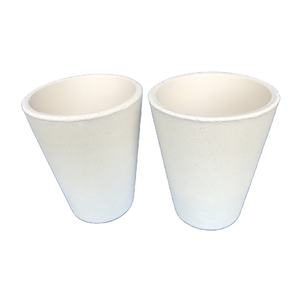
Applications of High Temperature Ceramic Crucible For Aircraft Engine Turbine Molding
High-Temperature Ceramic Crucibles in Airplane Engine Wind Turbine Molding
Precision Casting for Critical Components
Airplane engine generator blades need to work under extreme warm and stress and anxiety. To make these components, suppliers utilize investment spreading. This process needs a container that can hold liquified steel without breaking down. That is where high-temperature ceramic crucibles been available in.
These crucibles are made from advanced porcelains like zirconia or alumina. They can deal with temperatures over 1,700 ° C. Their strong structure maintains the molten superalloy stable during pouring. This stability assists prevent flaws in the final wind turbine component.
Why ceramic crucibles issue
Steel molds would certainly melt or react with the superalloy. Graphite could infect the melt. Ceramic crucibles fix both issues. They remain chemically inert. They likewise resist thermal shock when heated or cooled down promptly. This suggests less spreading failures and much better blade top quality.
Supporting complicated designs
Modern turbine blades have thin wall surfaces and inner cooling networks. Such attributes need spick-and-span, accurate metal flow. Ceramic crucibles help by providing smooth, consistent puts. Their smooth inner surface decreases disturbance. This brings about cleaner spreadings with fine details intact.
Makers additionally rely upon these crucibles for repeatability. Each batch of turbine blades must fulfill rigorous aerospace criteria. Making use of the exact same type of crucible makes sure regular outcomes throughout manufacturing runs. Even tiny modifications in material actions can create huge issues later on. So integrity at every action is important.
In other words, high-temperature ceramic crucibles play a silent yet vital function. They make it possible for the creation of generator parts that power today’s most reliable jet engines. Without them, achieving the required performance and safety and security degrees would be even more challenging.

Company Profile
Synthetic-chemical focus on the research and development, production and sales of ceramic products, serving the electronics, ceramics, chemical and other industries. Since its establishment in 2015, the company has been committed to providing customers with the best products and services, and has become a leader in the industry through continuous technological innovation and strict quality management.
Our products includes but not limited to Aluminum Nitride, Aluminum Oxide, Boron Carbide, Boron Nitride, Ceramic Crucible, ect. If you are interested in any type of these, please feel free to contact us.

Payment Methods
T/T, Western Union, Paypal, Credit Card etc.
Shipment Methods
By air, by sea, by express, as customers request.
5 FAQs of High Temperature Ceramic Crucible For Aircraft Engine Turbine Molding
High Temperature Ceramic Crucible for Aircraft Engine Turbine Molding – Frequently Asked Questions
What is this crucible made of?
This crucible uses high-purity ceramic materials like zirconia or alumina. These materials handle extreme heat without breaking down. They stay stable even when temperatures go above 1,700°C.
Why choose a ceramic crucible over metal ones?
Metal crucibles can react with molten superalloys used in turbine blades. Ceramic crucibles do not react. They keep the metal clean and prevent contamination. This helps produce stronger, more reliable turbine parts.
Can it be reused?
Yes, but only if handled correctly. Avoid sudden temperature changes. Let the crucible heat up and cool down slowly. With proper care, it can be used many times without cracking or wearing out fast.
How does it affect casting quality?
The smooth inner surface of the crucible reduces defects in the final casting. It also holds its shape under high heat, so the molten metal flows evenly. This leads to turbine blades with consistent structure and fewer flaws.
Is it compatible with vacuum or inert gas environments?
Yes. The ceramic material works well in both vacuum and argon-filled furnaces. It does not release gases or impurities that could ruin the melt. This makes it safe for precision aerospace casting processes.
REQUEST A QUOTE
RELATED PRODUCTS
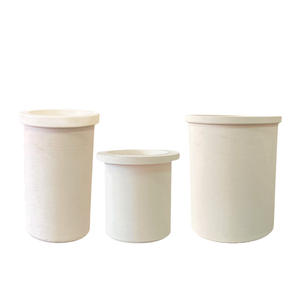
High Pure Silicon Carbide Ceramic Crucible for Melting Refractory
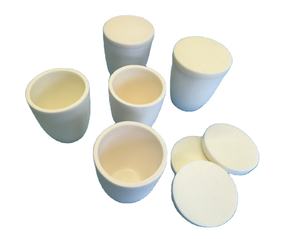
Jewelry Ceramic Crucible Dish for Melting Gold and Silver
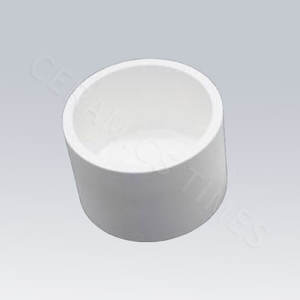
High Heat Resistant 95 and 99 Alumina Ceramic Crucible for Furnace
HIGH QUALITY CRUCIBLE for GOLD SMELTING Ceramic Fire Assay Crucibles
Lab Use Quartz Crucible 1700c Heat Resistant For Gold Melting