Next-Generation Ceramics: Unlocking Superior Properties for Industry

PRODUCT PARAMETERS
Description
Overview of Cordierite / Mullite Ceramic Honeycomb Heat Exchanger for RTO/RCO
Mullite is a high-performance, aluminosilicate advanced ceramic renowned for its exceptional stability in extreme environments. It is engineered to excel where thermal shock resistance, high-temperature strength, and chemical inertness are critical. Composed primarily of 3Al₂O₃·2SiO₂, mullite ceramic is a premier choice for demanding industrial applications, from furnace components to aerospace thermal protection systems.
Features of Cordierite / Mullite Ceramic Honeycomb Heat Exchanger for RTO/RCO
- Superior Thermal Shock Resistance: Withstands rapid temperature changes without cracking, ideal for cyclic heating processes.
- Excellent High-Temperature Stability: Maintains structural integrity and creep resistance at temperatures up to 1650°C and above.
- Low Thermal Expansion & High Melting Point: Ensures dimensional stability and longevity in severe thermal conditions.
- Outstanding Chemical & Corrosion Resistance: Performs reliably in corrosive atmospheres and against molten metals/salts.
- Good Electrical Insulation Properties: Effective as an insulating material in high-temperature electrical applications.
- High Refractoriness & Mechanical Strength: Offers excellent load-bearing capability in furnace settings and thermal processing.
Specification of Cordierite / Mullite Ceramic Honeycomb Heat Exchanger for RTO/RCO
This warmth exchanger uses ceramic honeycomb blocks. The ceramic material is cordierite or mullite. These materials take care of heats well. They resist abrupt temperature level changes also. The honeycomb shape has lots of little channels. These networks run right through the block. This produces a big surface inside. Warm gases flow with these channels. The ceramic material absorbs the warmth. The gases cool as they travel through.
Later on, amazing air recedes through the exact same channels. The saved warm transfers into this trendy air. The air fumes. This procedure happens repetitively. It is called regrowth. This is essential for RTO and RCO systems. RTO means Regenerative Thermal Oxidizer. RCO means Regenerative Catalytic Oxidizer. These systems ruin unsafe air contaminants. They require effective heat exchange. Our ceramic honeycomb provides this efficiency.
The honeycomb structure allows good air flow. It keeps pressure drops reduced. Energy expenses stay down. The ceramic is really resilient. It lasts a long period of time. It stands up to harsh chemical environments. It endures constant heating and cooling cycles. The blocks can be found in basic dimensions. Usual sizes consist of 150x150mm or 300x300mm. The cell density differs. Options consist of 100 cells per square inch or 200 cells per square inch. Higher cell thickness uses more area. It can mean greater stress drop however.
These ceramic blocks run dependably at high temperatures. They work well over 1000 levels Celsius. They are chemically stable. They stand up to strike from acids or solvents. This makes them ideal for commercial exhaust cleaning. They record heat effectively. They help in reducing gas needs for oxidation. This saves operating expense. They are an essential element for effective RTO and RCO devices. Their efficiency makes sure great system integrity. They aid meet rigorous environmental laws.
Applications of Cordierite / Mullite Ceramic Honeycomb Heat Exchanger for RTO/RCO
Cordierite and mullite ceramic honeycomb warm exchangers are vital components in RTO and RCO systems. They aid recover warmth really effectively. These tools are made from unique ceramic products. Cordierite handles fast temperature adjustments well. Mullite withstands very high warmth. Incorporating them produces a strong framework.
The honeycomb form has many tiny networks. This gives a huge surface area inside a small room. Warm gases go through these networks. They move warm to the ceramic walls. Then, cooler incoming gases circulation through the exact same channels. They get the saved warmth from the walls. This procedure pre-heats the incoming air.
Pre-heating the air saves a great deal of power. Heaters require less fuel to reach the required heats. This reduces operating expense substantially. The ceramic materials stand up to thermal shock. They do not break quickly when temperature levels change fast. They likewise stand up to chemical strike from gases. This ensures lengthy life span.
These porcelains are very stable at high temperatures. They carry out dependably in demanding RTO and RCO atmospheres. The warmth exchangers increase system effectiveness. They lower fuel usage and reduce exhausts. Using them makes thermal oxidation systems more economical and sustainable. They are vital for reliable waste gas treatment.

Company Profile
Synthetic-chemical focus on the research and development, production and sales of ceramic products, serving the electronics, ceramics, chemical and other industries. Since its establishment in 2015, the company has been committed to providing customers with the best products and services, and has become a leader in the industry through continuous technological innovation and strict quality management.
Our products includes but not limited to Aluminum Nitride, Aluminum Oxide, Boron Carbide, Boron Nitride, Ceramic Crucible, ect. If you are interested in any type of these, please feel free to contact us.

Payment Methods
T/T, Western Union, Paypal, Credit Card etc.
Shipment Methods
By air, by sea, by express, as customers request.
5 FAQs of Cordierite / Mullite Ceramic Honeycomb Heat Exchanger for RTO/RCO
What is a Cordierite/Mullite Ceramic Honeycomb Heat Exchanger?
It is a core part inside RTO or RCO systems. Its job is to capture heat from dirty air leaving the system. It then uses this heat to warm up the clean, incoming air. This saves a lot of energy. It is made from special ceramic materials shaped like a honeycomb. This shape gives it lots of surface area for heat transfer.
Why use ceramic honeycomb in RTO/RCO heat exchangers?
Ceramic honeycomb is the best choice for high temperatures. RTO and RCO units get very hot. Cordierite and Mullite ceramics handle this heat well. They do not break down easily. The honeycomb structure allows lots of air flow. It also transfers heat very efficiently. This combination saves energy and lowers operating costs.
What temperatures can this heat exchanger handle?
These ceramic heat exchangers work in very hot environments. Cordierite typically handles temperatures up to about 1200°C (2200°F). Mullite ceramic can handle even more heat. It often withstands temperatures over 1400°C (2550°F). This makes them perfect for the extreme heat inside RTO and RCO units.
What are the main advantages over metal heat exchangers?
Ceramic honeycombs beat metal exchangers in hot RTO/RCO jobs. They last much longer under extreme heat. Metal exchangers can warp or break down faster. Ceramics resist chemical corrosion better too. This means less maintenance and fewer replacements. They also provide excellent thermal shock resistance. Rapid temperature changes don’t damage them easily.
Does this heat exchanger need special maintenance?
Generally, it needs very little maintenance. The ceramic material is very durable. It doesn’t corrode like metal can. Its main job is heat exchange. It doesn’t get clogged easily. Regular checks of the whole RTO/RCO system are still important. But the ceramic heat exchanger itself is low-maintenance.
REQUEST A QUOTE
RELATED PRODUCTS
Refractory High Al2O3 Alumina Kiln Shelves Corundum Mullite Ceramic Solid Plate Kiln Furniture
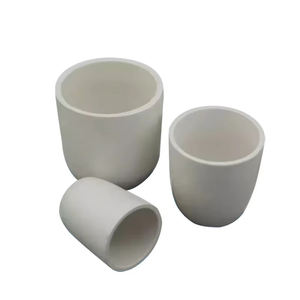
Refractory Cordierite Mullite Ceramic Tube for Heating
Porous Ceramic Plate Mullite Ceramic Disc Heater for
Industrial Refractory Mullite Ceramic Cordierite Honeycomb Ceramics Heat Accumulator
China Factory’s Hot ing Mullite Ceramic Al2O3 Pouring Cup Industrial Ceramic Welding Cutting Bending Small Order Accepted