Next-Generation Ceramics: Unlocking Superior Properties for Industry

PRODUCT PARAMETERS
Description
Overview of Diamond Bronze Sintered Grinding Wheel for Quartz Glass Ceramic
Quartz ceramics, also known as fused silica ceramics or re-bonded quartz products, are a high-performance advanced ceramic material. Unlike traditional clay-based ceramics, they are not made by sintering clay, but rather from high-purity fused silica (silicon dioxide, SiO₂) that is crushed, shaped, and then sintered at high temperatures.
Their core appeal lies in their unique combination of the excellent properties of fused silica glass (such as extremely low thermal expansion coefficient and excellent thermal shock stability) and the structural strength and versatility of ceramics (they can be made into crucibles, rollers, and irregularly shaped parts), overcoming the limitations of fused silica glass in terms of difficulty in manufacturing large sizes and complex shapes, and its high cost.
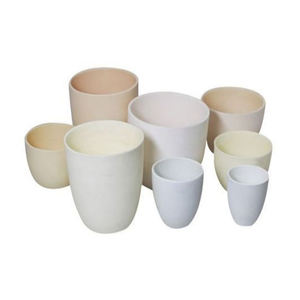
Quartz ceramics perform exceptionally well in harsh environments involving high temperatures, rapid temperature changes, and chemical corrosion, and are widely used in solar photovoltaics (crucibles for polycrystalline silicon ingot furnaces), semiconductors, aerospace, metallurgy and casting, the glass industry, and laboratories.
Main Characteristics of Diamond Bronze Sintered Grinding Wheel for Quartz Glass Ceramic
Excellent Thermal Shock Stability: They have an extremely low thermal expansion coefficient, generating almost no thermal stress during rapid temperature changes, and can withstand rapid cooling from extremely high temperatures to room temperature without cracking.
Extremely High Temperature Resistance and Thermal Stability: They can be used continuously at temperatures of 1100°C – 1350°C, and can even withstand higher temperatures for short periods. They do not soften or deform at high temperatures and maintain good dimensional stability.
Excellent Chemical Inertness and Corrosion Resistance: Except for hydrofluoric acid and hot concentrated phosphoric acid, they have strong resistance to most acids, salt solutions, and molten metals (such as aluminum, copper, gold, silver, and platinum), making them ideal melting and containment vessels.
Low Thermal Conductivity and Good Electrical Insulation: They have low thermal conductivity, making them excellent thermal insulation materials. They also maintain good electrical insulation properties at high temperatures.
High Purity and Low Contamination Risk: Made from high-purity quartz sand, they do not contaminate the high-purity molten metals or semiconductor materials they come into contact with, ensuring process cleanliness.
Moderate Mechanical Strength: Compared to most engineering ceramics, their mechanical strength at room temperature is relatively low; they are brittle materials. However, their strength is sufficient under their designed operating conditions (high-temperature insulation, thermal shock resistance). Its strength can be improved by optimizing the formula and manufacturing process.
Specifications of Diamond Bronze Sintered Grinding Wheel for Quartz Glass Ceramic
Diamond Bronze Sintered Grinding Wheel for Quartz, Glass & Ceramic
Key Specifications
This grinding wheel utilizes top quality diamond abrasives bound in a bronze sintered matrix . The bronze bond offers strong assistance to the rubies. It keeps them strongly in position during heavy grinding tasks.
The wheel is produced accuracy deal with difficult, breakable products like quartz, optical glass, technological ceramics, and similar non-metallic components. Its framework enables smooth cutting without damaging or splitting the work surface.
Grit size options range from 80 # to 600 #. Coarser grits (80 #– 180 #) remove material quick. Better grits (240 #– 600 #) provide a smoother surface area coating. Select the grit based on your called for stock removal rate and final surface area quality.
The standard dimensions include sizes from 50 mm to 300 mm, densities from 2 mm to 10 mm, and birthed dimensions of 12.7 mm ( 1/2″) or 20 mm ( 3/4″). Custom dimensions are additionally available upon demand.
This wheel performs at a optimum running speed of 4,500 RPM . Always match the wheel speed to your maker’s abilities. Use proper coolant throughout procedure to minimize heat and prolong wheel life.
The bronze bond is tough and wear-resistant . It functions well under high pressure and preserves form over long usage. This makes the wheel suitable for both roughing and completing passes.
It fits most basic bench mills, CNC devices, and surface grinders used in laboratories, optics shops, and ceramic production. Placing is easy with standard flanges.
For ideal results, dress the wheel frequently to keep its cutting side sharp. A clean, well-dressed wheel cuts much faster and creates much better surface high quality.
Deal with and keep the wheel in a dry area. Prevent influences or decreases that can harm the structure. Inspect before each usage for splits or indicators of wear.
Applications of Diamond Bronze Sintered Grinding Wheel for Quartz Glass Ceramic
Applications of Diamond Bronze Sintered Grinding Tires for Quartz, Glass, and Ceramic
Accuracy Grinding for Hard Brittle Products
Ruby bronze sintered grinding wheels function well on quartz, glass, and ceramic. These materials are difficult but break quickly. Requirement grinding tools frequently chip or crack them. Diamond wheels solve this trouble. The ruby grit cuts easily without damaging the surface.
Why bronze bond?
Bronze bonds hold diamond fragments firmly. This provides steady cutting power gradually. The wheel remains sharp longer than resin or vitrified types. It additionally resists heat and wear throughout heavy use. That makes it suitable for high-precision jobs.
Common Uses in Industry
In optics, these wheels shape and finish lenses made from merged quartz. They create smooth edges without micro-cracks. In electronics, they grind ceramic substrates and insulators. Precision matters below– any imperfection can ruin a circuit.
For lab tools, quartz tubes and glasses require clean cuts and polished ends. Ruby bronze wheels deliver consistent results. In building glass, they cut thick panels or bevel edges easily.
Efficiency Perks
These wheels run efficiently at broadband. They eliminate product fast but leave fine surfaces. Coolant use is often not needed, which saves time and expense. Operators see less wheel wear, so substitutes take place less often.
The inflexible bronze structure keeps the wheel real throughout long terms. That means less adjustments and better part high quality. Whether you cut, form, or finish, this tool manages tough jobs with control.
Manufacturers select ruby bronze sintered wheels when high quality and dependability matter a lot of. They trust the wheel to carry out the same way, part after part.

Company Profile
Synthetic-chemical focus on the research and development, production and sales of ceramic products, serving the electronics, ceramics, chemical and other industries. Since its establishment in 2015, the company has been committed to providing customers with the best products and services, and has become a leader in the industry through continuous technological innovation and strict quality management.
Our products includes but not limited to Aluminum Nitride, Aluminum Oxide, Boron Carbide, Boron Nitride, Ceramic Crucible, ect. If you are interested in any type of these, please feel free to contact us.

Payment Methods
T/T, Western Union, Paypal, Credit Card etc.
Shipment Methods
By air, by sea, by express, as customers request.
5 FAQs of Diamond Bronze Sintered Grinding Wheel for Quartz Glass Ceramic
Frequently Asked Questions: Diamond Bronze Sintered Grinding Wheel for Quartz, Glass & Ceramic
What materials can this grinding wheel work on?
This wheel is made for hard, brittle materials. It works well on quartz, glass, and technical ceramics. The bronze bond holds diamond grit firmly, giving clean cuts without chipping.
Why choose a bronze-bonded diamond wheel?
Bronze bonds are strong and wear slowly. They keep the diamond particles sharp longer. This gives steady performance and smooth surface finishes. It also handles wet or dry grinding without losing shape.
How long does the wheel last?
Life depends on use, but bronze sintered wheels last longer than many others. The dense structure resists wear. For light to medium jobs on quartz or ceramic, you get many hours of reliable grinding.
Can I use it with water cooling?
Yes. Water cooling is fine and often recommended. It reduces heat, prevents cracks in glass or ceramic, and keeps the wheel clean. Just make sure your grinder supports wet operation.
Is this wheel good for precision work?
Yes. The wheel runs true and stays balanced. It removes material evenly, which helps with tight tolerances. Many users rely on it for edge grinding, shaping, and finishing delicate parts without damage.
REQUEST A QUOTE
RELATED PRODUCTS
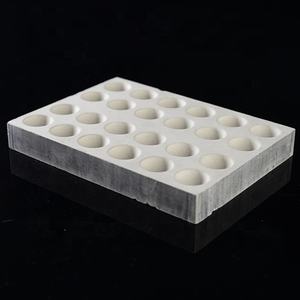
Quartz Ceramic Crucible and Melting Dish for Gold
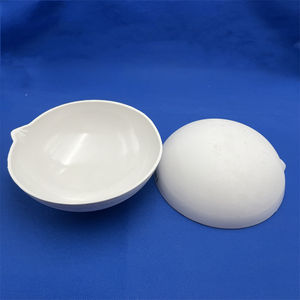
Casting Ceramic Quartz Melting Dishes Pot for Precious Metals
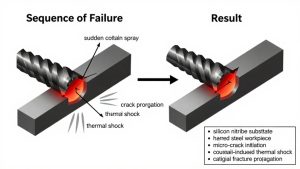
Marble Diamond Saw Blade for Quartz Glass and Ceramic
Customizable Metal Quartz Granite Stand Ceramic Tile Display Racks
Hot Plastic Quartz Stone Tile Specimen Catalog Ceramic Book