Next-Generation Ceramics: Unlocking Superior Properties for Industry

PRODUCT PARAMETERS
Description
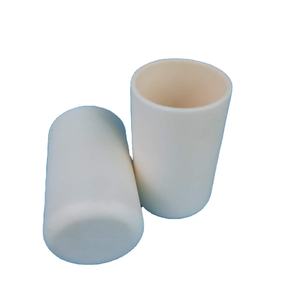
Overview of Factory Direct Melting Furnace Ceramic Crucible and Quartz Crucible
Quartz ceramics, also known as fused silica ceramics or re-bonded quartz products, are a high-performance advanced ceramic material. Unlike traditional clay-based ceramics, they are not made by sintering clay, but rather from high-purity fused silica (silicon dioxide, SiO₂) that is crushed, shaped, and then sintered at high temperatures.
Their core appeal lies in their unique combination of the excellent properties of fused silica glass (such as extremely low thermal expansion coefficient and excellent thermal shock stability) and the structural strength and versatility of ceramics (they can be made into crucibles, rollers, and irregularly shaped parts), overcoming the limitations of fused silica glass in terms of difficulty in manufacturing large sizes and complex shapes, and its high cost.
Quartz ceramics perform exceptionally well in harsh environments involving high temperatures, rapid temperature changes, and chemical corrosion, and are widely used in solar photovoltaics (crucibles for polycrystalline silicon ingot furnaces), semiconductors, aerospace, metallurgy and casting, the glass industry, and laboratories.
Main Characteristics of Factory Direct Melting Furnace Ceramic Crucible and Quartz Crucible
Excellent Thermal Shock Stability: They have an extremely low thermal expansion coefficient, generating almost no thermal stress during rapid temperature changes, and can withstand rapid cooling from extremely high temperatures to room temperature without cracking.
Extremely High Temperature Resistance and Thermal Stability: They can be used continuously at temperatures of 1100°C – 1350°C, and can even withstand higher temperatures for short periods. They do not soften or deform at high temperatures and maintain good dimensional stability.
Excellent Chemical Inertness and Corrosion Resistance: Except for hydrofluoric acid and hot concentrated phosphoric acid, they have strong resistance to most acids, salt solutions, and molten metals (such as aluminum, copper, gold, silver, and platinum), making them ideal melting and containment vessels.
Low Thermal Conductivity and Good Electrical Insulation: They have low thermal conductivity, making them excellent thermal insulation materials. They also maintain good electrical insulation properties at high temperatures.
High Purity and Low Contamination Risk: Made from high-purity quartz sand, they do not contaminate the high-purity molten metals or semiconductor materials they come into contact with, ensuring process cleanliness.
Moderate Mechanical Strength: Compared to most engineering ceramics, their mechanical strength at room temperature is relatively low; they are brittle materials. However, their strength is sufficient under their designed operating conditions (high-temperature insulation, thermal shock resistance). Its strength can be improved by optimizing the formula and manufacturing process.
Specifications of Factory Direct Melting Furnace Ceramic Crucible and Quartz Crucible
Manufacturing facility straight melting heater crucibles been available in two primary types. Ceramic crucibles and quartz crucibles serve various functions. Both are important for high-temperature applications.
Ceramic crucibles are made from unique heat-resistant clay. They manage temperatures approximately 1600 ° C. This makes them appropriate for melting usual steels like aluminum, copper, brass, and bronze. Ceramic crucibles resist thermal shock relatively well. They are generally extra affordable than quartz options. Numerous sizes are offered to match various heater abilities. Typical sizes vary from small 1kg ability to large 50kg capacity. Ceramic crucibles function well with induction heating systems and gas heaters.
Quartz crucibles are crafted from pure integrated quartz. They can endure also higher temperature levels. Quartz crucibles operate reliably up to 1750 ° C. This severe warmth tolerance is vital for melting rare-earth elements. Gold, silver, and platinum require these high temperatures. Quartz uses superb chemical pureness. It decreases contamination of sensitive thaws. Quartz crucibles additionally show solid resistance to abrupt temperature modifications. They are clear to infrared radiation. This attribute boosts heating effectiveness in some furnace kinds. Quartz crucibles are commonly much more expensive. They are required for innovative metallurgy and high-purity applications. Sizes resemble ceramic versions. Quartz crucibles fit both induction and resistance heaters.
Choose ceramic for common steel melting tasks. Use quartz for rare-earth elements or ultra-high temperature levels. Both crucible types are readily available manufacturing facility straight. This guarantees affordable pricing and reliable supply. Consider your specific melting requires very carefully. Material kind, called for temperature level, and spending plan are vital variables.
Applications of Factory Direct Melting Furnace Ceramic Crucible and Quartz Crucible
Manufacturing facility direct melting heater crucibles been available in ceramic and quartz types. Each serves details demands in metalworking. Ceramic crucibles are tough. They deal with high warmth well. People use them for thawing metals like gold, silver, copper. Fashion jewelry makers typically choose ceramic. Factories utilize them too. They last a long time. This saves money gradually. Quartz crucibles are clear. You can see the melt within. This benefits viewing the procedure. Quartz resists chain reactions. It works well for melting platinum, palladium, various other rare-earth elements. Labs like quartz crucibles. They require pureness. Quartz doesn’t include pollutants. Both crucible kinds fit various heating system models. You need the ideal size. Examine your heating system specifications. Ceramic crucibles are typically less expensive upfront. Quartz may cost even more. Quartz offers far better presence. Ceramic supplies wonderful toughness. Think of your melting temperature. Ceramic takes care of really high temperatures. Quartz likewise stands up to extreme warm. Consider the metal you thaw. Some metals respond with certain products. Ceramic is inert for many alloys. Quartz is super pure. Your selection depends upon the task. Factory straight ways reduced costs. You avoid the middleman. This benefits tiny workshops. Large factories profit too. Quality crucibles avoid thaw loss. They maintain operations smooth. Select ceramic for stamina and expense. Pick quartz for exposure and purity.

Company Profile
Synthetic-chemical focus on the research and development, production and sales of ceramic products, serving the electronics, ceramics, chemical and other industries. Since its establishment in 2015, the company has been committed to providing customers with the best products and services, and has become a leader in the industry through continuous technological innovation and strict quality management.
Our products includes but not limited to Aluminum Nitride, Aluminum Oxide, Boron Carbide, Boron Nitride, Ceramic Crucible, ect. If you are interested in any type of these, please feel free to contact us.

Payment Methods
T/T, Western Union, Paypal, Credit Card etc.
Shipment Methods
By air, by sea, by express, as customers request.
5 FAQs of Factory Direct Melting Furnace Ceramic Crucible and Quartz Crucible
Here are five common questions about our factory direct melting furnace crucibles:
What are ceramic and quartz crucibles used for? These crucibles hold melted metal. They go inside a melting furnace. The furnace heats the metal until it becomes liquid. You pour the liquid metal into molds. Crucibles are essential tools for this process.
What is the difference between ceramic and quartz crucibles? Both work well. Ceramic crucibles are strong. They resist wear from chemicals. Quartz crucibles are very pure. They handle sudden temperature changes better. Choose ceramic for tough jobs. Choose quartz for very pure melts.
What temperature can these crucibles handle? Our crucibles withstand high heat. Specific limits depend on the material and size. Ceramic crucibles typically handle temperatures up to 1600°C. Quartz crucibles can manage even higher, often exceeding 1700°C. Always check the specifications for your specific model.
How long will a crucible last? Crucible life varies. It depends on the metal melted, the temperatures used, and how you handle it. Using it correctly helps it last longer. Harsh conditions shorten its life. With good care, expect many melting cycles.
Why buy factory direct? Buying directly from us saves you money. You skip the middleman markup. You get a better price. You also get quality control straight from the source. We ensure each crucible meets our standards before it ships.
REQUEST A QUOTE
RELATED PRODUCTS
Factory Quartz Limestone Coal Ceramic Cement Dry Grinding Mill
Custom Exhibition Hall Marble Granite Quartz Ceramic Display Rack
Hot ing Flat Ceramic Quartz Stone Slab Tile for Kitchen
Hot ing White Ceramic Tiles Durable Artificial Quartz Slab
Customized Floor Standing Ceramic Tile Granite Quartz Display Racks