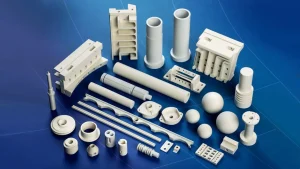
Next-Generation Ceramics: Unlocking Superior Properties for Industry

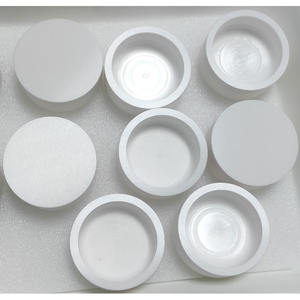
PRODUCT PARAMETERS
Description
Overview of Grinding Ball Mill Machine for Limestone Quartz Sand Ceramic
Quartz ceramics, also known as fused silica ceramics or re-bonded quartz products, are a high-performance advanced ceramic material. Unlike traditional clay-based ceramics, they are not made by sintering clay, but rather from high-purity fused silica (silicon dioxide, SiO₂) that is crushed, shaped, and then sintered at high temperatures.
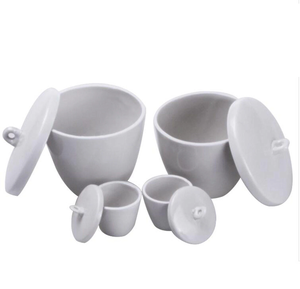
Their core appeal lies in their unique combination of the excellent properties of fused silica glass (such as extremely low thermal expansion coefficient and excellent thermal shock stability) and the structural strength and versatility of ceramics (they can be made into crucibles, rollers, and irregularly shaped parts), overcoming the limitations of fused silica glass in terms of difficulty in manufacturing large sizes and complex shapes, and its high cost.
Quartz ceramics perform exceptionally well in harsh environments involving high temperatures, rapid temperature changes, and chemical corrosion, and are widely used in solar photovoltaics (crucibles for polycrystalline silicon ingot furnaces), semiconductors, aerospace, metallurgy and casting, the glass industry, and laboratories.
Main Characteristics of Grinding Ball Mill Machine for Limestone Quartz Sand Ceramic
Excellent Thermal Shock Stability: They have an extremely low thermal expansion coefficient, generating almost no thermal stress during rapid temperature changes, and can withstand rapid cooling from extremely high temperatures to room temperature without cracking.
Extremely High Temperature Resistance and Thermal Stability: They can be used continuously at temperatures of 1100°C – 1350°C, and can even withstand higher temperatures for short periods. They do not soften or deform at high temperatures and maintain good dimensional stability.
Excellent Chemical Inertness and Corrosion Resistance: Except for hydrofluoric acid and hot concentrated phosphoric acid, they have strong resistance to most acids, salt solutions, and molten metals (such as aluminum, copper, gold, silver, and platinum), making them ideal melting and containment vessels.
Low Thermal Conductivity and Good Electrical Insulation: They have low thermal conductivity, making them excellent thermal insulation materials. They also maintain good electrical insulation properties at high temperatures.
High Purity and Low Contamination Risk: Made from high-purity quartz sand, they do not contaminate the high-purity molten metals or semiconductor materials they come into contact with, ensuring process cleanliness.
Moderate Mechanical Strength: Compared to most engineering ceramics, their mechanical strength at room temperature is relatively low; they are brittle materials. However, their strength is sufficient under their designed operating conditions (high-temperature insulation, thermal shock resistance). Its strength can be improved by optimizing the formula and manufacturing process.
Specifications of Grinding Ball Mill Machine for Limestone Quartz Sand Ceramic
Grinding Round Mill Maker– Technical Specifications
Design and Capacity
Design: MQG/MQS Collection
Ability: 0.5 to 12 heaps per hour, depending on product solidity and feed dimension
Feed Dimension: Up to 25 mm
Release Dimension: 0.074 to 0.89 mm (adjustable based on grinding requirements).
Power and Drive System
Electric motor Power: Varies from 18.5 kW to 450 kW.
Drive Type: Requirement equipment rim drive or optional main drive.
Voltage: 380V/ 660V/ 10kV (adjustable to neighborhood power supply).
Drum and Liner Information
Drum Size: 900 mm to 3600 mm.
Drum Size: 1800 mm to 8000 mm.
Lining Product: High manganese steel, rubber, or ceramic– selected based on application.
Turning Speed: 15 to 30 rpm (differs by version size).
Grinding Media
Sphere Fee: Cast iron or forged steel grinding spheres.
Round Size Variety: 20 mm to 100 mm diameter.
Filling up Proportion: Normally 30% to 40% of mill quantity.
Application Viability
This round mill is developed for fine and ultra-fine grinding of non-metallic minerals. It functions well with limestone, quartz sand, and ceramic raw materials. The equipment handles both dry and wet grinding procedures. Wet grinding prevails for ceramic and quartz applications. Dry grinding suits limestone used in construction or chemical industries.
Construction and Resilience
The primary frame makes use of sturdy carbon steel. All welds fulfill industrial safety criteria. Bearings are secured and oiled for long life span. Optional dust collection systems can be included for cleaner procedure. The control panel includes overload defense and emergency quit functions.
Installation and Support
Requirement models ship with full installation illustrations. On-site commissioning support is available. Extra components like liners, trunnion bearings, and equipments are stocked worldwide for rapid substitute.
Applications of Grinding Ball Mill Machine for Limestone Quartz Sand Ceramic
Applications of Grinding Round Mill Equipment for Sedimentary Rock, Quartz, Sand, and Ceramic
Handling Limestone
The ball mill machine grinds limestone into great powder. This powder is utilized in concrete manufacturing, agriculture, and flue gas desulfurization. The machine breaks down big limestone portions equally. It ensures regular particle size, which is important for quality control in industrial usage.
Handling Quartz
Quartz requires exact grinding because of its hardness. The round mill successfully reduces quartz to the called for fineness for glassmaking, electronics, and optical tools. Its robust style handles rough materials without fast wear. Operators can change settings to satisfy different quartz powder specifications.
Refining Sand
Sand processed by a ball mill ends up being consistent and tidy. This is essential for factory mold and mildews, building and construction, and water filtration systems. The machine removes pollutants and controls grain dimension. Clean, well-graded sand enhances performance in end-use applications.
Producing Ceramic Materials
Ceramic production counts on carefully ground raw materials. The ball mill blends and grinds clay, feldspar, and other components right into a smooth slurry or powder. This action makes sure even firing and strong final products like ceramic tiles, sanitary ware, and technical ceramics. Regular grinding protects against issues during shaping and sintering.
The ball mill equipment works constantly with secure performance. It uses steel or ceramic grinding media based on material demands. Secured systems minimize dust and contamination. Upkeep is easy, and parts are very easy to replace. Industries select this equipment for dependability, performance, and convenience throughout different raw materials. Whether processing soft limestone or tough quartz, the round mill delivers dependable results whenever.

Company Profile
Synthetic-chemical focus on the research and development, production and sales of ceramic products, serving the electronics, ceramics, chemical and other industries. Since its establishment in 2015, the company has been committed to providing customers with the best products and services, and has become a leader in the industry through continuous technological innovation and strict quality management.
Our products includes but not limited to Aluminum Nitride, Aluminum Oxide, Boron Carbide, Boron Nitride, Ceramic Crucible, ect. If you are interested in any type of these, please feel free to contact us.

Payment Methods
T/T, Western Union, Paypal, Credit Card etc.
Shipment Methods
By air, by sea, by express, as customers request.
5 FAQs of Grinding Ball Mill Machine for Limestone Quartz Sand Ceramic
Frequently Asked Questions About Grinding Ball Mill Machines for Limestone, Quartz, Sand, and Ceramic
What materials can this ball mill grind?
This machine works well with limestone, quartz, sand, and ceramic. It also handles other hard or medium-hard minerals. The mill reduces these materials into fine powder for industrial use.
How does the ball mill work?
The ball mill rotates a cylinder filled with grinding media—usually steel or ceramic balls. As the cylinder turns, the balls lift and fall, crushing the material inside. This action grinds the feed into a uniform powder over time.
What size of output can I expect?
Output fineness depends on your settings and material type. Most users achieve particle sizes between 0.074 mm and 0.4 mm. You can adjust rotation speed, grinding time, and ball size to get the desired result.
Is the machine easy to maintain?
Yes. The design is simple with few moving parts. Regular tasks include checking oil levels, tightening bolts, and replacing worn liners or balls. Keep the machine clean and lubricated to avoid breakdowns.
Can it run continuously?
Yes, the ball mill supports continuous operation. It has a strong motor and cooling system to prevent overheating. Still, give it short breaks during long runs to extend its service life. Always follow the manufacturer’s guidelines for safe, nonstop use.
REQUEST A QUOTE
RELATED PRODUCTS
High Quality Quartz Sand for Glass Plastic and Ceramic Production
Ceramic Ball Mill for Quartz
Quartz Silica Sand Grinding Machine Ceramic Ball Mill Production Line
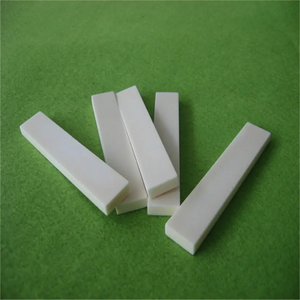
Custom Exhibition Hall Ceramic Tiles Marble Quartz Display Rack Stand
Customized Excellent Quality Milky White Fused Quartz Ceramic Crucible