Next-Generation Ceramics: Unlocking Superior Properties for Industry

PRODUCT PARAMETERS
Description
Overview of High Purity Fused Quartz for Ceramic Casting Metallurgical Silica
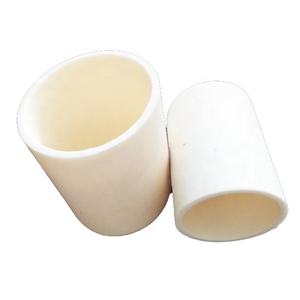
Quartz ceramics, also known as fused silica ceramics or re-bonded quartz products, are a high-performance advanced ceramic material. Unlike traditional clay-based ceramics, they are not made by sintering clay, but rather from high-purity fused silica (silicon dioxide, SiO₂) that is crushed, shaped, and then sintered at high temperatures.
Their core appeal lies in their unique combination of the excellent properties of fused silica glass (such as extremely low thermal expansion coefficient and excellent thermal shock stability) and the structural strength and versatility of ceramics (they can be made into crucibles, rollers, and irregularly shaped parts), overcoming the limitations of fused silica glass in terms of difficulty in manufacturing large sizes and complex shapes, and its high cost.
Quartz ceramics perform exceptionally well in harsh environments involving high temperatures, rapid temperature changes, and chemical corrosion, and are widely used in solar photovoltaics (crucibles for polycrystalline silicon ingot furnaces), semiconductors, aerospace, metallurgy and casting, the glass industry, and laboratories.
Main Characteristics of High Purity Fused Quartz for Ceramic Casting Metallurgical Silica
Excellent Thermal Shock Stability: They have an extremely low thermal expansion coefficient, generating almost no thermal stress during rapid temperature changes, and can withstand rapid cooling from extremely high temperatures to room temperature without cracking.
Extremely High Temperature Resistance and Thermal Stability: They can be used continuously at temperatures of 1100°C – 1350°C, and can even withstand higher temperatures for short periods. They do not soften or deform at high temperatures and maintain good dimensional stability.
Excellent Chemical Inertness and Corrosion Resistance: Except for hydrofluoric acid and hot concentrated phosphoric acid, they have strong resistance to most acids, salt solutions, and molten metals (such as aluminum, copper, gold, silver, and platinum), making them ideal melting and containment vessels.
Low Thermal Conductivity and Good Electrical Insulation: They have low thermal conductivity, making them excellent thermal insulation materials. They also maintain good electrical insulation properties at high temperatures.
High Purity and Low Contamination Risk: Made from high-purity quartz sand, they do not contaminate the high-purity molten metals or semiconductor materials they come into contact with, ensuring process cleanliness.
Moderate Mechanical Strength: Compared to most engineering ceramics, their mechanical strength at room temperature is relatively low; they are brittle materials. However, their strength is sufficient under their designed operating conditions (high-temperature insulation, thermal shock resistance). Its strength can be improved by optimizing the formula and manufacturing process.
Specifications of High Purity Fused Quartz for Ceramic Casting Metallurgical Silica
High purity integrated quartz is a vital material for demanding ceramic spreading and metallurgical silica applications. It provides remarkable performance under extreme warm. This material is made primarily from silicon dioxide. Its purity is very high, often surpassing 99.9%. Low degrees of contaminations like aluminum, sodium, potassium, and calcium are crucial. These reduced levels stop undesirable reactions during usage. High pureness indicates much better top quality end products.
The thermal homes are impressive. It has a very low coefficient of thermal development. This indicates it withstands fracturing when temperatures alter quickly. It endures temperatures above 1700 ° C without softening. This high softening point is vital for mold and mildews and linings. It guarantees dimensional stability during duplicated heating and cooling cycles.
Its thickness is an additional crucial feature. High purity integrated quartz has a regular thickness. This density aids develop steady, non-reactive mold and mildews. It also contributes to the material’s overall stamina. The product is chemically inert also. It stands up to strike from acids, bases, and molten metals. This inertness protects the cast metal or ceramic product.
Particle size distribution is carefully regulated. Different grades supply various particle dimensions. Great powders produce smooth mold and mildew surfaces. Coarser fragments include strength and permeability. Regular sizing ensures predictable efficiency set after set. This quartz supplies dependable results in shops and metallurgical plants. Its unique homes make it essential for crucial applications.
Applications of High Purity Fused Quartz for Ceramic Casting Metallurgical Silica
High pureness merged quartz uses significant benefits in ceramic spreading and metallurgical applications. This product is made by melting pure quartz sand at very high temperatures. The result is a glass-like compound. It has near-perfect pureness. This purity is important. Pollutants can spoil delicate spreading procedures. Integrated quartz maintains the material tidy.
Ceramic spreading mold and mildews benefit substantially from high purity integrated quartz. These molds shape molten steel into complex parts. The molds need to hold up against severe heat. Integrated quartz deals with these temperatures easily. It doesn’t soften or deform. This keeps the mold shape specific. The casting continues to be precise. Fused quartz likewise withstands chemical assault. Molten steel will not stay with it. The mold releases the casting smoothly. Surface area problems are minimized. Less finishing job is required. Production prices go down.
Metallurgical processes utilize high purity integrated quartz crucibles and linings. These containers hold liquified steel. They need to be inert. Integrated quartz does not react with a lot of metals. It prevents contamination. Steel quality remains high. Integrated quartz likewise supplies excellent thermal shock resistance. Temperature level modifications occur fast in metallurgy. The product will not split. Procedures run securely. Downtime is lessened.
Uniformity is one more key benefit. High pureness merged quartz delivers the exact same residential properties whenever. Suppliers depend on this. Refine control ends up being simpler. Rejects decline. Return improves. The product’s smooth surface is essential as well. It prevents gases from developing bubbles in the casting. Defects are stayed clear of. Total item high quality boosts.

Company Profile
Synthetic-chemical focus on the research and development, production and sales of ceramic products, serving the electronics, ceramics, chemical and other industries. Since its establishment in 2015, the company has been committed to providing customers with the best products and services, and has become a leader in the industry through continuous technological innovation and strict quality management.
Our products includes but not limited to Aluminum Nitride, Aluminum Oxide, Boron Carbide, Boron Nitride, Ceramic Crucible, ect. If you are interested in any type of these, please feel free to contact us.

Payment Methods
T/T, Western Union, Paypal, Credit Card etc.
Shipment Methods
By air, by sea, by express, as customers request.
5 FAQs of High Purity Fused Quartz for Ceramic Casting Metallurgical Silica
People often ask about High Purity Fused Quartz for ceramic casting and metallurgical silica. Here are five common questions.
What is High Purity Fused Quartz? It is a special glass. We make it by melting pure natural quartz crystals at very high temperatures. This process creates a material with almost no bubbles or flaws. It is very pure silica glass.
Why is it good for ceramic casting molds? This fused quartz handles extreme heat very well. It keeps its shape even under the intense temperatures of metal casting. This stability prevents the mold from cracking or warping. It makes precise ceramic parts possible.
How does it help in metallurgy? In metal production, crucibles and tubes face harsh conditions. High purity fused quartz resists chemical attack from molten metals and slags. It lasts longer than other materials. This reduces downtime and replacement costs.
What makes it better than regular quartz? Regular quartz has more impurities. These impurities can react with molten materials. High purity fused quartz minimizes this risk. Its low thermal expansion means less stress from temperature changes. This is crucial for reliable performance.
How pure is it really? The purity level is extremely high. We talk about parts per million for impurities like iron or aluminum. This purity ensures the quartz does not contaminate sensitive melts. It provides consistent results batch after batch.
REQUEST A QUOTE
RELATED PRODUCTS
High Quality White Quartz Sand for Ceramic Decoration and Glass
New Automatic Ceramic Tile Marble Quartz Stone Pressing Forming Machine
Ceramic Ball Mill Machine for Gold Ore Granite Basalt Quartz
Factory Direct Casting Ceramic Refractory Materials Quartz Sand
Fully Automatic Strong Magnet for Iron Removal from Quartz Sand Ceramics