Next-Generation Ceramics: Unlocking Superior Properties for Industry

PRODUCT PARAMETERS
Description
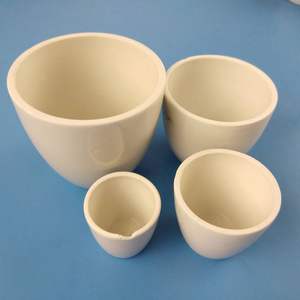
Overview of Refractory Quartz Ceramic Crucibles for Melting Platinum Gold
Quartz ceramics, also known as fused silica ceramics or re-bonded quartz products, are a high-performance advanced ceramic material. Unlike traditional clay-based ceramics, they are not made by sintering clay, but rather from high-purity fused silica (silicon dioxide, SiO₂) that is crushed, shaped, and then sintered at high temperatures.
Their core appeal lies in their unique combination of the excellent properties of fused silica glass (such as extremely low thermal expansion coefficient and excellent thermal shock stability) and the structural strength and versatility of ceramics (they can be made into crucibles, rollers, and irregularly shaped parts), overcoming the limitations of fused silica glass in terms of difficulty in manufacturing large sizes and complex shapes, and its high cost.
Quartz ceramics perform exceptionally well in harsh environments involving high temperatures, rapid temperature changes, and chemical corrosion, and are widely used in solar photovoltaics (crucibles for polycrystalline silicon ingot furnaces), semiconductors, aerospace, metallurgy and casting, the glass industry, and laboratories.
Main Characteristics of Refractory Quartz Ceramic Crucibles for Melting Platinum Gold
Excellent Thermal Shock Stability: They have an extremely low thermal expansion coefficient, generating almost no thermal stress during rapid temperature changes, and can withstand rapid cooling from extremely high temperatures to room temperature without cracking.
Extremely High Temperature Resistance and Thermal Stability: They can be used continuously at temperatures of 1100°C – 1350°C, and can even withstand higher temperatures for short periods. They do not soften or deform at high temperatures and maintain good dimensional stability.
Excellent Chemical Inertness and Corrosion Resistance: Except for hydrofluoric acid and hot concentrated phosphoric acid, they have strong resistance to most acids, salt solutions, and molten metals (such as aluminum, copper, gold, silver, and platinum), making them ideal melting and containment vessels.
Low Thermal Conductivity and Good Electrical Insulation: They have low thermal conductivity, making them excellent thermal insulation materials. They also maintain good electrical insulation properties at high temperatures.
High Purity and Low Contamination Risk: Made from high-purity quartz sand, they do not contaminate the high-purity molten metals or semiconductor materials they come into contact with, ensuring process cleanliness.
Moderate Mechanical Strength: Compared to most engineering ceramics, their mechanical strength at room temperature is relatively low; they are brittle materials. However, their strength is sufficient under their designed operating conditions (high-temperature insulation, thermal shock resistance). Its strength can be improved by optimizing the formula and manufacturing process.
Specifications of Refractory Quartz Ceramic Crucibles for Melting Platinum Gold
Refractory quartz ceramic crucibles are built for melting platinum and gold. They take care of extreme heat well. These crucibles are made from really pure quartz ceramic. High pureness is essential. Pollutants can wreck your rare-earth elements. The material provides fantastic chemical security. This indicates it stands up to responses with molten platinum and gold. Your thaw keeps tidy.
These crucibles stand up to really heats. They are safe for thawing platinum and gold. Unexpected temperature level adjustments won’t break them quickly. Thermal shock resistance is strong. Crucibles heat up and cool without breaking. This is vital for repeated melting cycles. Lengthy life span saves money.
Quartz ceramic stands up to deterioration. Molten metals will not consume into the crucible product. Your platinum and gold stay pure. Crucible toughness is excellent. They resist physical damages throughout use. Handling them is more secure. Crucible forms are developed for efficiency. Typical shapes include tall cylinders and wider basins. This helps heat spread equally. Melting happens quicker.
Sizes differ to fit different needs. Small sizes are for little quantities. Plus sizes deal with bigger batches. Crucible walls are smooth inside. This stops material from sticking. Cleaning up is simpler later. Quartz ceramic is tough. Crucibles last longer under hard problems. They are a trusted selection.
Applications of Refractory Quartz Ceramic Crucibles for Melting Platinum Gold
Refractory quartz ceramic crucibles are vital tools. They deal with extreme heat. Individuals utilize them for melting platinum and gold. These steels require really high temperatures. Quartz ceramic crucibles handle this warmth well. They withstand cracking or breaking. This makes them trusted.
Precious jewelry makers rely on these crucibles. Platinum and gold are priceless. Jewelers thaw them to produce new items. The crucibles keep the metal clean. Pollutants are bad for precious jewelry. Quartz ceramic does not include any kind of dust. The steel stays pure. This is essential for high quality.
Scientific research laboratories also require these crucibles. Researchers thaw platinum and gold for experiments. They call for accurate outcomes. The crucibles use superb thermal security. Temperature level adjustments won’t spoil the thaw. Chemical resistance is essential too. Quartz ceramic will not respond with the metals. So, lab results stay exact.
Industrial setups use them greatly. Manufacturing facilities fine-tune and refine large quantities of platinum and gold. They need resilient devices. These crucibles last many heating cycles. Factories conserve cash in time. They don’t need constant substitutes. The crucibles take care of constant procedure. Manufacturing keeps moving smoothly.
These crucibles operate in different heaters. Induction heating systems prevail. Gas heaters likewise utilize them. The crucibles fit well. Their toughness prevents leaks. Safety is a big issue. Nobody desires spills. Quartz ceramic gives that protection.

Company Profile
Synthetic-chemical focus on the research and development, production and sales of ceramic products, serving the electronics, ceramics, chemical and other industries. Since its establishment in 2015, the company has been committed to providing customers with the best products and services, and has become a leader in the industry through continuous technological innovation and strict quality management.
Our products includes but not limited to Aluminum Nitride, Aluminum Oxide, Boron Carbide, Boron Nitride, Ceramic Crucible, ect. If you are interested in any type of these, please feel free to contact us.

Payment Methods
T/T, Western Union, Paypal, Credit Card etc.
Shipment Methods
By air, by sea, by express, as customers request.
5 FAQs of Refractory Quartz Ceramic Crucibles for Melting Platinum Gold
What makes quartz good for crucibles melting platinum or gold?
Quartz ceramic is very pure. It has almost no impurities. Impurities can ruin your precious metal melt. Quartz also resists high heat well. This is vital for melting platinum or gold. Platinum melts at an extremely high temperature. Quartz handles this heat without breaking down easily.
How hot can these quartz crucibles get?
These crucibles can handle very high temperatures. They are usually rated for continuous use up to about 1750 degrees Celsius. That is plenty hot enough for platinum. Platinum melts around 1768 degrees Celsius. Gold melts much lower, near 1064 degrees Celsius. So these crucibles work for both. Do not exceed the maker’s stated max temperature. Going too hot might crack the crucible.
Can I melt other metals in a quartz ceramic crucible?
Yes, you can melt other precious metals. Silver and palladium melt fine in them. But be careful. Some other metals react badly with quartz. For example, aluminum or titanium can react. They might stick to the crucible or damage it. Stick to precious metals like platinum, gold, silver, palladium. These are generally safe.
Are quartz crucibles reusable?
Yes, you can usually reuse them. They are quite durable if handled right. Avoid sudden temperature changes. Don’t heat them too fast. Don’t cool them too fast either. Thermal shock can crack them. Inspect the crucible after each use. Look for cracks or deep stains. If it looks damaged, don’t use it again. A damaged crucible might fail during your next melt.
How do I clean a quartz ceramic crucible?
Cleaning needs care. Let the crucible cool down slowly after use. Do not quench it in water. Once cool, remove any leftover metal slag carefully. You can use dilute acid like nitric acid for stubborn residue. Rinse the crucible well with water afterward. Make sure it is completely dry before your next use. Never use abrasive cleaners. They can scratch the surface. Scratches might cause problems later.
REQUEST A QUOTE
RELATED PRODUCTS
Customized Magnetic Separator for Quartz Sand and Ceramics
Custom Plastic Porcelain Ceramic and Quartz Sample Catalogue Book
Refractory Gold Melting Quartz Fused Silica Ceramic Crucible Cup
Modern Ceramic Tile and Quartz Stone Sample Display Case
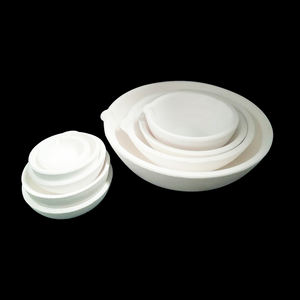
Large Diameter High Purity Fused Quartz Ceramic Cylindrical Crucible