Next-Generation Ceramics: Unlocking Superior Properties for Industry

PRODUCT PARAMETERS
Description
Overview of Wear Resistance Silicon Nitride Silicon Carbide Ceramic
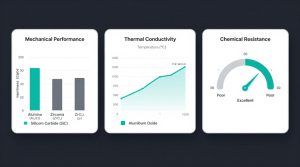
Silicon Carbide (SiC) is a super-hard, synthetic ceramic material known for its outstanding thermal conductivity, exceptional wear resistance, and ability to maintain high strength at extreme temperatures. It excels in demanding mechanical, thermal, and corrosive environments where other materials fail.
Features of Wear Resistance Silicon Nitride Silicon Carbide Ceramic
- Exceptional Wear & Abrasion Resistance: Extremely hard and durable, ideal for severe wear applications.
- High Thermal Conductivity: Excellent heat dissipation, superior to most metals at high temperatures.
- Superior Chemical Resistance: Resists attack by acids, alkalis, and molten metals.
- High-Temperature Strength: Maintains mechanical strength up to 1650°C.
- Excellent Thermal Shock Resistance: Withstands rapid temperature changes far better than Alumina.
- Semiconducting Properties: Can be engineered as an electrical conductor or insulator.
Specification of Wear Resistance Silicon Nitride Silicon Carbide Ceramic
Wear-Resistant Silicon Nitride and Silicon Carbide Ceramic Specs
Product Composition
This ceramic combines high-purity silicon nitride (Si ₃ N FOUR) and silicon carbide (SiC). Both products are sintered under regulated conditions to create a thick, consistent structure. The final product has minimal impurities, which aids maintain regular performance popular environments.
Solidity and Stamina
The material reveals outstanding firmness, normally above 1800 HV on the Vickers range. Its flexural stamina varieties from 600 to 900 MPa, depending on the precise formula and processing approach. These homes make it very immune to fracturing or damaging during use.
Put on Resistance
This ceramic master wear resistance. It does well versus abrasion, disintegration, and sliding wear. Tests show very low wear prices when revealed to sand, slurries, or metal-on-ceramic contact. This makes it ideal for components that encounter constant rubbing or bit effect.
Thermal Performance
It continues to be stable at high temperatures– up to 1400 ° C in air. Thermal shock resistance is strong because of low thermal development and great thermal conductivity. The material does not soften or flaw conveniently under warmth stress and anxiety.
Chemical Stability
The ceramic resists rust from acids, antacid, and molten steels. It remains intact in rough chemical settings where metals or polymers would weaken swiftly. This quality sustains long service life in aggressive commercial setups.
Density and Accuracy
Completed parts have a thickness of 3.1– 3.2 g/cm FIVE. They can be machined to tight resistances, often within ± 0.01 mm. Surface area surfaces as smooth as Ra 0.2 µm are attainable, decreasing rubbing in moving parts.
Typical Applications
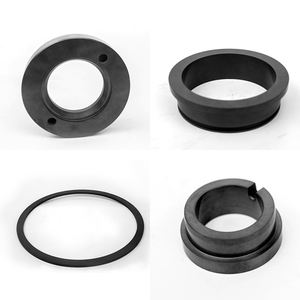
Industries utilize this ceramic in seals, bearings, nozzles, pump components, and cutting tools. Any type of component requiring longevity, warm resistance, and reduced wear gain from this product.
Applications of Wear Resistance Silicon Nitride Silicon Carbide Ceramic
Applications of Wear-Resistant Silicon Nitride and Silicon Carbide Ceramics
Industrial Machinery Parts
Silicon nitride and silicon carbide porcelains deal with difficult conditions better than a lot of steels. They stand up to wear, remain solid at heats, and do not corrode easily. These characteristics make them excellent for parts like bearings, seals, and pump elements. In mining and oil exploration devices, where grit and stress trigger rapid damages, these porcelains last much longer and decrease downtime.
Steel Processing Tools
In metal forming and cutting operations, tools face constant friction and warm. Basic products break fast. Ceramic inserts and passes away made from silicon nitride or silicon carbide keep their form and sharpness gradually. This suggests less device modifications, smoother production runs, and lower costs.
Aerospace and Protection Solutions
Aircraft engines and defense hardware require components that function accurately under stress and anxiety. Wear-resistant ceramics are utilized in generator blades, nozzles, and shield systems. They add toughness without adding weight. Their capability to endure extreme warm and mechanical shock makes them a smart option for important applications.
Automotive Efficiency Parts
High-performance lorries use these ceramics in brake discs, turbocharger rotors, and valve train elements. Silicon carbide and silicon nitride cut down on wear and improve action. Chauffeurs get better control, and maintenance intervals extend.
Energy and Power Generation
Power plants rely on equipment that runs continuously. Ceramic parts in compressors, warm exchangers, and burning chambers stand up versus erosion and thermal biking. Their long life span assists maintain power systems running safely and successfully.

Company Profile
Synthetic-chemical focus on the research and development, production and sales of ceramic products, serving the electronics, ceramics, chemical and other industries. Since its establishment in 2015, the company has been committed to providing customers with the best products and services, and has become a leader in the industry through continuous technological innovation and strict quality management.
Our products includes but not limited to Aluminum Nitride, Aluminum Oxide, Boron Carbide, Boron Nitride, Ceramic Crucible, ect. If you are interested in any type of these, please feel free to contact us.

Payment Methods
T/T, Western Union, Paypal, Credit Card etc.
Shipment Methods
By air, by sea, by express, as customers request.
5 FAQs of Wear Resistance Silicon Nitride Silicon Carbide Ceramic
Frequently Asked Questions About Wear-Resistant Silicon Nitride and Silicon Carbide Ceramics
What makes these ceramics so wear-resistant?
Silicon nitride and silicon carbide have very hard atomic structures. This hardness helps them resist scratches, abrasion, and surface damage. They keep their shape and performance even under heavy use or harsh conditions.
Where are these ceramics commonly used?
These materials work well in tough environments. You’ll find them in pump seals, cutting tools, bearings, and parts for mining or chemical processing. Their strength and stability make them ideal for machinery that runs nonstop or handles abrasive materials.
How do they compare to metals or standard ceramics?
They last longer than most metals when it comes to wear. Unlike regular ceramics, they don’t crack easily. They also handle high temperatures better and won’t corrode like metal parts might in wet or acidic settings.
Can they be shaped into complex parts?
Yes, but it takes special methods. These ceramics start as powders, then get pressed and heated until solid. After that, they’re ground or machined to exact sizes. While the process is more involved than molding metal, the final parts offer superior durability.
Do they need special maintenance?
Not really. Because they resist wear, corrosion, and heat, they need less upkeep than many alternatives. Just avoid sudden impacts—while strong, they can still chip if hit hard enough. In normal operation, they run reliably with minimal care.
REQUEST A QUOTE
RELATED PRODUCTS
Alumina Silicon Carbide Boron Carbide Ceramic Support
Silicon Carbide Ceramic Foam for Corrosion Resistant Materials
Refractory Nitride Bonded Silicon Carbide Ceramic Kiln Shelf
Custom High Performance Silicon Carbide Ceramic Rods
Silicon Carbide Ceramic Beams for Shuttle Furnace Holders