Next-Generation Ceramics: Unlocking Superior Properties for Industry

PRODUCT PARAMETERS
Description
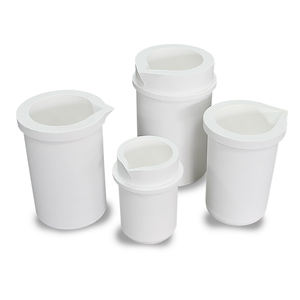
Overview of Factory Custom Alumina and Opaque Quartz Ceramic Crucible
Quartz ceramics, also known as fused silica ceramics or re-bonded quartz products, are a high-performance advanced ceramic material. Unlike traditional clay-based ceramics, they are not made by sintering clay, but rather from high-purity fused silica (silicon dioxide, SiO₂) that is crushed, shaped, and then sintered at high temperatures.
Their core appeal lies in their unique combination of the excellent properties of fused silica glass (such as extremely low thermal expansion coefficient and excellent thermal shock stability) and the structural strength and versatility of ceramics (they can be made into crucibles, rollers, and irregularly shaped parts), overcoming the limitations of fused silica glass in terms of difficulty in manufacturing large sizes and complex shapes, and its high cost.
Quartz ceramics perform exceptionally well in harsh environments involving high temperatures, rapid temperature changes, and chemical corrosion, and are widely used in solar photovoltaics (crucibles for polycrystalline silicon ingot furnaces), semiconductors, aerospace, metallurgy and casting, the glass industry, and laboratories.
Main Characteristics of Factory Custom Alumina and Opaque Quartz Ceramic Crucible
Excellent Thermal Shock Stability: They have an extremely low thermal expansion coefficient, generating almost no thermal stress during rapid temperature changes, and can withstand rapid cooling from extremely high temperatures to room temperature without cracking.
Extremely High Temperature Resistance and Thermal Stability: They can be used continuously at temperatures of 1100°C – 1350°C, and can even withstand higher temperatures for short periods. They do not soften or deform at high temperatures and maintain good dimensional stability.
Excellent Chemical Inertness and Corrosion Resistance: Except for hydrofluoric acid and hot concentrated phosphoric acid, they have strong resistance to most acids, salt solutions, and molten metals (such as aluminum, copper, gold, silver, and platinum), making them ideal melting and containment vessels.
Low Thermal Conductivity and Good Electrical Insulation: They have low thermal conductivity, making them excellent thermal insulation materials. They also maintain good electrical insulation properties at high temperatures.
High Purity and Low Contamination Risk: Made from high-purity quartz sand, they do not contaminate the high-purity molten metals or semiconductor materials they come into contact with, ensuring process cleanliness.
Moderate Mechanical Strength: Compared to most engineering ceramics, their mechanical strength at room temperature is relatively low; they are brittle materials. However, their strength is sufficient under their designed operating conditions (high-temperature insulation, thermal shock resistance). Its strength can be improved by optimizing the formula and manufacturing process.
Specifications of Factory Custom Alumina and Opaque Quartz Ceramic Crucible
Manufacturing facility customized alumina crucibles are made from pure aluminum oxide. They reveal excellent resistance to high temperatures. These crucibles manage temperatures as much as 1800 ° C quickly. Alumina is extremely strong. It resists chemical rust well. Acids and bases do not quickly harm it. This material also has excellent thermal shock resistance. It cools off and warms up without cracking promptly. These crucibles can be found in many dimensions. Usual sizes vary from 10ml to 5000ml ability. Personalized shapes are possible. You can get tall kind, reduced type, or special layouts. Surface finishes vary. Choices include smooth sleek or conventional matte finishes. Alumina crucibles fit demanding lab work. They help melting, calcining, and sintering materials.
Nontransparent quartz ceramic crucibles use one more choice. They are made from fused silicon dioxide. This material is very pure. It provides fantastic chemical stability. Opaque quartz deals with slightly lower temperatures than alumina. Its optimum constant use is about 1100 ° C. It manages thermal cycling quite possibly. Unexpected temperature adjustments cause less stress. These crucibles resist acids strongly. Alkalis impact them much more gradually. They can be found in comparable size varies to alumina crucibles. Customized shapes are likewise available. Nontransparent quartz has a natural white, non-translucent look. These crucibles are usually chosen for specific chemical procedures. They are good for responses entailing hostile compounds.
Both sorts of crucibles are customized. Manufacturing facilities create them to your exact demands. You define the measurements, shape, and capability needed. You choose the product based upon your application. Consider the maximum temperature level required. Consider the chemicals entailed. Determine if thermal shock is a big problem. The factory then produces the crucible to match these specifications. This makes sure the crucible carries out properly for your job. Customization covers dimension, wall surface density, and overall geometry. Surface area coating options aid as well.
Applications of Factory Custom Alumina and Opaque Quartz Ceramic Crucible
Manufacturing facility custom-made alumina and nontransparent quartz ceramic crucibles are essential tools in lots of sectors. They deal with high temperatures and harsh chemicals well. Alumina crucibles are extremely solid. They stand up to heat up to 1800 ° C. This makes them best for thawing steels like gold, silver, and platinum. Jewelers and metal refineries use them daily. Laboratories rely on them for chemical evaluation requiring intense warmth. They also operate in growing synthetic crystals. Alumina crucibles are chemically inert. They do not react with many liquified materials. This maintains samples pure throughout screening or melting. Their durability implies they last longer than other products. This conserves money with time.
Opaque quartz ceramic crucibles are various. They handle a little reduced temperatures than alumina, typically approximately 1100 ° C. But they use superb thermal shock resistance. Unexpected temperature level modifications won’t split them easily. This is vital for processes including quick home heating or air conditioning. They prevail in semiconductor manufacturing. Right here, they hold materials during crystal development or annealing. The optical industry uses them for melting unique glasses. Opaque quartz is very pure. It doesn’t include pollutants to delicate procedures. Its smooth surface area prevents product sticking. Cleaning up is less complicated after usage. Both types of crucibles are customized. Factories form them to particular sizes and styles. This guarantees they fit special devices and process needs completely. Selecting the ideal crucible depends upon the temperature level and chemical atmosphere required. Alumina suits extreme warm. Opaque quartz stands out where thermal shock is a risk.

Company Profile
Synthetic-chemical focus on the research and development, production and sales of ceramic products, serving the electronics, ceramics, chemical and other industries. Since its establishment in 2015, the company has been committed to providing customers with the best products and services, and has become a leader in the industry through continuous technological innovation and strict quality management.
Our products includes but not limited to Aluminum Nitride, Aluminum Oxide, Boron Carbide, Boron Nitride, Ceramic Crucible, ect. If you are interested in any type of these, please feel free to contact us.

Payment Methods
T/T, Western Union, Paypal, Credit Card etc.
Shipment Methods
By air, by sea, by express, as customers request.
5 FAQs of Factory Custom Alumina and Opaque Quartz Ceramic Crucible
What exactly are alumina and opaque quartz ceramic crucibles?
These crucibles are containers made from special ceramics. They are used for melting or holding materials at very high temperatures. Alumina is aluminum oxide. Opaque quartz is a special type of fused silica.
How hot can these crucibles get?
These crucibles handle extreme heat well. Alumina crucibles typically withstand temperatures up to about 1700°C. Opaque quartz crucibles can handle temperatures up to about 1100°C. This makes them suitable for many demanding processes.
Are they resistant to chemicals?
Yes, both alumina and opaque quartz resist chemicals effectively. They don’t react easily with many acids, bases, and other substances. This chemical stability is crucial for lab work and industrial uses. It means the crucible won’t ruin your materials.
Why choose opaque quartz over clear quartz?
Opaque quartz blocks light better than clear quartz. This feature matters for certain chemical reactions sensitive to light. Opaque quartz also offers good thermal shock resistance. It can handle rapid temperature changes without cracking easily.
How should these crucibles be handled?
Handle them carefully to avoid cracks. Don’t heat them too quickly or cool them down too fast. Always use tongs designed for high temperatures. Follow the specific heating instructions for the material you are using.
REQUEST A QUOTE
RELATED PRODUCTS
High Grade Quartz for Precision Ceramic Applications
Whole High Quality Nano Ceramic Diamond Quartz Coating
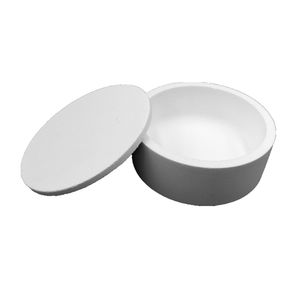
Low Energy Consumption Quartz Impact Crusher for Ceramic Materials
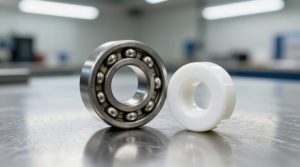
Free Design High Quality Custom Size Quartz Stone Ceramic Display
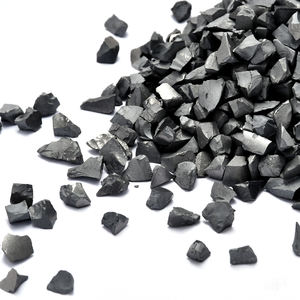
Factory Quartz Limestone Ceramic Industrial Dry Grinding Mill