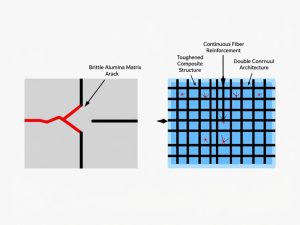
Next-Generation Ceramics: Unlocking Superior Properties for Industry

PRODUCT PARAMETERS
Description
Overview of High Grade Quartz for Precision Ceramic Applications
Quartz ceramics, also known as fused silica ceramics or re-bonded quartz products, are a high-performance advanced ceramic material. Unlike traditional clay-based ceramics, they are not made by sintering clay, but rather from high-purity fused silica (silicon dioxide, SiO₂) that is crushed, shaped, and then sintered at high temperatures.
Their core appeal lies in their unique combination of the excellent properties of fused silica glass (such as extremely low thermal expansion coefficient and excellent thermal shock stability) and the structural strength and versatility of ceramics (they can be made into crucibles, rollers, and irregularly shaped parts), overcoming the limitations of fused silica glass in terms of difficulty in manufacturing large sizes and complex shapes, and its high cost.
Quartz ceramics perform exceptionally well in harsh environments involving high temperatures, rapid temperature changes, and chemical corrosion, and are widely used in solar photovoltaics (crucibles for polycrystalline silicon ingot furnaces), semiconductors, aerospace, metallurgy and casting, the glass industry, and laboratories.
Main Characteristics of High Grade Quartz for Precision Ceramic Applications
Excellent Thermal Shock Stability: They have an extremely low thermal expansion coefficient, generating almost no thermal stress during rapid temperature changes, and can withstand rapid cooling from extremely high temperatures to room temperature without cracking.
Extremely High Temperature Resistance and Thermal Stability: They can be used continuously at temperatures of 1100°C – 1350°C, and can even withstand higher temperatures for short periods. They do not soften or deform at high temperatures and maintain good dimensional stability.
Excellent Chemical Inertness and Corrosion Resistance: Except for hydrofluoric acid and hot concentrated phosphoric acid, they have strong resistance to most acids, salt solutions, and molten metals (such as aluminum, copper, gold, silver, and platinum), making them ideal melting and containment vessels.
Low Thermal Conductivity and Good Electrical Insulation: They have low thermal conductivity, making them excellent thermal insulation materials. They also maintain good electrical insulation properties at high temperatures.
High Purity and Low Contamination Risk: Made from high-purity quartz sand, they do not contaminate the high-purity molten metals or semiconductor materials they come into contact with, ensuring process cleanliness.
Moderate Mechanical Strength: Compared to most engineering ceramics, their mechanical strength at room temperature is relatively low; they are brittle materials. However, their strength is sufficient under their designed operating conditions (high-temperature insulation, thermal shock resistance). Its strength can be improved by optimizing the formula and manufacturing process.
Specifications of High Grade Quartz for Precision Ceramic Applications
High-grade quartz is essential for requiring accuracy ceramic applications. This material provides consistent performance in crucial production processes. Our quartz meets stringent requirements for pureness and particle size control. We supply trusted material for your technological porcelains needs.
The quartz web content have to go beyond 99.5% SiO2. High purity is non-negotiable for premium ceramics. Pollutants directly affect end product residential or commercial properties. Contaminants like iron or aluminum oxides are lessened. This guarantees foreseeable firing habits and outstanding last characteristics.
Particle dimension circulation is securely regulated. Fine bit sizes are important. This permits better developing and denser sintering. Our quartz powders supply uniform fragment dimension distributions. You attain regular packing density and microstructure development. This causes trusted mechanical toughness and thermal security.
Low alkali material is an additional essential need. Alkalis can cause unwanted responses during firing. We make sure marginal levels of sodium and potassium oxides. This avoids issues like bloating or surface area problems. Your ceramic parts keep dimensional accuracy and surface area high quality.
Particular chemical analysis assurances structure. We provide in-depth certifications with each batch. Trace element levels are kept an eye on and reported. You have full openness pertaining to the material chemistry. This sustains quality assurance in your production line.
This high-grade quartz is excellent for innovative ceramics. Applications include kiln furnishings, specialized refractories, and technological porcelain. It performs well in investment casting mold and mildews and factory cores. The material supports regular, high-yield manufacturing.
Applications of High Grade Quartz for Precision Ceramic Applications
High quality quartz is essential for precision ceramics. This product provides special homes. Ceramic manufacturers depend on it. The purity is vital. Pollutants create flaws. High purity quartz lessens problems. This leads to more powerful, much more trustworthy ceramic parts. Regular top quality matters. Quartz provides this uniformity.
Thermal stability is one more benefit. Quartz takes care of high heat well. This is necessary during firing. Ceramics require firing in kilns. Quartz assists keep form. It stops warping or fracturing. This stability makes sure dimensional accuracy. Exact measurements are essential in many applications.
Reduced thermal development is vital as well. Quartz broadens really little when heated up. It gets little bit when cooled. This reduces tension inside porcelains. Stresses create fractures. Making use of quartz decreases the danger. It improves the item life expectancy. Components last longer under temperature changes.
Chemical resistance is a significant advantage. Quartz resists acids and antacids. It withstands severe chemicals. This is necessary for lots of end uses. Assume chemical handling tools. Believe semiconductor production tools. Quartz aids porcelains make it through tough atmospheres. It avoids degradation.
The bit dimension issues. Fine, controlled quartz fragments are utilized. They boost packing density. Better loading provides a smoother surface. It enhances the final coating. Uniform particles guarantee also shooting. This adds to total item quality. High quality quartz delivers efficiency. It fulfills requiring application requirements.

Company Profile
Synthetic-chemical focus on the research and development, production and sales of ceramic products, serving the electronics, ceramics, chemical and other industries. Since its establishment in 2015, the company has been committed to providing customers with the best products and services, and has become a leader in the industry through continuous technological innovation and strict quality management.
Our products includes but not limited to Aluminum Nitride, Aluminum Oxide, Boron Carbide, Boron Nitride, Ceramic Crucible, ect. If you are interested in any type of these, please feel free to contact us.

Payment Methods
T/T, Western Union, Paypal, Credit Card etc.
Shipment Methods
By air, by sea, by express, as customers request.
5 FAQs of High Grade Quartz for Precision Ceramic Applications
What is high-grade quartz?
High-grade quartz means very pure quartz material. It has very low levels of unwanted elements. People use it for precision ceramic parts. It’s good for applications needing exact control.
Why is high-grade quartz used in precision ceramics?
High-grade quartz is used because it is stable. It doesn’t change much when heated. Ceramics made with it shrink predictably. This helps make parts with tight size requirements. It also gives good strength and chemical resistance.
What properties make high-grade quartz suitable?
Its low thermal expansion is key. This means parts won’t warp much during firing. Its high purity prevents defects in the ceramic. It also helps achieve a smooth surface finish. This is important for many technical uses.
How does purity affect the ceramic performance?
Impurities cause problems. They can create bubbles or weak spots. High purity means fewer flaws. This leads to stronger, more reliable parts. Consistent purity gives consistent results batch after batch.
Is high-grade quartz different from regular quartz?
Yes. Regular quartz has more impurities. High-grade quartz is specially processed. It is cleaned to remove contaminants. This makes it cost more. But it’s needed for demanding ceramic applications.
REQUEST A QUOTE
RELATED PRODUCTS
Inert Gas Atmosphere Furnace with Quartz Alumina Ceramic Tube
Customize Logo Artificial Stone Ceramic Tile Marble Quartz Sample Box
Large Capacity Ceramic Ball Mill for Limestone Quartz and Cement
Melting Gold Platinum Fused Silica Quartz Ceramic Crucible Dish
Ceramic Foundry Industry Silica Quartz Sand Per Ton