Next-Generation Ceramics: Unlocking Superior Properties for Industry

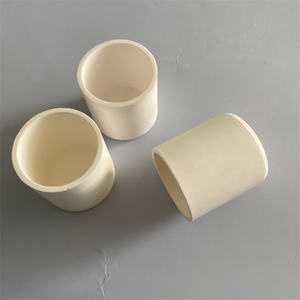
PRODUCT PARAMETERS
Description
Overview of Quartz Stone Slab Ceramic Material Water Jet Cutting Machine
Quartz ceramics, also known as fused silica ceramics or re-bonded quartz products, are a high-performance advanced ceramic material. Unlike traditional clay-based ceramics, they are not made by sintering clay, but rather from high-purity fused silica (silicon dioxide, SiO₂) that is crushed, shaped, and then sintered at high temperatures.
Their core appeal lies in their unique combination of the excellent properties of fused silica glass (such as extremely low thermal expansion coefficient and excellent thermal shock stability) and the structural strength and versatility of ceramics (they can be made into crucibles, rollers, and irregularly shaped parts), overcoming the limitations of fused silica glass in terms of difficulty in manufacturing large sizes and complex shapes, and its high cost.
Quartz ceramics perform exceptionally well in harsh environments involving high temperatures, rapid temperature changes, and chemical corrosion, and are widely used in solar photovoltaics (crucibles for polycrystalline silicon ingot furnaces), semiconductors, aerospace, metallurgy and casting, the glass industry, and laboratories.
Main Characteristics of Quartz Stone Slab Ceramic Material Water Jet Cutting Machine
Excellent Thermal Shock Stability: They have an extremely low thermal expansion coefficient, generating almost no thermal stress during rapid temperature changes, and can withstand rapid cooling from extremely high temperatures to room temperature without cracking.
Extremely High Temperature Resistance and Thermal Stability: They can be used continuously at temperatures of 1100°C – 1350°C, and can even withstand higher temperatures for short periods. They do not soften or deform at high temperatures and maintain good dimensional stability.
Excellent Chemical Inertness and Corrosion Resistance: Except for hydrofluoric acid and hot concentrated phosphoric acid, they have strong resistance to most acids, salt solutions, and molten metals (such as aluminum, copper, gold, silver, and platinum), making them ideal melting and containment vessels.
Low Thermal Conductivity and Good Electrical Insulation: They have low thermal conductivity, making them excellent thermal insulation materials. They also maintain good electrical insulation properties at high temperatures.
High Purity and Low Contamination Risk: Made from high-purity quartz sand, they do not contaminate the high-purity molten metals or semiconductor materials they come into contact with, ensuring process cleanliness.
Moderate Mechanical Strength: Compared to most engineering ceramics, their mechanical strength at room temperature is relatively low; they are brittle materials. However, their strength is sufficient under their designed operating conditions (high-temperature insulation, thermal shock resistance). Its strength can be improved by optimizing the formula and manufacturing process.
Specifications of Quartz Stone Slab Ceramic Material Water Jet Cutting Machine
Quartz Rock Piece Porcelain Material Water Jet Cutting Device– Secret Specs
Reducing System
The device utilizes a high-pressure water jet combined with rough garnet. This technique puncture quartz, ceramic, and other hard products cleanly. The reducing head carry on three axes for exact control. Maximum cutting speed gets to 150 mm per minute, depending on material density.
Pump and Pressure
A 37 kW intensifier pump delivers up to 420 MPa (60,000 PSI) of stress. This makes sure smooth, rapid cuts without warmth damage or fractures. The pump runs progressively for long hours and consists of automatic pressure modification.
Worktable Size
The conventional worktable procedures 3000 mm by 1500 mm. It supports slabs up to 200 mm thick. The table surface is constructed from stainless-steel grates to reduce wear and allow simple cleaning.
Motion Control
Precision straight overviews and servo motors assist the cutting head. Positioning precision stays within ± 0.1 mm over the complete traveling array. The system links to common CAD/CAM software application for quick task configuration.
Water and Abrasive Monitoring
A closed-loop filtration system recycles reducing water. It eliminates debris and expands water life. An automated abrasive feeder maintains garnet flow constant throughout operation. This reduces waste and running costs.
Electrical Needs
Power input is 380 V, 3-phase, 50/60 Hz. Total power intake has to do with 45 kW under complete lots. The control cupboard meets IP54 defense criteria for dust and splash resistance.
Measurements and Weight
Maker footprint is 4200 mm (L) × 2200 mm (W) × 2500 mm (H). Overall weight is roughly 6500 kg. Forklift ports and raising points are built in for safe transport and installment.
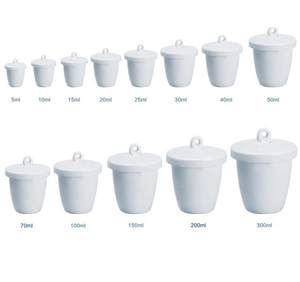
Applications of Quartz Stone Slab Ceramic Material Water Jet Cutting Machine
Applications of Quartz Rock Slab Ceramic Material Water Jet Reducing Machine
Precision Cutting for Demanding Products
The water jet cutting maker is built to take care of challenging materials like quartz rock slabs and ceramic. It makes use of a high-pressure stream of water mixed with rough particles to puncture these thick surface areas easily. This technique prevents heat, so there is no threat of cracking or warping the product during the process.
Why it functions well for quartz and ceramic
Quartz and ceramic are tough and weak. Traditional saws can chip or damage them. The water jet cuts without get in touch with, which implies much less anxiety on the material. Edges remain smooth, and intricate shapes are feasible without additional finishing actions.
Typical usages in real-world settings
Kitchen counters, backsplashes, and wall surface panels usually need custom-made shapes. Developers use this device to create contours, intermediaries for sinks, or thorough patterns. Floor tile suppliers also rely upon it to create consistent pieces rapidly. In design, it aids shape decorative aspects that fit precise measurements.
Advantages over various other cutting techniques
No dirt is generated, which keeps the work area cleaner and much safer. Given that no warm is entailed, the product’s color and structure remain unmodified. Setup is quick, and adjustments can be made on the fly utilizing digital controls. This conserves time and lowers waste.
Who utilizes this machine
Stone makers, ceramic tile stores, and building companies use it daily. Musicians and developers also select it when they require clean lines and complex kinds. It fits well in both tiny workshops and big production lines.
The maker supplies regular results throughout various densities and dimensions. Operators discover it simple to manage as soon as educated. Upkeep is simple, and parts last long under regular usage.

Company Profile
Synthetic-chemical focus on the research and development, production and sales of ceramic products, serving the electronics, ceramics, chemical and other industries. Since its establishment in 2015, the company has been committed to providing customers with the best products and services, and has become a leader in the industry through continuous technological innovation and strict quality management.
Our products includes but not limited to Aluminum Nitride, Aluminum Oxide, Boron Carbide, Boron Nitride, Ceramic Crucible, ect. If you are interested in any type of these, please feel free to contact us.

Payment Methods
T/T, Western Union, Paypal, Credit Card etc.
Shipment Methods
By air, by sea, by express, as customers request.
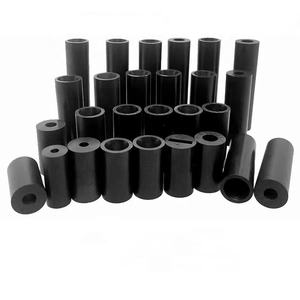
5 FAQs of Quartz Stone Slab Ceramic Material Water Jet Cutting Machine
Frequently Asked Questions About Quartz Stone Slab Water Jet Cutting Machines
1. What materials can this machine cut?
The water jet cutting machine cuts quartz stone slabs with ease. It also works well on granite, marble, ceramic, glass, and metal. The high-pressure water stream mixed with abrasive grit handles hard materials without causing heat damage or cracks.
2. Is the cutting process precise?
Yes. The machine delivers high precision. It follows digital designs exactly. Tolerances stay within ±0.1 mm. This ensures clean edges and accurate shapes every time. Complex patterns are no problem.
3. Does it cause damage to the material?
No. Unlike traditional saws, water jet cutting creates no heat. That means no burning, melting, or micro-cracks. The material stays intact. Surface quality remains smooth and ready for finishing.
4. How fast is the cutting speed?
Speed depends on material thickness and type. For standard quartz slabs (20–30 mm thick), the machine cuts at 100–300 mm per minute. Thinner pieces cut faster. Operators can adjust pressure and speed for best results.
5. Is maintenance difficult?
Not at all. Routine checks keep the machine running well. Clean the nozzle and check the pump regularly. Replace worn parts like seals or abrasives when needed. Most tasks take little time. Training makes maintenance even easier.
REQUEST A QUOTE
RELATED PRODUCTS
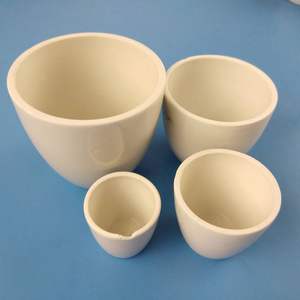
High Frequency Quartz Tube and Steatite Ceramic Insulation Part
Refractory Quartz Ceramic Crucibles for Melting Platinum Gold
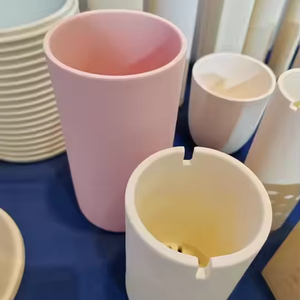
Fused Silica Quartz Alumina Ceramic Roller for Glass Tempering Furnace
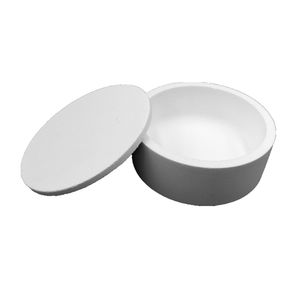
Holder Metal Flooring Stone Quartz Display Rack Ceramic Display Rack
Slab Stone Ceramic Quartz CNC Axis Waterjet Cutting Machine