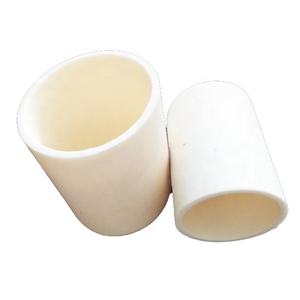
Next-Generation Ceramics: Unlocking Superior Properties for Industry

PRODUCT PARAMETERS
Description
Overview of Best Quartz Ceramic Roller Fused Silica Rolls
Quartz ceramics, also known as fused silica ceramics or re-bonded quartz products, are a high-performance advanced ceramic material. Unlike traditional clay-based ceramics, they are not made by sintering clay, but rather from high-purity fused silica (silicon dioxide, SiO₂) that is crushed, shaped, and then sintered at high temperatures.
Their core appeal lies in their unique combination of the excellent properties of fused silica glass (such as extremely low thermal expansion coefficient and excellent thermal shock stability) and the structural strength and versatility of ceramics (they can be made into crucibles, rollers, and irregularly shaped parts), overcoming the limitations of fused silica glass in terms of difficulty in manufacturing large sizes and complex shapes, and its high cost.
Quartz ceramics perform exceptionally well in harsh environments involving high temperatures, rapid temperature changes, and chemical corrosion, and are widely used in solar photovoltaics (crucibles for polycrystalline silicon ingot furnaces), semiconductors, aerospace, metallurgy and casting, the glass industry, and laboratories.
Main Characteristics of Best Quartz Ceramic Roller Fused Silica Rolls
Excellent Thermal Shock Stability: They have an extremely low thermal expansion coefficient, generating almost no thermal stress during rapid temperature changes, and can withstand rapid cooling from extremely high temperatures to room temperature without cracking.
Extremely High Temperature Resistance and Thermal Stability: They can be used continuously at temperatures of 1100°C – 1350°C, and can even withstand higher temperatures for short periods. They do not soften or deform at high temperatures and maintain good dimensional stability.
Excellent Chemical Inertness and Corrosion Resistance: Except for hydrofluoric acid and hot concentrated phosphoric acid, they have strong resistance to most acids, salt solutions, and molten metals (such as aluminum, copper, gold, silver, and platinum), making them ideal melting and containment vessels.
Low Thermal Conductivity and Good Electrical Insulation: They have low thermal conductivity, making them excellent thermal insulation materials. They also maintain good electrical insulation properties at high temperatures.
High Purity and Low Contamination Risk: Made from high-purity quartz sand, they do not contaminate the high-purity molten metals or semiconductor materials they come into contact with, ensuring process cleanliness.
Moderate Mechanical Strength: Compared to most engineering ceramics, their mechanical strength at room temperature is relatively low; they are brittle materials. However, their strength is sufficient under their designed operating conditions (high-temperature insulation, thermal shock resistance). Its strength can be improved by optimizing the formula and manufacturing process.
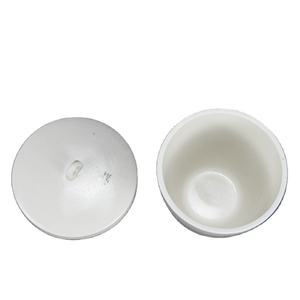
Specifications of Best Quartz Ceramic Roller Fused Silica Rolls
Requirements of Best Quartz Porcelain Roller Fused Silica Rolls
Material Make-up
These rollers are made from high-purity integrated silica. The product consists of over 99.9% SiO TWO. This makes sure excellent thermal stability and low thermal expansion. No binders or ingredients are utilized in the manufacturing procedure. The outcome is a tidy, regular structure that does well under severe heat.
Dimensional Precision
All rollers are precision-ground to limited tolerances. Size tolerance remains within ± 0.05 mm. Straightness is kept below 0.1 mm per meter of length. Surface area surface reaches Ra ≤ 0.8 µm. These specifications assure smooth procedure and consistent contact in commercial applications.
Thermal Performance
Integrated silica rollers take care of temperature levels as much as 1150 ° C constantly. They stand up to thermal shock far better than most ceramics. Quick home heating or air conditioning does not create breaking or warping. This makes them ideal for glass annealing, semiconductor handling, and solar battery manufacturing.
Mechanical Strength
Regardless of their brittleness, these rollers supply reliable lots assistance. Flexural toughness arrays from 45 to 60 MPa. Hardness procedures around 570– 620 Knoop. The style minimizes deflection under typical operating lots. Customers can anticipate long life span with correct handling.
Chemical Resistance
The rollers show solid resistance to acids and halogens. They do not react with many molten glasses or metal vapors. Alkalis and hydrofluoric acid should be prevented. This chemical inertness assists maintain item purity in sensitive environments.
Modification Options
Sizes and shaft configurations can be tailored to your needs. Criterion diameters range from 20 mm to 300 mm. Sizes increase to 3000 mm. End fittings, keyways, or flanges are offered on demand. Each system is tested before delivery to fulfill quality requirements.
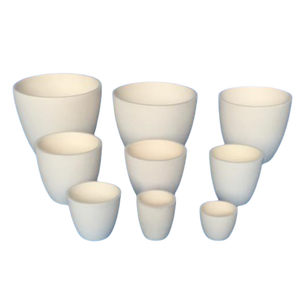
Applications of Best Quartz Ceramic Roller Fused Silica Rolls
Applications of Best Quartz Ceramic Roller Fused Silica Rolls
High-Temperature Industrial Processes
Quartz ceramic roller merged silica rolls job well in high-heat setups. They manage temperature levels approximately 1200 ° C without buckling or cracking. These rollers prevail in glass production lines. They sustain and move glass sheets smoothly with annealing lehrs and solidifying zones. Their low thermal growth maintains them steady under quick home heating or air conditioning.
Solar Panel Manufacturing
Solar cell manufacturers depend on these rollers for regular results. During the diffusion and firing steps, integrated silica rollers bring silicon wafers through heating systems. The material stays tidy and does not pollute fragile surface areas. This helps maintain solar batteries effective and defect-free.
Semiconductor Production
In chip manufacturing, pureness matters a great deal. Fused silica rollers satisfy stringent tidiness requirements. They move wafers inside CVD (chemical vapor deposition) and oxidation chambers. Their smooth surface prevents scrapes. Their chemical inertness prevents undesirable responses with process gases.
Apartment Panel Display Lines
Making LCDs and OLED displays needs constant, specific handling. These rollers guide glass substratums via finishing and sintering stages. They withstand drooping even after lengthy usage. That suggests less line interruptions and much better yield rates.
Specialty Glass and Ceramics
Art glass studios and technical porcelains plants additionally use integrated silica rolls. They help shape and end up items without leaving marks. The rollers remain strong in duplicated thermal cycles. Operators value their long life span and reduced maintenance requirements.
These rollers match any work where heat resistance, purity, and dimensional security are essential. Their performance cuts downtime and boosts outcome throughout numerous sophisticated markets.

Company Profile
Synthetic-chemical focus on the research and development, production and sales of ceramic products, serving the electronics, ceramics, chemical and other industries. Since its establishment in 2015, the company has been committed to providing customers with the best products and services, and has become a leader in the industry through continuous technological innovation and strict quality management.
Our products includes but not limited to Aluminum Nitride, Aluminum Oxide, Boron Carbide, Boron Nitride, Ceramic Crucible, ect. If you are interested in any type of these, please feel free to contact us.

Payment Methods
T/T, Western Union, Paypal, Credit Card etc.
Shipment Methods
By air, by sea, by express, as customers request.
5 FAQs of Best Quartz Ceramic Roller Fused Silica Rolls
What is a quartz ceramic roller made of?
Quartz ceramic rollers are built from fused silica, a high-purity form of glass made mostly from silicon dioxide. This material is melted and shaped into solid rollers. It has no added binders or fillers. The result is a smooth, dense surface that handles heat and wear very well.
Why choose fused silica over other materials?
Fused silica stays stable at high temperatures. It does not expand much when heated, so it keeps its shape. It also resists thermal shock better than metals or regular ceramics. That means it won’t crack when temperature changes fast. Its surface stays clean and smooth, which helps in processes like glass bending or fiber drawing.
Where are these rollers used?
These rollers work in industries that need clean, precise, and heat-resistant parts. Common uses include flat glass production, solar panel manufacturing, and optical fiber lines. They also appear in semiconductor processing and high-temperature conveyor systems. Any place where metal rollers would contaminate the product or warp under heat is a good fit for fused silica rollers.
How long do quartz ceramic rollers last?
With proper care, they can last many years. Their life depends on operating conditions like temperature, load, and speed. Because fused silica is hard and chemically inert, it wears slowly. Avoid sudden impacts or sharp contact, as this material is strong but not impact-proof.
Can these rollers be customized?
Yes. Most manufacturers offer custom sizes, diameters, and lengths. You can also request specific surface finishes or hole patterns for mounting. Just share your machine specs and process needs, and the supplier will build a roller that fits your system exactly.
REQUEST A QUOTE
RELATED PRODUCTS
Showroom Quartz Stone Sample Ceramic Tile Display Rack Floor Slide
Glass Tempering Furnace Quartz Fused Silica Ceramic Roller
Fused Silica Quartz Ceramic Roller for Tile Kiln Furnace
Best Choice Quartz Ceramic Screw for High Power Microwave Devices
Quartz Ceramic Soldering Plates for Jewelry Processing