Next-Generation Ceramics: Unlocking Superior Properties for Industry

PRODUCT PARAMETERS
Description
Overview of Factory Dry Wet Ball Mill Quartz Limestone Coal Ceramic Cement
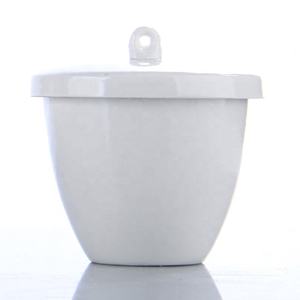
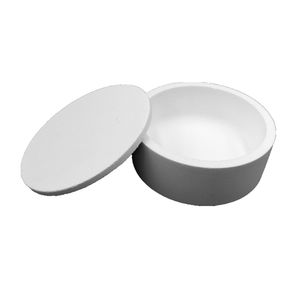
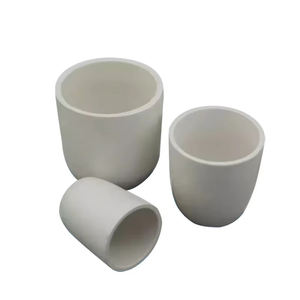
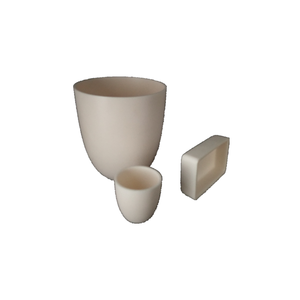
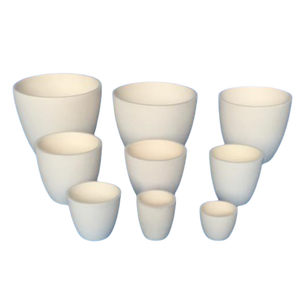
Quartz ceramics, also known as fused silica ceramics or re-bonded quartz products, are a high-performance advanced ceramic material. Unlike traditional clay-based ceramics, they are not made by sintering clay, but rather from high-purity fused silica (silicon dioxide, SiO₂) that is crushed, shaped, and then sintered at high temperatures.
Their core appeal lies in their unique combination of the excellent properties of fused silica glass (such as extremely low thermal expansion coefficient and excellent thermal shock stability) and the structural strength and versatility of ceramics (they can be made into crucibles, rollers, and irregularly shaped parts), overcoming the limitations of fused silica glass in terms of difficulty in manufacturing large sizes and complex shapes, and its high cost.
Quartz ceramics perform exceptionally well in harsh environments involving high temperatures, rapid temperature changes, and chemical corrosion, and are widely used in solar photovoltaics (crucibles for polycrystalline silicon ingot furnaces), semiconductors, aerospace, metallurgy and casting, the glass industry, and laboratories.
Main Characteristics of Factory Dry Wet Ball Mill Quartz Limestone Coal Ceramic Cement
Excellent Thermal Shock Stability: They have an extremely low thermal expansion coefficient, generating almost no thermal stress during rapid temperature changes, and can withstand rapid cooling from extremely high temperatures to room temperature without cracking.
Extremely High Temperature Resistance and Thermal Stability: They can be used continuously at temperatures of 1100°C – 1350°C, and can even withstand higher temperatures for short periods. They do not soften or deform at high temperatures and maintain good dimensional stability.
Excellent Chemical Inertness and Corrosion Resistance: Except for hydrofluoric acid and hot concentrated phosphoric acid, they have strong resistance to most acids, salt solutions, and molten metals (such as aluminum, copper, gold, silver, and platinum), making them ideal melting and containment vessels.
Low Thermal Conductivity and Good Electrical Insulation: They have low thermal conductivity, making them excellent thermal insulation materials. They also maintain good electrical insulation properties at high temperatures.
High Purity and Low Contamination Risk: Made from high-purity quartz sand, they do not contaminate the high-purity molten metals or semiconductor materials they come into contact with, ensuring process cleanliness.
Moderate Mechanical Strength: Compared to most engineering ceramics, their mechanical strength at room temperature is relatively low; they are brittle materials. However, their strength is sufficient under their designed operating conditions (high-temperature insulation, thermal shock resistance). Its strength can be improved by optimizing the formula and manufacturing process.
Specifications of Factory Dry Wet Ball Mill Quartz Limestone Coal Ceramic Cement
Factory Dry Damp Sphere Mill– Developed for Heavy-Duty Grinding
Our manufacturing facility dry wet round mill handles tough grinding work effortlessly. It functions well for quartz, limestone, coal, ceramic, and cement materials. This maker offers you reputable efficiency whether you run it in completely dry or damp mode.
Trick Includes
Strong Building and construction: The mill body utilizes thick steel plates. All welds are solid and examined. Bearings and equipments are developed to last under hefty lots.
Dual-Mode Operation: Switch over in between dry and damp grinding without significant changes. Simply adjust the feed and discharge setup. This saves time and cuts downtime.
Reliable Grinding: Steel balls inside the drum crush product fast. The turning rate is set for best outcomes. You get fine, even powder every single time.
Easy Maintenance: Large gain access to doors allow you examine components quickly. Liners are bolted in place– basic to change when put on. Lubrication factors are easy to reach.
Technical Facts
Ability: From 0.5 to 30 tons per hour, based upon model and product.
Electric motor Power: Ranges from 18.5 kW to 1600 kW.
Drum Size: Diameter from 900 mm to 4500 mm; size from 1800 mm to 12000 mm.
Feeding Dimension: Max 25 mm.
Discharge Size: As fine as 0.074 mm (200 mesh).
The mill operates on common three-phase power. Control board come with overload defense and start-stop buttons. Optional functions include automatic lubrication and dirt collection systems.
All devices are checked prior to shipping. We offer complete assistance for installment and training. Extra components are always in supply.
Applications of Factory Dry Wet Ball Mill Quartz Limestone Coal Ceramic Cement
Manufacturing Facility Dry Wet Sphere Mill– Versatile Grinding for Key Industries
Wide Use Across Materials and Sectors
The dry wet sphere mill is a core grinding maker utilized in several factories. It works well with both dry and wet products. This versatility makes it perfect for refining various raw materials.
Quartz is one usual product ground in sphere mills. High-purity quartz powder is needed for glass, electronic devices, and solar panels. The round mill breaks quartz right into penalty, uniform particles without contamination.
For sedimentary rock, the mill aids produce filler powders utilized in building and construction, paper, and plastics. Whether completely dry or slurry type, the devices makes sure consistent excellence and high result.
In the coal sector, sphere mills grind coal right into fine powder for burning in nuclear power plant. Reliable grinding enhances burning effectiveness and lowers emissions. Both bituminous and anthracite coal can be processed reliably.
Ceramic production likewise relies on accurate grinding. Raw clay, feldspar, and various other minerals should be grated to specific fragment sizes. The ball mill delivers smooth, even blends that assistance strong, defect-free ceramics.
Concrete producing uses round mills at several stages. From raw meal prep work to last clinker grinding, the maker makes certain the appropriate appearance and sensitivity. Its robust design handles heavy loads and constant operation.
Built for Real-World Demands
These mills are made with durable steel coverings and wear-resistant linings. They run smoothly with low upkeep needs. Operators can switch between dry and damp modes based upon material type and end usage. Automatic controls assistance keep consistent item top quality set after set.
Manufacturing facilities select this devices because it deals with hard, unpleasant, or sticky materials efficiently. It scales easily from small pilot lines to complete plants. Power usage stays reasonable many thanks to optimized turning speed and packing proportions.

Company Profile
Synthetic-chemical focus on the research and development, production and sales of ceramic products, serving the electronics, ceramics, chemical and other industries. Since its establishment in 2015, the company has been committed to providing customers with the best products and services, and has become a leader in the industry through continuous technological innovation and strict quality management.
Our products includes but not limited to Aluminum Nitride, Aluminum Oxide, Boron Carbide, Boron Nitride, Ceramic Crucible, ect. If you are interested in any type of these, please feel free to contact us.

Payment Methods
T/T, Western Union, Paypal, Credit Card etc.
Shipment Methods
By air, by sea, by express, as customers request.
5 FAQs of Factory Dry Wet Ball Mill Quartz Limestone Coal Ceramic Cement
Frequently Asked Questions About Our Dry & Wet Ball Mills
What materials can your ball mills process?
Our ball mills handle many hard materials. These include quartz, limestone, coal, ceramic, and cement. Both dry and wet grinding methods work well with these substances.
What is the difference between dry and wet ball milling?
Dry milling grinds materials without adding water or liquid. Wet milling mixes the material with water or another liquid during grinding. Wet milling often gives a finer powder and reduces dust.
How do I choose the right type for my factory?
Pick dry milling if your final product must stay completely dry. Choose wet milling if you need very fine particles or want to cut down on dust and heat. Your raw material and end-use decide the best option.
Are your ball mills built for heavy-duty use?
Yes. We design every mill for long-term industrial use. The shells, liners, and drive systems are made from strong, wear-resistant materials. This ensures stable performance even under high load.
What support do you offer after purchase?
We give full technical help from start to finish. This includes installation guidance, operator training, and spare parts supply. Our team responds fast to service requests so your production keeps running smoothly.
REQUEST A QUOTE
RELATED PRODUCTS
Customized Professional Glossy Ceramic for Quartz Like Stone Slab
Machinery for High Precision Grinding Ceramic Glass Quartz Rods
Customized Magnetic Separator for Quartz Sand and Ceramics
High Efficiency Polishing Machine for Granite Marble Ceramic Quartz
New Design Ceramic Tile Stand Metal Sliding Quartz Stone Display Rack