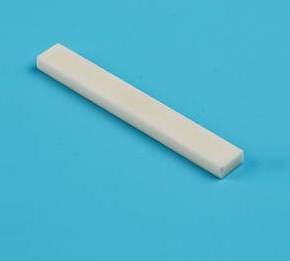
Next-Generation Ceramics: Unlocking Superior Properties for Industry

PRODUCT PARAMETERS
Description
Overview of Precision Machined 96%/99.6% Alumina (Al2O3) Ceramic Substrate Plate
Alumina Ceramic, or Aluminum Oxide (Al₂O₃), is the most widely used and versatile advanced ceramic material. Known for its excellent balance of mechanical, thermal, and electrical properties, it is a cost-effective solution for a vast array of demanding industrial applications. Alumina components are produced in purity levels ranging from 85% to 99.9%, with properties enhancing as purity increases.
Features of Precision Machined 96%/99.6% Alumina (Al2O3) Ceramic Substrate Plate
- High Hardness & Wear Resistance: Offers exceptional resistance to abrasion and mechanical wear.
- Excellent Electrical Insulation: Maintains high electrical resistivity even at elevated temperatures.
- Good Thermal Conductivity: (For a ceramic) effectively dissipates heat, especially in higher purity grades.
- High Compressive Strength: Capable of withstanding significant mechanical loads.
- Chemical Inertness: Highly resistant to corrosion from acids, alkalis, and molten metals.
- Cost-Effectiveness: Provides superior performance at a lower cost compared to many other technical ceramics.
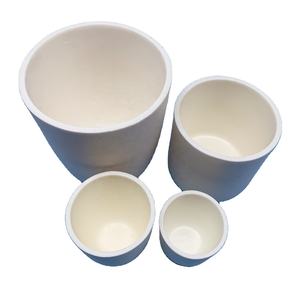
Specifications of Precision Machined 96%/99.6% Alumina (Al2O3) Ceramic Substrate Plate
Accuracy Machined Alumina Porcelain Substrate Plate
Product Composition
96% or 99.6% pure alumina (Al two O ₃) creates the base of this ceramic substrate plate. The high purity degree makes certain superb electric insulation and solid mechanical efficiency. Both grades use trusted thermal security for requiring applications.
Key Specifications
The conventional density arrays from 0.25 mm to 6.35 mm, with custom sizes readily available on demand. Surface area flatness is held to limited resistances– typically within ± 0.005 mm per 25 mm. Side surface is smooth, without chips or splits, and fulfills market requirements for tidy handling and assembly.
Dimensional precision is kept with precision CNC machining. This procedure allows complicated shapes, fine features, and limited tolerances down to ± 0.01 mm. Holes, slots, and shapes are machined cleanly without endangering structural stability.
Performance Characteristics
These plates reveal high dielectric stamina, making them perfect for electronic and semiconductor applications. They resist wear, corrosion, and oxidation even at elevated temperature levels. Thermal conductivity differs by grade: 96% alumina supplies regarding 20– 24 W/m ·K, while 99.6% reaches up to 30 W/m · K.
The product stays steady in severe settings. It manages constant use up to 1600 ° C (2912 ° F) in air. Its reduced thermal growth coefficient ensures marginal dimensional modification under thermal biking.
Common Applications
Designers utilize these substratums in power electronic devices, sensing units, laser systems, and vacuum cleaner feedthroughs. They also offer well in clinical devices, aerospace parts, and industrial heating elements where reliability and accuracy issue most.
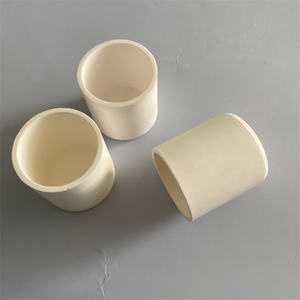
Applications of Precision Machined 96%/99.6% Alumina (Al2O3) Ceramic Substrate Plate
Applications of Precision Machined 96%/ 99.6% Alumina (Al ₂ O FOUR) Ceramic Substrate Plates
Electronics and Semiconductor Industry
Precision machined alumina ceramic substrate plates are extensively utilized in electronics. Their high electrical insulation and thermal stability make them optimal for motherboard, chip carriers, and sensor real estates. The 99.6% pureness grade provides remarkable performance in high-frequency applications, while the 96% grade gives an economical solution for basic usage.
Medical Tools
These ceramic plates appear in numerous medical tools. They stand up to corrosion and can be disinfected repeatedly without damage. This makes them appropriate for surgical tools, imaging equipment elements, and implantable device housings. Their biocompatibility makes certain safety when made use of near or inside the body.
Aerospace and Defense
In severe environments like those found in aerospace systems, alumina substrates do dependably. They take care of severe temperature levels and mechanical anxiety well. Engineers use them in radar systems, rocket assistance elements, and satellite interaction equipment where consistent efficiency is essential.
Industrial Equipment
Manufacturing equipment usually makes use of these ceramic plates as wear-resistant parts. They function as insulators in heating elements, spacers in vacuum cleaner chambers, and bases for high-temperature sensors. Their hardness and chemical inertness assistance extend tools life and minimize upkeep demands.
Automotive Sensors and Ignition Systems
Modern vehicles rely on alumina porcelains in oxygen sensors, spark plug insulators, and electronic control systems. The product’s capacity to stand up to warmth and vibration makes certain long-term dependability under demanding driving problems.
Why pick precision-machined alumina? Tight dimensional tolerances, smooth surface area finishes, and constant material residential properties enable these substrates to satisfy exact design needs across sectors. Whether you need 96% for longevity or 99.6% for peak electrical efficiency, both qualities provide trustworthy results in real-world applications.

Company Profile
Synthetic-chemical focus on the research and development, production and sales of ceramic products, serving the electronics, ceramics, chemical and other industries. Since its establishment in 2015, the company has been committed to providing customers with the best products and services, and has become a leader in the industry through continuous technological innovation and strict quality management.
Our products includes but not limited to Aluminum Nitride, Aluminum Oxide, Boron Carbide, Boron Nitride, Ceramic Crucible, ect. If you are interested in any type of these, please feel free to contact us.

Payment Methods
T/T, Western Union, Paypal, Credit Card etc.
Shipment Methods
By air, by sea, by express, as customers request.
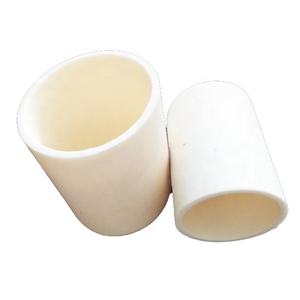
5 FAQs of Precision Machined 96%/99.6% Alumina (Al2O3) Ceramic Substrate Plate
Frequently Asked Questions About Precision Machined Alumina Ceramic Substrate Plates
What is alumina ceramic?
Alumina ceramic is a material made from aluminum oxide (Al₂O₃). We offer two common purity levels: 96% and 99.6%. The higher the purity, the better the electrical insulation and thermal performance.
Why choose 96% or 99.6% alumina?
96% alumina works well for general industrial uses. It is strong, cost-effective, and resists wear. 99.6% alumina offers superior electrical insulation, thermal conductivity, and smooth surface finish. Pick 99.6% when your application needs high precision or operates in demanding environments.
How are these plates machined?
We use precision grinding and CNC machining to shape the plates. This ensures tight tolerances, flat surfaces, and clean edges. Every plate meets strict quality standards before shipping.
Where are these substrates used?
These plates are common in electronics, sensors, semiconductor tools, and high-temperature fixtures. They support circuits, insulate components, and hold parts in place without warping under heat.
Can you customize size and thickness?
Yes. We can produce plates in custom dimensions, thicknesses, and shapes. Just share your drawing or specifications. Our team will machine the part to your exact needs while keeping high quality and consistency.
REQUEST A QUOTE
RELATED PRODUCTS
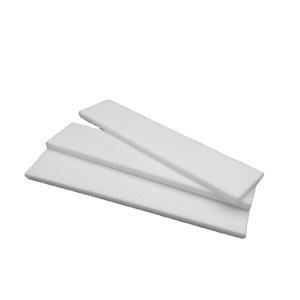
Chemical Resistant Alumina Ceramic Packing Balls
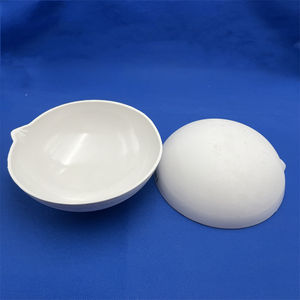
Al2O3 Square Alumina Ceramic Plates for Furnace Processing
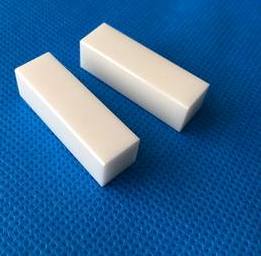
99.6% Alumina (Al2O3) Ceramic Substrate for Electronics
Pink Alumina (Al2O3) Ceramic Substrate for High-Frequency Applications
4N High-Purity Alumina for High-Temperature Insulation Materials