Next-Generation Ceramics: Unlocking Superior Properties for Industry

Aluminum Oxide Ceramic Is Not Obsolete. It’s Evolving.
Forget the buzz around newer materials. Aluminum oxide ceramic, or alumina, remains the pragmatic, high-volume backbone of the technical ceramics industry. Its dominance isn’t about being the best at any one thing; it’s about offering the most reliable, cost-effective performance across the widest range of brutal applications. While everyone chases silicon nitride ceramic for bearings or silicon carbide ceramic for extreme thermal conductivity, engineers keep specifying alumina. This analysis explains why.
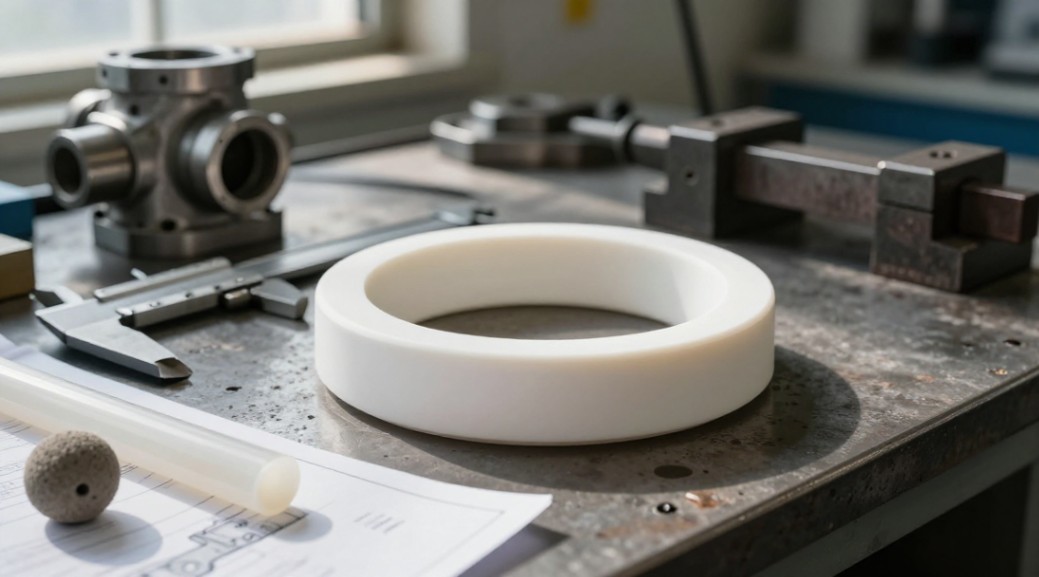
The Unmatched Utility of Al2O3: A Data-Backed Reality
Industry procurement data consistently shows alumina capturing over 60% of the structural technical ceramics market. The reason is a brutally simple value proposition.
- Hardness & Wear Resistance: At 9 on the Mohs scale, it outlasts most metals and many polymers. This makes it ideal for wear plates, slurry pump seals, and cutting tool inserts where abrasion is the primary failure mode.
- Electrical Insulation: High dielectric strength and volume resistivity make it the default choice for substrates, spark plug insulators, and high-voltage bushing cores. It’s the bedrock of power electronics.
- Chemical Inertness: It laughs at strong acids and alkalis (except hydrofluoric acid and concentrated phosphoric acid). This stability is critical for labware, chemical processing components, and medical implants.
- Cost-Effectiveness: The raw material (bauxite) is abundant. Manufacturing processes like dry pressing and isostatic pressing are highly scalable. You get 80% of the performance of exotic ceramics for 30% of the cost.
The Alumina Selection Matrix: Cutting Through the Noise
Not all alumina is equal. The purity grade dictates everything. Choose wrong, and your component fails.
- 96% Al2O3 (The Workhorse): Contains silicate glass phase. Sinters at lower temperatures. Use it for mechanical seals, wear liners, and industrial tiles where ultimate strength isn’t critical but cost is.
- 99.5% Al2O3 (The Performer): Higher purity means better mechanical properties, electrical insulation, and corrosion resistance. This is the grade for semiconductor wafer handling, advanced medical components, and precision ball valves.
- 99.9%+ Al2O3 (The Specialist): Transparent or near-transparent when sintered properly. Used in high-pressure sodium lamp arc tubes and specialized laser applications. The cost jumps significantly.
I see many engineers default to 99.5% for “safety.” That’s often wasteful. For a non-critical insulating bushing in a dry environment, 96% is perfect. Save the high-purity material for where it actually matters.
The Hard Truth: Alumina’s Limitations Are Its Design Parameters
Alumina is brittle. Its thermal shock resistance is inferior to silicon carbide ceramic or aluminum nitride ceramic. This isn’t a flaw; it’s a design constraint you must engineer around.
- Brittleness: Avoid sharp internal corners. Use generous radii. Never press-fit alumina into a metal housing without a compliant interlayer. On forums like Eng-Tips, seasoned designers constantly warn newbies: “Alumina doesn’t yield. It fractures.”
- Thermal Shock: Don’t quench it. Avoid rapid, uneven heating. For applications involving severe cycling, mullite ceramic or silicon nitride might be better choices. The key is understanding the real-world thermal gradient.
Beyond the Bulk: Surface and Form Define Function
The as-fired surface of alumina is adequate for many jobs. But post-processing unlocks new applications.
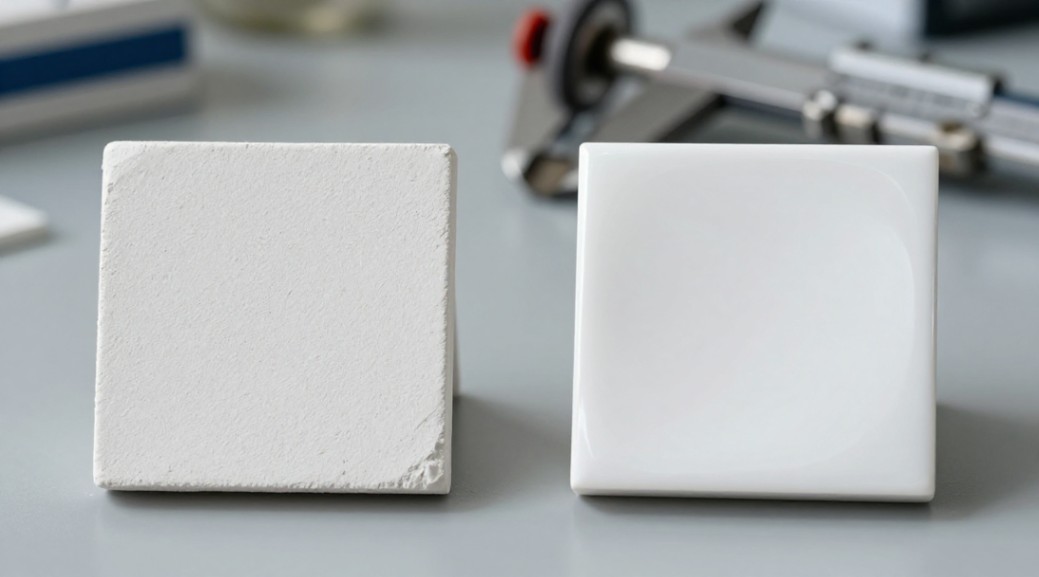
A mirror polish (Ra < 0.1 µm) reduces friction and particle adhesion in semiconductor or pharmaceutical applications. A laser-etched surface can promote adhesion for metal brazing. Grinding and lapping to tight tolerances (±0.001") is standard for mechanical seal faces. The capability is there; you just need to specify it and pay for it.
The Future Is Composite, Not Replacement
The trend isn’t away from alumina. It’s towards enhancing it. The future lies in alumina-based composites.
- Zirconia-Toughened Alumina (ZTA): Adding zirconia particles dramatically increases fracture toughness. This bridges the gap between traditional alumina and tougher but more expensive ceramics.
- Alumina Matrix Composites: Reinforcing with silicon carbide whiskers or platelets creates materials with phenomenal wear resistance for mining and aerospace. Think of it as upgrading the workhorse, not retiring it.
Industry chatter on platforms like ResearchGate points to nano-scale doping and tailored grain boundary engineering as the next frontier. The goal is to push alumina’s performance envelope without sacrificing its core economic advantage.
The Final Verdict: How to Think About Alumina
Stop comparing alumina to boron carbide ceramic or silicon nitride ceramic on a pure property spreadsheet. That’s the wrong lens. View it as the most rational engineering solution for 8 out of 10 demanding applications. Its vast manufacturing base, predictable behavior, and extensive documentation make it the low-risk, high-reward choice.
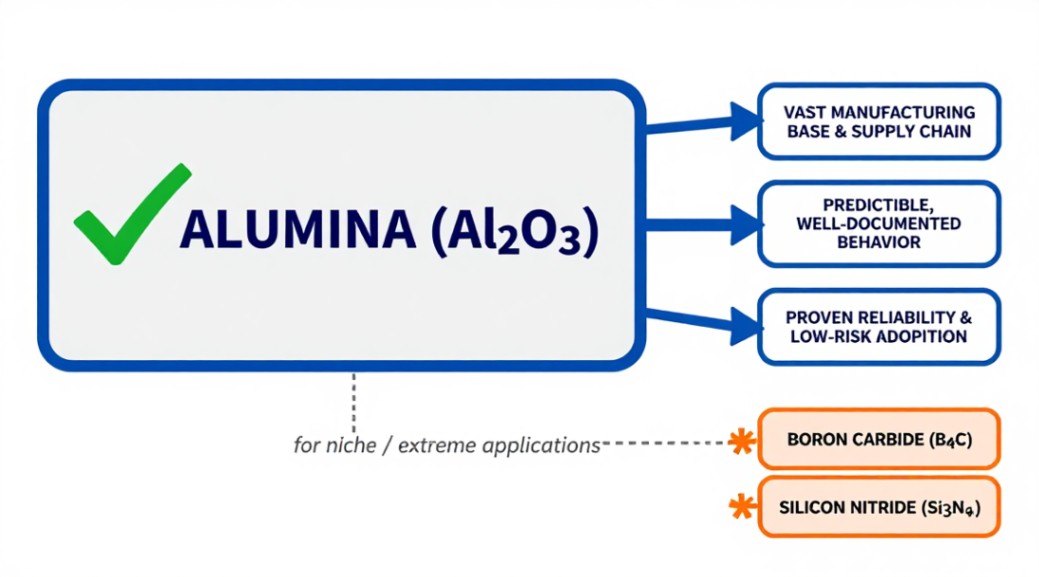
Your next step isn’t to buy a product. It’s to scrutinize your design requirements. Map your needs for hardness, corrosion resistance, electrical properties, and cost against the alumina grade matrix. Then, engage with a fabricator who understands the nuances between dry pressing and injection molding for your part geometry. The material has been proven for decades. Your job is to apply it correctly.
Suppiler
Synthetic-chemical focus on the research and development, production and sales of ceramic products, serving the electronics, ceramics, chemical and other industries. Since its establishment in 2015, the company has been committed to providing customers with the best products and services, and has become a leader in the industry through continuous technological innovation and strict quality management.
Our products includes but not limited to Aluminum Nitride, Aluminum Oxide, Boron Carbide, Boron Nitride, Ceramic Crucible, ect. If you are interested in any type of these, please feel free to contact us.