Next-Generation Ceramics: Unlocking Superior Properties for Industry

The Unseen Barrier: When Standard Materials Fail
Have you ever faced premature component failure in a high-temperature furnace? Watched a critical seal degrade from chemical attack, leading to costly downtime? Perhaps you’re designing an electronic circuit that overheats because the insulating substrate can’t manage the thermal load. These are the hidden costs of material limitations. When metals corrode, plastics deform, and standard ceramics crack under stress, engineers turn to a fundamental solution. That solution is aluminum oxide ceramic, a material engineered to operate where others cannot.
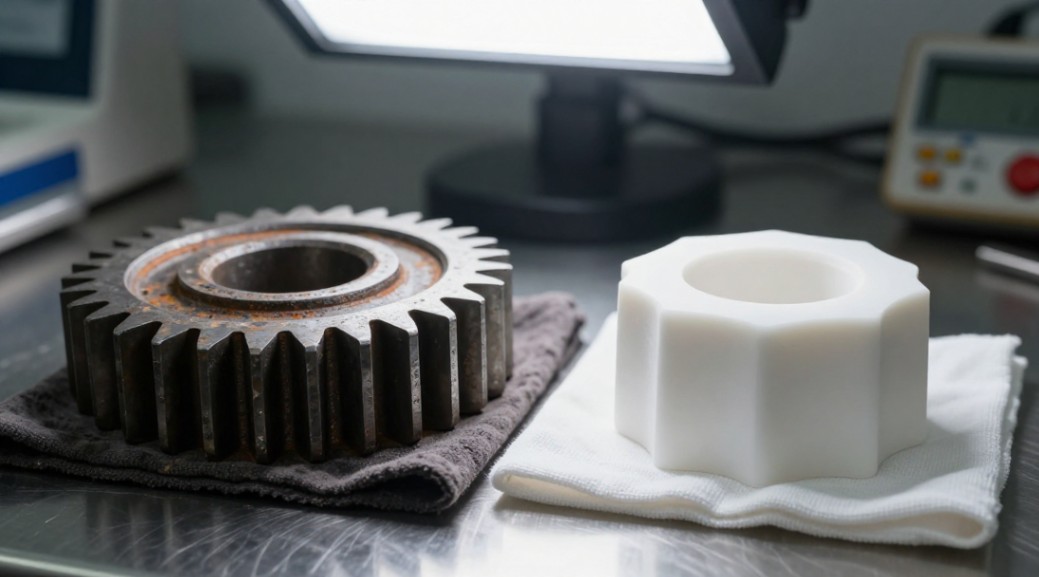
Definition and Core Composition of Aluminium Oxide Ceramic
Aluminum oxide ceramic (Al2O3) is a high-performance technical ceramic manufactured by consolidating and sintering fine alumina powder into a dense, polycrystalline structure. Often called alumina, it is the most widely used engineering ceramic due to its optimal balance of properties, availability, and cost-effectiveness. Its fundamental composition is a crystalline lattice of aluminium and oxygen atoms, which directly imparts its defining characteristics: extreme hardness, excellent electrical insulation, and significant chemical inertness.
Essential Properties: The Alumina Advantage
The utility of aluminum oxide ceramic stems from a synergistic combination of mechanical, thermal, and electrical properties. These are not incidental benefits; they are predictable, data-driven outcomes of its atomic structure.
Mechanical and Wear Properties
Hardness approaching that of silicon carbide ceramic makes alumina highly resistant to abrasion. Its compressive strength far exceeds most metals, allowing it to sustain significant loads without deformation. This combination delivers exceptional service life for wear plates, cutting tools, and slurry pump components, directly reducing maintenance frequency and total cost of ownership.
Electrical and Thermal Performance
Alumina is an outstanding electrical insulator, even at elevated temperatures. This, coupled with good thermal conductivity for a ceramic, makes it the dominant material for electronic substrates and insulating seals. It maintains dimensional stability and insulation resistance in environments that would cause organic materials to break down.
Chemical and Thermal Stability
Possessing high chemical inertness, aluminium oxide ceramic resists attack from most acids, alkalis, and molten metals. Its high melting point (over 2000°C) ensures structural integrity in high-temperature processes. While its thermal shock resistance is moderate compared to silicon nitride ceramic or mullite ceramic, it is sufficient for a vast range of industrial applications.
Key Applications Across Critical Industries
The properties of alumina translate directly into solutions for core industrial challenges. It is not a niche material; it is a workhorse.
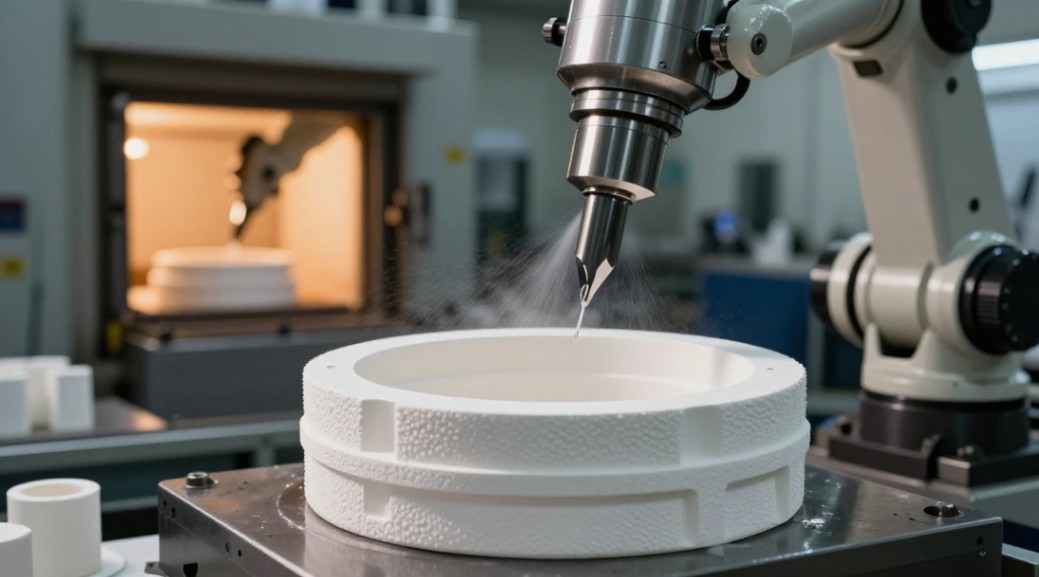
- Electronics: The backbone of the industry, used for chip packaging substrates, insulators, and spark plug bodies.
- Industrial Wear: Liners, nozzles, wear plates, and ball valve seats where abrasion resistance is paramount.
- Medical: Biocompatible components for implants, surgical tools, and dental prosthetics due to its inertness.
- Automotive & Aerospace: Sensor housings, insulating rings, and wear components in demanding thermal and mechanical environments.
Grades, Manufacturing, and Precision Machining
Not all alumina is equal. Purity dictates performance. Standard 96% Al2O3 offers an excellent cost-to-performance ratio for most mechanical applications. High-purity 99.5% Al2O3 provides superior mechanical strength, wear resistance, and corrosion resistance for semiconductor or high-vacuum applications.
Manufacturing typically involves pressing or casting alumina powder into a “green” form, followed by sintering at temperatures exceeding 1600°C. The result is a near-net-shape component with extreme hardness, which necessitates diamond grinding for final surface finish and tight tolerances. This post-sinter machining is a critical cost factor but enables the precision required for seals and insulators.
Comparative Analysis: Alumina vs. Other Engineering Ceramics
Material selection is about trade-offs. Alumina’s strength is its balance.
Compared to zirconia, alumina is harder and more wear-resistant but has lower fracture toughness. Against silicon carbide ceramic, alumina offers better electrical insulation and lower cost but inferior thermal conductivity. Silicon nitride ceramic provides superior thermal shock resistance and toughness, often at a higher price point. Aluminium nitride ceramic excels in thermal management for electronics, while boron nitride ceramic offers unique lubricity and requires a special coating for boron nitride ceramic crucibles in some metal-melting applications. Engineers choose alumina when they need a reliable, proven material that delivers a comprehensive suite of properties economically.
The Future and Advanced Composites
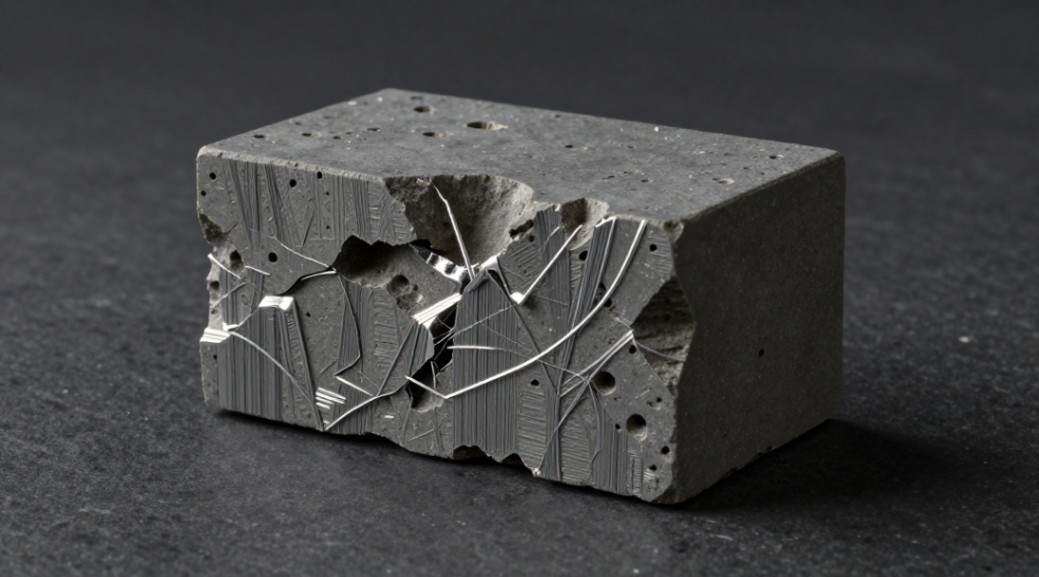
Research continues to push boundaries. While monolithic aluminum oxide ceramic is mature, its role in composites is expanding. Incorporating secondary phases or fibers, akin to strategies used in Ultra-High Temperature Ceramic Matrix Composites (UHTCMCs), aims to address its primary weakness: brittleness. Advanced slurry infiltration methods, similar to those enabling double continuous structure UHTCMCs, could one day produce alumina-based composites with dramatically improved fracture toughness for next-generation applications. Furthermore, exploration into novel high-entropy oxide systems with melting points exceeding 3000°C highlights the ongoing quest for ultra-high-temperature stability, a direction where alumina’s foundational knowledge is invaluable.
Implementing the Solution
Selecting the right ceramic begins with a clear definition of the operational environment. List the required mechanical loads, thermal cycles, chemical exposures, and electrical parameters. For most applications demanding a blend of wear resistance, electrical insulation, and chemical stability, aluminum oxide ceramic is the logical first candidate. Its long-term cost-effectiveness stems from unparalleled service life. Consult with an experienced ceramic component manufacturer to specify the correct grade, design for manufacturability, and leverage their expertise in pressureless sintered or other advanced processes to achieve a component that performs reliably under pressure.
Suppiler
Synthetic-chemical focus on the research and development, production and sales of ceramic products, serving the electronics, ceramics, chemical and other industries. Since its establishment in 2015, the company has been committed to providing customers with the best products and services, and has become a leader in the industry through continuous technological innovation and strict quality management.
Our products includes but not limited to Aluminum Nitride, Aluminum Oxide, Boron Carbide, Boron Nitride, Ceramic Crucible, ect. If you are interested in any type of these, please feel free to contact us.