Next-Generation Ceramics: Unlocking Superior Properties for Industry

Did you know 65% of early crucible failures start with a stuck ingot? That piece of valuable metal fused to the crucible wall isn’t just an annoyance-it’s a sign of catastrophic wear, contamination, and wasted money. The culprit is almost always the wrong release agent or a poorly applied coating. Let’s fix that.
Boron Nitride Crucible Coating: Your Questions, Answered
Why does my metal stick, and how does boron nitride stop it?
Molten metal is aggressive. It wets ceramic and graphite surfaces, seeping into microscopic pores. Upon cooling, it forms a mechanical lock. Boron nitride creates a barrier. Its platelet structure lays down like sheets of graphite, but it’s chemically inert. Metal cannot wet it. The surface remains slick from room temperature to 1800°C. No wetting means no bonding. Your ingot simply shrinks away during cooling.
I’ve used spray-on graphite. Why switch?
This is the critical mistake. Spray graphite is messy, inconsistent, and can contaminate melts. It’s carbon. At high temperatures, it can react with certain metals or oxides, forming carbides or creating a sticky surface. Boron nitride is pure and stable. Users on specialized forums report, “Switching from graphite spray to BN aerosol was the single biggest improvement to my ingot surface finish and crucible lifespan.” The difference isn’t subtle; it’s fundamental.
What’s the RIGHT way to apply it to prevent sticking?
Preparation is everything. Never coat a dirty or hot crucible.
- Clean the crucible thoroughly. Remove all old coating and residue with a soft brush or dedicated cleaner.
- Ensure it’s completely dry and at room temperature.
- Shake the boron nitride aerosol can for a full minute. Agitation is non-negotiable.
- Hold the can 6-8 inches away. Apply multiple light, sweeping coats. You want a thin, even, milky-white film. One heavy, drippy coat will fail.
- Let it dry for 5-10 minutes. The coating will adhere through a weak van der Waals force-perfect for release.
Remember: Thin, even, and dry. Thick coats crack and flake.
How does it impact purity compared to other coatings?
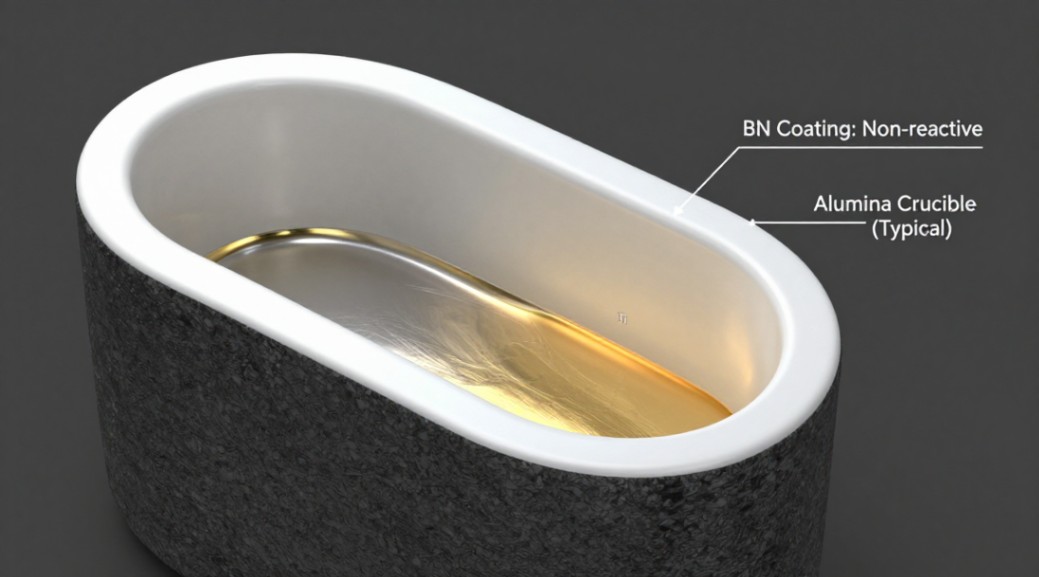
Boron nitride is a champion for purity. Unlike alumina or zirconia-based dressings, it does not sinter into a hard ceramic layer. It does not introduce oxygen or other contaminants into sensitive melts like titanium, gold, or aerospace alloys. The coating remains a separate, non-reactive layer. Your metal sees only BN, not the crucible material.
My crucible still has residue. Do I need to clean and recoat every time?
Not always. Inspect after each use. If the white BN film is still visibly intact and smooth, you can reuse it. If you see dark spots, metal splatter, or any breakdown, you must clean it. Leaving compromised coating is asking for sticking. For high-purity work, many users recoat every time as a best practice. It takes two minutes and guarantees performance.
What’s the biggest safety mistake people make?
Applying it to a warm crucible. The solvent will flash off too quickly, causing the BN particles to ball up and create a gritty, useless layer. Always coat cold. Also, work in a well-ventilated area-you’re spraying an aerosol. A fume hood or open garage door is ideal.
How do I choose between aerosol, paste, and powder forms?
For preventing sticking on crucibles, the aerosol suspension is the gold standard for most users. It gives the most consistent, thin film. Pastes are better for patching or very specific brush-on applications. Powders are for making your own suspensions or specialized processes. Start with a reputable brand’s aerosol. It’s foolproof when applied correctly.
The Final Word: Don’t Compromise Your Melt
Your crucible is the heart of your operation. Coating it with anything less than a dedicated boron nitride formula is a gamble with your yield, your metal’s purity, and your wallet. The process is simple: clean, shake, spray thin, let dry. That’s it. This isn’t a complex ritual. It’s a non-negotiable step for anyone serious about clean releases and long crucible life. Stop fighting stuck ingots. Start with a perfect barrier.
Suppiler
Synthetic-chemical focus on the research and development, production and sales of ceramic products, serving the electronics, ceramics, chemical and other industries. Since its establishment in 2015, the company has been committed to providing customers with the best products and services, and has become a leader in the industry through continuous technological innovation and strict quality management.
Our products includes but not limited to Aluminum Nitride, Aluminum Oxide, Boron Carbide, Boron Nitride, Ceramic Crucible, ect. If you are interested in any type of these, please feel free to contact us.