Next-Generation Ceramics: Unlocking Superior Properties for Industry

A Simple Truth, A Complex Performer
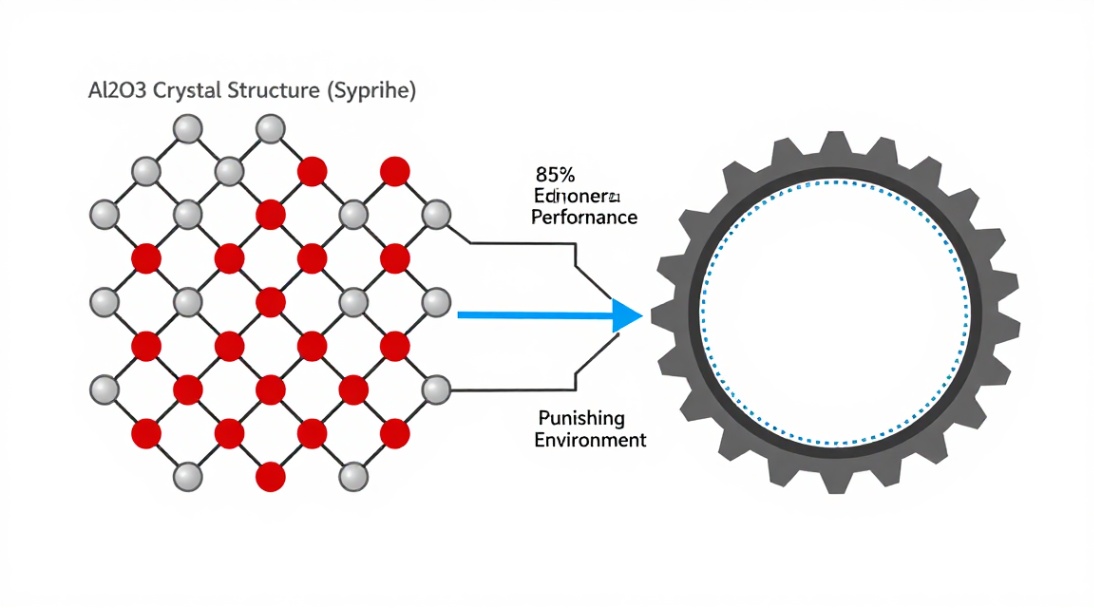
Despite being chemically identical to common sapphire, engineered aluminum oxide ceramic delivers a shocking 85% of the hardness of diamond for a fraction of the cost. This single data point reveals its core paradox: a simple composition driving exceptional engineering performance. We don’t just specify Al2O3; we leverage a material that consistently outperforms expectations in the most punishing environments.
What Exactly Is Aluminum Oxide Ceramic?
At its heart, aluminum oxide ceramic is a synthetic material produced by consolidating and sintering high-purity alumina powders. This process transforms a fine powder into a dense, polycrystalline solid. We control the purity (from 85% to over 99.9%) and grain size to tailor its final characteristics. It’s this fundamental manufacturing control that lets us dial in properties for specific battles-whether against electrical failure, abrasive wear, or thermal shock.
The Core Arsenal: Key Properties That Drive Selection
Its reputation rests on a formidable trio of properties. First is exceptional hardness and wear resistance. This makes it a go-to for components sliding, grinding, or impacting other materials. Second is outstanding electrical insulation, even at elevated temperatures. Third is impressive thermal stability; it maintains strength and form up to 1600°C. It also boasts excellent chemical inertness. Corrosive acids and bases that eat through metals often have little effect.
Industry Veteran Feedback
On forums like Reddit and engineering communities, a common refrain from users is about cost-performance. “For the price, nothing beats alumina for non-conductive, high-temp fixtures in our lab furnaces,” one user noted. Another shared, “We switched from a specialty steel to an aluminium oxide ceramic wear plate in our feed system. Wear life increased 10x, eliminating a major downtime source.” This real-world validation is the true test.
How It Stacks Up: The Ceramic Family Tree
Choosing the right ceramic means understanding the family. Aluminum oxide ceramic is the versatile, cost-effective workhorse. Zirconia offers higher fracture toughness (less brittle) and better insulation, but at a higher cost and lower maximum temperature. Silicon carbide ceramics, including reaction-sintered and pressureless sintered types, provide superior thermal conductivity and extreme hardness for abrasion, but are more expensive and electrically conductive. Aluminum nitride ceramic is the champion of heat dissipation in electronics. For applications needing lubricity and thermal shock resistance, we look at boron nitride ceramics, often with a special coating for boron nitride ceramic crucibles.
The Real-World Domains of Aluminum Oxide
This material isn’t just for labs. It’s on the front lines of modern industry.
Electrical and Electronic Insulation
This is arguably its most critical role. It forms the backbone of microelectronics as substrates and packages for integrated circuits. It’s the insulator in spark plugs, high-voltage bushings, and industrial heater tubes. Its stability under electrical stress is unmatched by polymers and more reliable than many other ceramics.
Mechanical Wear and Abrasion Resistance
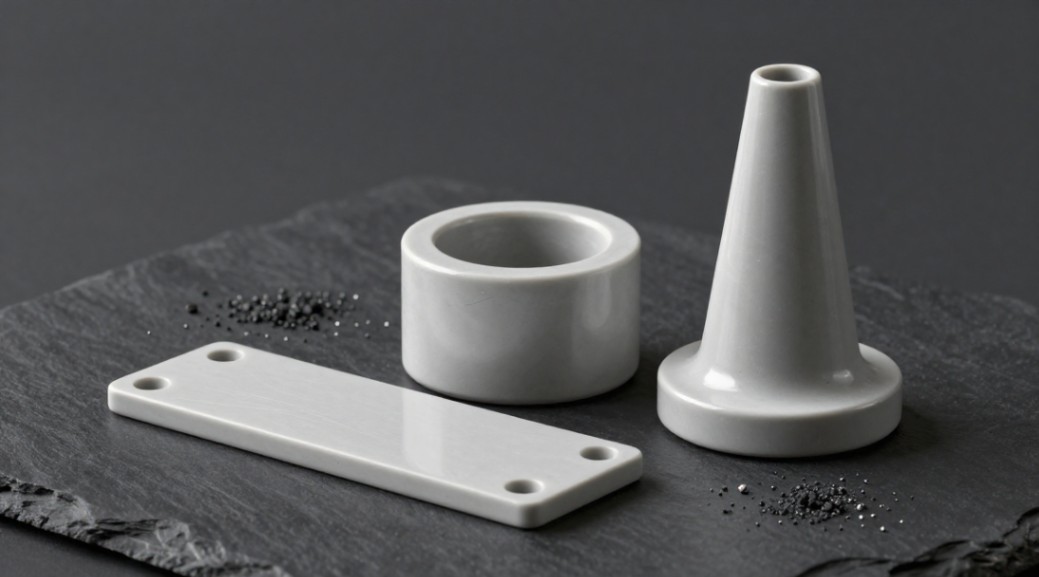
When parts are being ground away, we specify alumina. Think plates, liners, tubes for material handling, pump seals, and nozzles for abrasive slurries. In cutting tools, alumina-based machining inserts handle high-speed finishing of hardened steels and cast irons, where chemical wear is a factor.
Biomedical and Specialized Applications
Its biocompatibility and corrosion resistance make it a trusted material for medical and dental implants, like hip joint balls and dental abutments. It’s also essential in analytical instruments, wear guides for textile machinery, and as a critical component in semiconductor manufacturing equipment.
Understanding the Trade-Off: The Brittleness Factor
No material is perfect. The primary limitation of aluminum oxide ceramic is its brittleness. It has low fracture toughness compared to metals. It handles compressive loads superbly but is vulnerable to impact, tension, and sharp stress concentrations. This isn’t a deal-breaker; it’s a design parameter. We mitigate this by designing parts to avoid tensile stresses, using generous fillets, and specifying proper mounting techniques that avoid point loading.
Selecting the Right Grade: An Engineer’s Checklist
Don’t just order “alumina.” Make an informed choice. Ask these questions:
- Purity & Density: Do you need 99.6% Al2O3 for high wear and corrosion, or will a 96% grade suffice for electrical insulation? Higher purity generally means better properties but higher cost and increased brittleness.
- Surface Finish: Does your application require a polished, as-fired, or ground surface? Precision grinding is often needed for dimensional tolerance but adds expense.
- Operating Environment: What is the maximum temperature, thermal cycle severity, and chemical exposure? Alumina excels, but verify against specific chemicals.
- Load Type: Is the part in pure compression, or are there bending or impact forces? Redesign or consider a tougher ceramic like zirconia if impact is unavoidable.
- Coefficient of Thermal Expansion (CTE): If bonding to a metal, CTE mismatch can cause failure. This requires careful engineering and sometimes transition materials.
The Final Analysis: A Material That Earns Its Keep
In our decades of experience, aluminum oxide ceramic remains the default starting point for a reason. It offers a rare combination of high performance, proven reliability, and relative affordability. While advanced ceramics like silicon nitride ceramics or boron carbide ceramic have their niches, alumina solves the majority of industrial ceramic challenges. Its limitations are well-known and manageable through smart design.
If your project involves extreme wear, high-temperature electrical isolation, or corrosive media, you are likely already considering it. The next step is critical: moving from consideration to specification with confidence. You need more than a datasheet; you need component-level expertise to ensure the grade, design, and finishing align with your operational reality. Don’t leave performance on the table-or risk failure in the field.
Ready to engineer with certainty? Stop compromising with metals that wear out or plastics that fail. Let’s analyze your specific application. Share your operating parameters and performance goals, and we will provide a definitive recommendation on the optimal aluminum oxide ceramic grade and design for your project. Contact our engineering team today for a direct consultation and quote.
Suppiler
Synthetic-chemical focus on the research and development, production and sales of ceramic products, serving the electronics, ceramics, chemical and other industries. Since its establishment in 2015, the company has been committed to providing customers with the best products and services, and has become a leader in the industry through continuous technological innovation and strict quality management.
Our products includes but not limited to Aluminum Nitride, Aluminum Oxide, Boron Carbide, Boron Nitride, Ceramic Crucible, ect. If you are interested in any type of these, please feel free to contact us.