Next-Generation Ceramics: Unlocking Superior Properties for Industry

A Puzzling Statistic That Defines an Industry
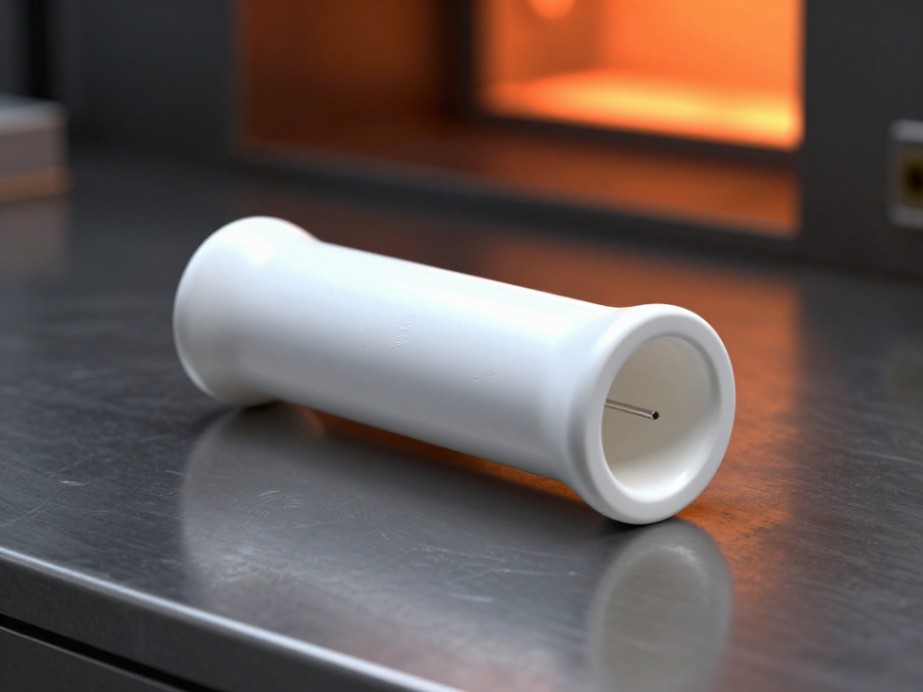
Here’s a fact that might surprise you: over 96% of the protective tubes housing thermocouples in industrial furnaces are made from aluminum oxide ceramic. The reason? No other material, including advanced metals, provides the same consistent blend of electrical insulation, thermal stability, and chemical resistance at over 1700°C. This single application reveals the core value of this material. It isn’t just about hardness; it’s about predictable, unwavering performance where failure is not an option.
Your Aluminium Oxide Ceramic Questions, Expertly Answered
After two decades working with this material, I’ve fielded thousands of questions. Let’s address the most critical ones that drive material selection and innovation today.
1. What truly makes aluminium oxide ceramic different from other engineering ceramics?
Its dominance stems from a perfect balance of properties at a reasonable cost. Compare it to silicon carbide ceramic, which excels in thermal conductivity and wear, or silicon nitride ceramic, known for superb fracture toughness. Aluminum oxide ceramic sits between them. It offers superior hardness and wear resistance to most alternatives, excellent electrical insulation, and outstanding chemical inertness. As a report from the American Ceramic Society notes, it’s often the ‘default champion’ for applications demanding a blend of these traits without the premium price of specialized ceramics like boron carbide ceramic or aluminum nitride ceramic.
2. I hear ‘alumina’ and ‘sapphire’-are they the same material?
Chemically, yes. Both are primarily aluminium oxide (Al₂O₃). The difference lies in purity and crystal structure. Standard aluminum oxide ceramic parts are polycrystalline, meaning they contain countless tiny crystals (grains) of alpha-Al2O3 bonded together. This gives them strength and hardness. Single-crystal alumina, grown under precise conditions, is what we call sapphire. It’s optically transparent and has even higher chemical resistance, but it’s far more expensive to produce in complex shapes. For most industrial components, the polycrystalline form is the workhorse.
3. Where are engineers pushing the boundaries with this material now?
The trends are clear. In electronics, the drive for miniaturization and higher power is pushing aluminum oxide ceramic substrates to their limits, though aluminum nitride ceramic is gaining ground for ultra-high thermal management. The real growth is in harsh environments. We’re seeing its use expand in industrial wear components like seals and blast nozzles that handle highly abrasive slurries. Another key area is biomedical implants-its proven biocompatibility makes it a trusted material for joint replacements and dental components. The data shows a steady 5-7% annual growth in these advanced industrial and medical segments.
4. When should I choose it over a super-hard metal or silicon carbide?
Use this simple decision framework. Choose aluminum oxide ceramic when your top priorities are: (1) resisting sliding abrasion, (2) maintaining electrical insulation at high temperatures, and (3) avoiding corrosion from acids or caustics. For example, a guide roll in a hot steel mill faces abrasion and heat-a perfect alumina application. Choose a hardened metal when you need high impact toughness or ease of machining. Switch to a silicon carbide ceramic or reaction-sintered silicon carbide ceramic if your primary need is extreme thermal conductivity or resistance to erosion by high-velocity gases.
5. What’s the biggest mistake people make when designing with alumina?
Treating it like metal. It’s a brittle material. You cannot tolerate stress concentrations. Sharp corners, press fits, and point loading are your enemies. Successful design means using generous fillets, specifying sintered-to-size tolerances where possible, and partnering with a manufacturer early. If you need to machine it post-sintering, diamond grinding is your only real option. And remember, its compressive strength is about ten times its tensile strength-design to put it in compression.
6. How do manufacturing methods like dry pressing or injection molding affect the final part?
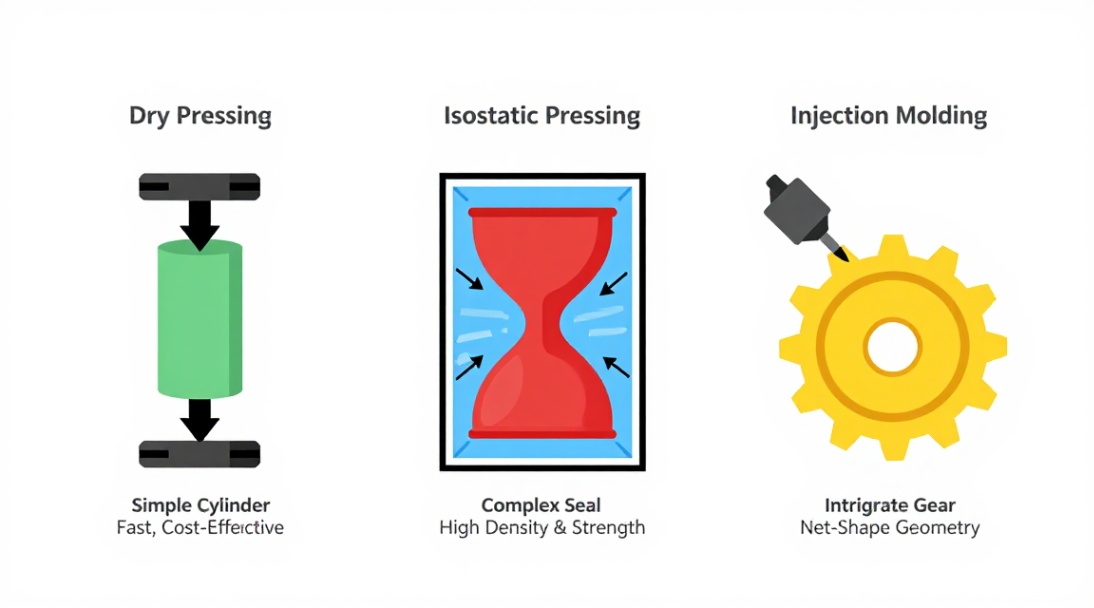
The process dictates the geometry, tolerance, and economics. Dry pressing is fast and cost-effective for simple, solid shapes like tiles or simple cylinders. Isostatic pressing applies uniform pressure from all sides, creating parts with higher, more consistent density and strength-ideal for complex seals or critical wear components. Injection molding allows for highly intricate, net-shape geometries, but involves a costly binder-removal stage. My advice: start with the required geometry and strength, then select the process that matches.
The Next Step: From Insight to Application
Understanding aluminum oxide ceramic is the first step. Applying it successfully is the next. The key is to engage with experienced material specialists early in your design phase. Share your operating environment-the temperatures, chemicals, stresses, and electrical requirements. They can guide you on grade selection (from 85% to 99.8% purity), manufacturing process, and design-for-ceramics principles. Many top suppliers, for instance, offer proprietary special coatings or can advise on when a hybrid approach with a silicon nitride ceramic might be better. Don’t just replace a metal part with alumina. Redesign for it. When you do, you’ll unlock reliability that metals simply can’t match in the most punishing conditions.
Suppiler
Synthetic-chemical focus on the research and development, production and sales of ceramic products, serving the electronics, ceramics, chemical and other industries. Since its establishment in 2015, the company has been committed to providing customers with the best products and services, and has become a leader in the industry through continuous technological innovation and strict quality management.
Our products includes but not limited to Aluminum Nitride, Aluminum Oxide, Boron Carbide, Boron Nitride, Ceramic Crucible, ect. If you are interested in any type of these, please feel free to contact us.