Next-Generation Ceramics: Unlocking Superior Properties for Industry

The Alumina Paradox
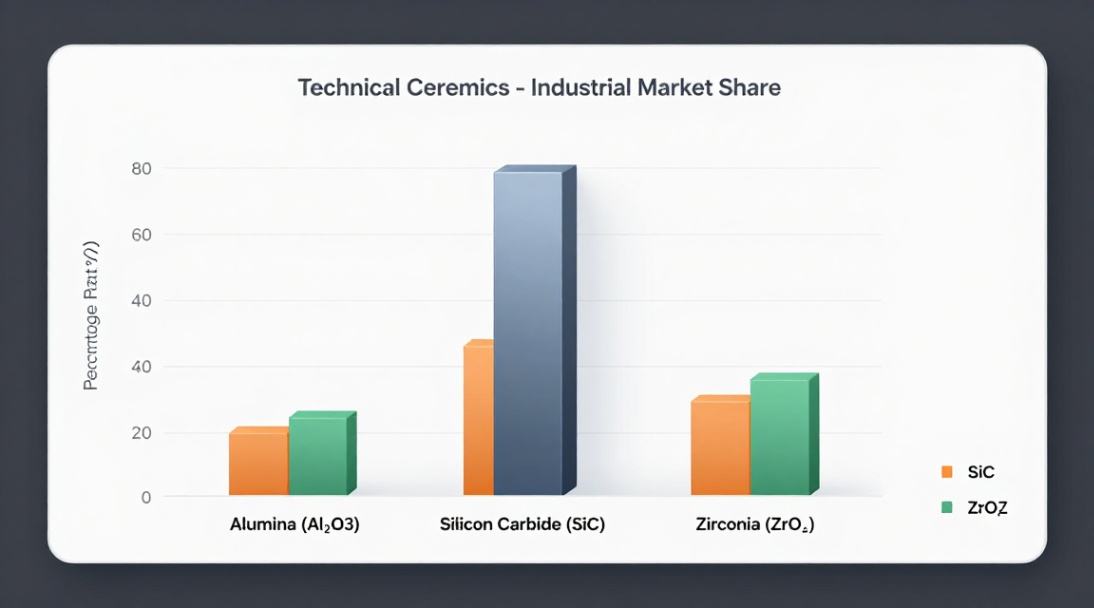
Here’s a statistic that might surprise you: over 80% of all advanced technical ceramics used in industrial applications today are based on one material. It’s not the newest, strongest, or most exotic. It’s aluminum oxide ceramic. For all the talk about silicon carbide ceramic and zirconia, alumina is the workhorse that quietly gets the job done. Why? The answer lies in a powerful combination of logic, economics, and performance that other materials struggle to match.
The Core Logic of Alumina’s Dominance
Engineering is a series of trade-offs. We evaluate cost, properties, and manufacturability. Aluminum oxide ceramic, or Al2O3, sits at a unique intersection. Its intrinsic properties-high hardness (9 on the Mohs scale), excellent wear resistance, superb electrical insulation, and resistance to high temperatures and corrosion-are not the absolute best in any single category. Boron carbide is harder. Silicon nitride ceramic is tougher. Aluminum nitride conducts heat better. Yet, alumina provides a remarkable 90% solution for most severe-duty problems at a fraction of the cost and complexity. This isn’t a compromise; it’s strategic optimization.
Purity, Performance, and Precision Engineering
The magic of alumina lies in its tunability. The most common grades we specify are 96% and 99.5% (often called 99.5% alumina). That small difference in purity has a massive impact. The 96% grade is incredibly cost-effective and mechanically robust for wear parts, liners, and insulators. The 99.5% alumina elevates the game. Its density and surface finish improve dramatically, making it suitable for high-voltage substrates, semiconductor wafer handling, and biomedical implants where ionic purity and smoothness are non-negotiable. We choose the grade based on the failure mechanism we need to defeat.
Manufacturing Shapes the Application
Process dictates possibility. For simple, high-volume shapes, dry pressing is our go-to. For complex, high-performance components with uniform density in all axes, we move to isostatic pressing. When geometric intricacy rivals that of injection-molded metal parts, we employ ceramic injection molding. Each step up in process sophistication directly translates to greater design freedom and higher final performance, enabling us to push aluminum oxide ceramic into more demanding roles.
The Unseen Backbone of Critical Industries
Walk through any high-tech facility, and you’ll find alumina. In the semiconductor industry, it’s in wafer carriers and plasma-resistant parts. In automotive, it’s wear-resistant seals and sensor components. In medical technology, it forms the basis for biocompatible implants and surgical tool tips. Its electrical insulation and thermal stability make it indispensable in aerospace as sensor housings and insulating bushings. Alumina doesn’t just exist in these places; it enables them to function reliably under stress.
Overcoming the Brittleness Challenge
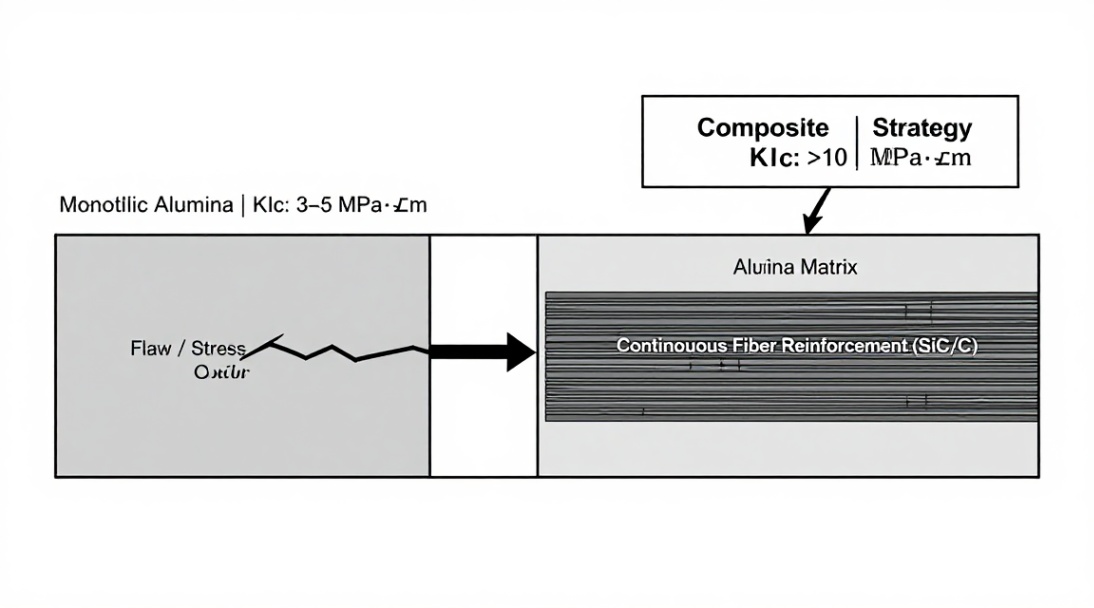
Brittleness is the primary design constraint. We cannot design with alumina as we would with steel. The logic is different. We must avoid tensile stress concentrations, use generous radii, and design for compression loading. This is a fundamental mindset shift. However, the industry is innovating. While monolithic ceramics like alumina have a fracture toughness of 3-5 MPa·m¹/², new composite strategies hint at the future. Imagine reinforcing alumina matrices with continuous fibers to push toughness above 10 MPa·m¹/², effectively engineering out brittleness. While this is more common with silicon carbide-bonded silicon nitride ceramics, the principle informs our future approach to enhancing alumina’s reliability.
A Logical Comparison: When Not to Use Alumina
Smart material selection means knowing the off-ramps. Let’s apply pure logic. If your primary need is thermal shock resistance, silicon carbide ceramic or mullite ceramic might be superior. For extreme high-temperature structural applications above 1650°C where oxidation resistance is key, you’d evaluate reaction-sintered silicon carbide ceramics. When you need electrical conductivity or supreme thermal conductivity, you look at silicon carbide ceramic or aluminium nitride ceramic. For non-wetting applications with molten metals, a special coating for boron nitride ceramic crucibles is often the logical choice. Alumina is the default, but we must know when to override.
The Final Machining and Finishing Frontier
The journey isn’t over after sintering. Achieving a precise final dimension or a mirror surface on a material harder than tool steel requires specialized techniques. Diamond grinding is standard. For the finest finishes, we use lapping and polishing. This stage is critical and expensive. It often determines the final cost and performance of the component. Our design must minimize the need for intricate machining by leveraging net-shape forming processes wherever possible.
The Future Is Engineered, Not Discovered
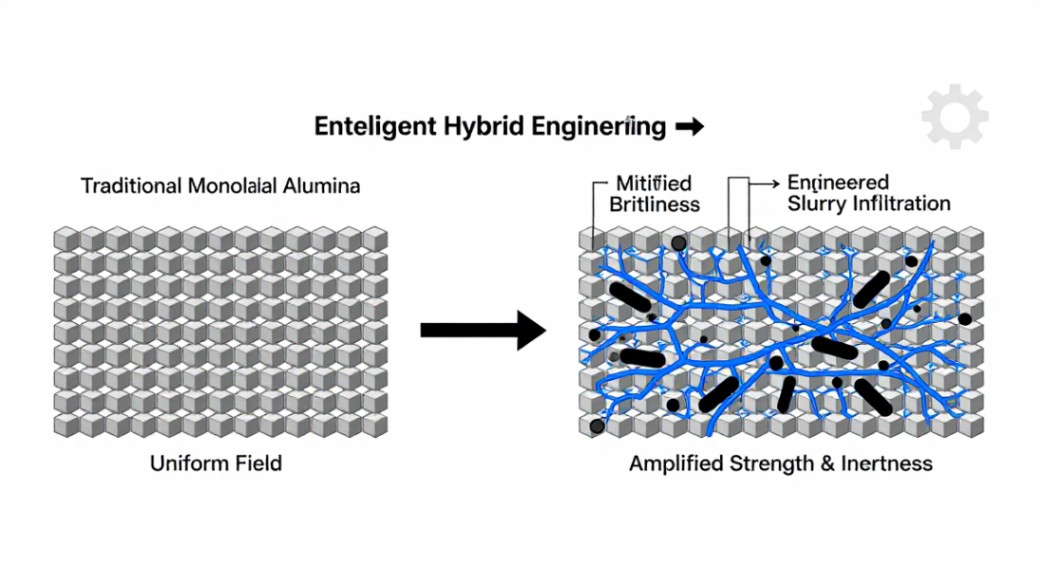
The trend is clear. The future of aluminum oxide ceramic isn’t about finding a new miracle compound. It’s about intelligent engineering. It’s about using advanced processes like the slurry infiltration strategies mentioned in cutting-edge composites to build smarter microstructures at lower temperatures. It’s about hybridizing alumina with other phases to mitigate its weaknesses while amplifying its core strengths of hardness, chemical inertness, and electrical resistance. This evolution is driven by logical problem-solving, not chance. Our role is to understand this trajectory and apply the same logic to our own material selection and component design today.
The data points to a simple truth. For a balance of performance, reliability, and cost-effectiveness that underpins modern technology, aluminum oxide ceramic remains the logical, indispensable choice. Its dominance is not an accident. It is the result of decades of solving real-world problems with an elegantly simple material.
Suppiler
Synthetic-chemical focus on the research and development, production and sales of ceramic products, serving the electronics, ceramics, chemical and other industries. Since its establishment in 2015, the company has been committed to providing customers with the best products and services, and has become a leader in the industry through continuous technological innovation and strict quality management.
Our products includes but not limited to Aluminum Nitride, Aluminum Oxide, Boron Carbide, Boron Nitride, Ceramic Crucible, ect. If you are interested in any type of these, please feel free to contact us.