Next-Generation Ceramics: Unlocking Superior Properties for Industry

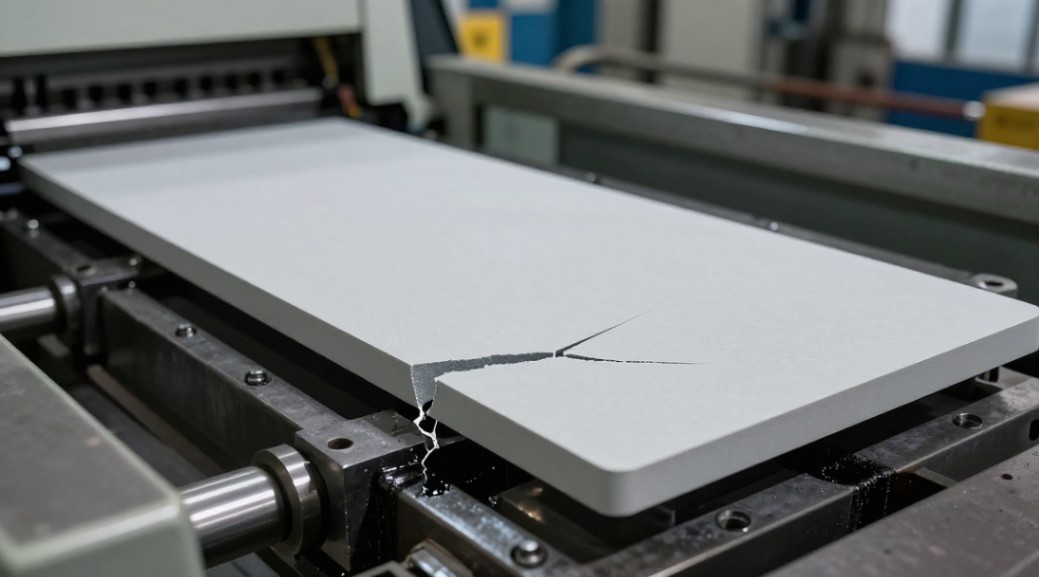
I remember my first real-world ceramics failure vividly. We had designed a new wear plate for a packaging machine, confident that our chosen material was the toughest available. We specified a high-purity aluminium oxide ceramic. It arrived, looked perfect, and failed spectacularly after just 48 hours of use. Not from wear, but from a catastrophic crack. The problem wasn’t the material’s quality-it was a fundamental mismatch between its properties and the application’s mechanical shocks. That costly lesson taught me more about material selection than any textbook. Let’s make sure you avoid that pitfall.
What is Aluminum Oxide Ceramic, Really?
At its core, aluminium oxide ceramic, or alumina (Al2O3), is one of the workhorses of the technical ceramics world. We don’t just make it from clay. We start with refined powders, press them into shape, and fire them at extreme temperatures in a process called sintering. This transforms a loose powder into a dense, hard, and chemically inert component. Its reputation for hardness and wear resistance is well-earned, often sitting just below diamond on the hardness scale. But it’s more than just a hard block. Its excellent electrical insulation and good thermal conductivity make it incredibly versatile.
The Step-by-Step Guide to Selecting Your Alumina Grade
Choosing the right alumina isn’t a guessing game. Follow this process to nail your selection every time.
Step 1: Define Your Non-Negotiables
Before you even look at a data sheet, write down your application’s three most critical demands. Is it sheer abrasion? Electrical isolation at high temperatures? Chemical corrosion? For example, a seal face prioritizes surface finish and flatness, while a ballistic armor tile prioritizes fracture toughness. Be specific.
Step 2: Understand the Purity Trade-Off
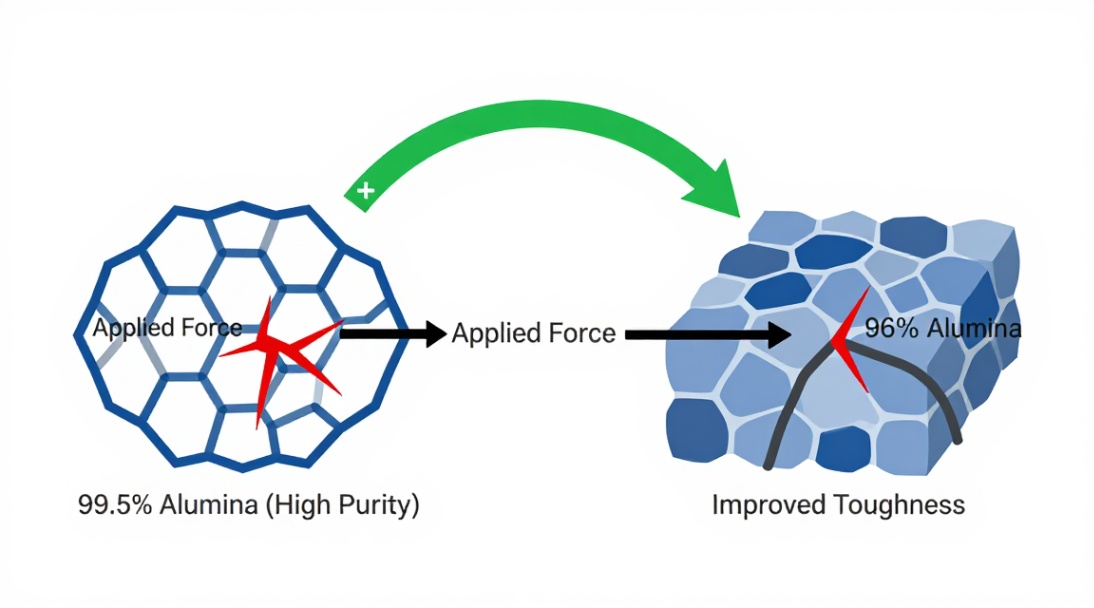
This is where many engineers get tripped up. Higher purity (like 99.5% Al2O3) isn’t always better.
- High-Purity (99.5%+ Alumina): Superior electrical insulation, higher hardness, better corrosion resistance, and can withstand higher operating temperatures. The downside? It’s more brittle and significantly more expensive to machine.
- Lower Purity (92%-96% Alumina): Contains glass-forming additives (like silicates). This actually improves mechanical strength and fracture toughness. It’s also easier and cheaper to machine. The trade-off is a slight reduction in maximum use temperature and electrical properties.
We see many users on engineering forums like Reddit make the “high purity is always better” assumption and pay for it in both cost and performance. One user shared how switching from 99.5% to 96% alumina for a high-impact fixture doubled its service life because of the improved toughness.
Step 3: Compare It to the Alternatives
Aluminum oxide ceramic is fantastic, but it’s not the only advanced ceramic. Use this comparison to see if it’s truly your best fit.
| Material | Key Advantage vs. Alumina | Key Limitation vs. Alumina | Consider When You Need… |
|---|---|---|---|
| Zirconia (ZrO2) | Much higher fracture toughness & strength | Lower hardness & wear resistance | Mechanical reliability in high-stress parts |
| Silicon Carbide (SiC) | Far superior thermal conductivity & temp limit | More expensive, lower electrical insulation | Extreme heat dissipation (e.g., kiln furniture) |
| Aluminum Nitride (AlN) | Exceptional thermal conductivity (like a metal) | Very high cost, sensitive to moisture | Electronics packaging for heat sinking |
| Boron Carbide (B4C) | Extreme hardness for abrasion/armor | Very brittle, very high cost | The ultimate wear or ballistic protection |
Key Design Considerations and How to Work Around Limits
Alumina’s primary limitation is its brittleness. You must design with this in mind.
- Avoid Sharp Corners and Notches: They create stress concentrators. Always specify generous radii.
- Account for Its Stiffness: Aluminum oxide ceramic doesn’t flex. Ensure your mounting scheme allows for thermal expansion mismatch and avoids point loading.
- Machining is a Specialist Job: You cannot machine it like metal. It requires diamond-grit tools, slow speeds, and rigid setups. Post-sintering grinding is expensive, so design for net-shape or near-net-shape sintering whenever possible.
Where Aluminum Oxide Ceramic Truly Shines: Real Applications
Its balance of properties makes it indispensable in several fields.
- Electronics: Substrates for circuits, insulators for spark plugs, and protective tubes for thermocouples.
- Industrial Wear: Pump seals, wire guides, cutting tool inserts, and abrasive blast nozzles.
- Medical: Dental implants, prosthetic hip joint bearings, and surgical instrument components due to its biocompatibility.
Looking Ahead: What’s Next for Alumina?
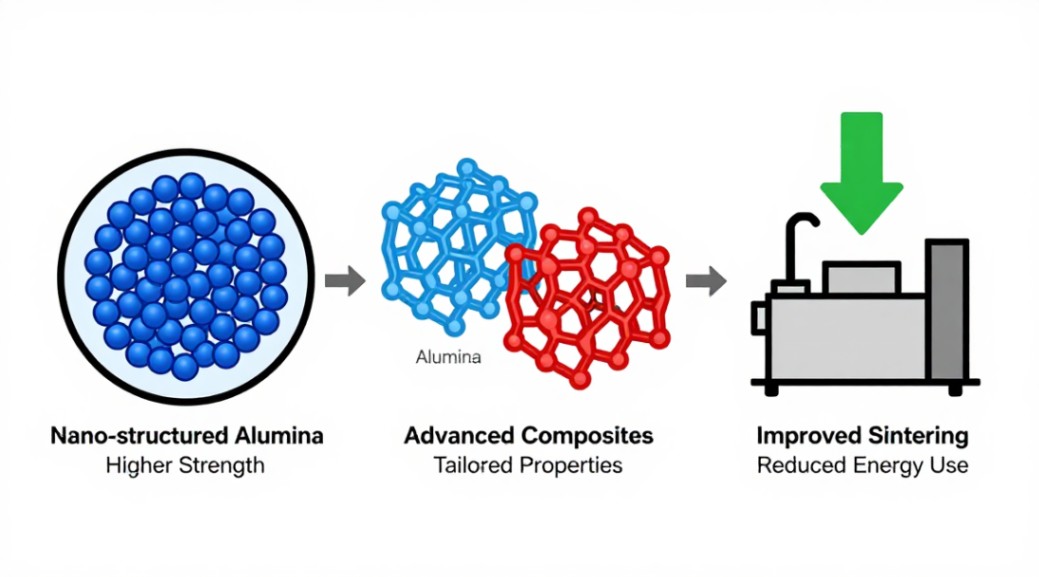
The field isn’t static. We’re seeing exciting trends like nano-structured alumina for even higher strength, advanced composite formulations that blend alumina with zirconia or other phases for tailored properties, and improved sintering techniques that reduce energy use. The goal is always the same: push the limits of performance while controlling cost.
The best next step? Apply this framework to your current design challenge. Re-evaluate that part that keeps failing. Cross-reference your core needs from Step 1 with the purity trade-offs in Step 2 and the material comparison table. Often, the solution isn’t just a better material, but a smarter choice within the aluminium oxide ceramic family itself.
Suppiler
Synthetic-chemical focus on the research and development, production and sales of ceramic products, serving the electronics, ceramics, chemical and other industries. Since its establishment in 2015, the company has been committed to providing customers with the best products and services, and has become a leader in the industry through continuous technological innovation and strict quality management.
Our products includes but not limited to Aluminum Nitride, Aluminum Oxide, Boron Carbide, Boron Nitride, Ceramic Crucible, ect. If you are interested in any type of these, please feel free to contact us.