Next-Generation Ceramics: Unlocking Superior Properties for Industry

A Shattered Blade and an Unbreakable Seal
I watched a high-speed steel cutting tool shatter against a grayish-white component. It wasn’t diamond. It wasn’t tungsten carbide. It was a puck of aluminum oxide ceramic, unmarked and cool to the touch. That moment, twenty years ago, shattered my perception of “hard” materials. Everyone chases the exotic – silicon carbide, boron nitride, aluminum nitride. Yet, the backbone of modern industrial ceramics isn’t the flashy newcomer. It’s the relentless, unglamorous, and supremely dependable workhorse: aluminum oxide ceramic, or alumina. Forget “ever-evolving landscapes.” This is about a material so fundamentally sound it defines the rules.
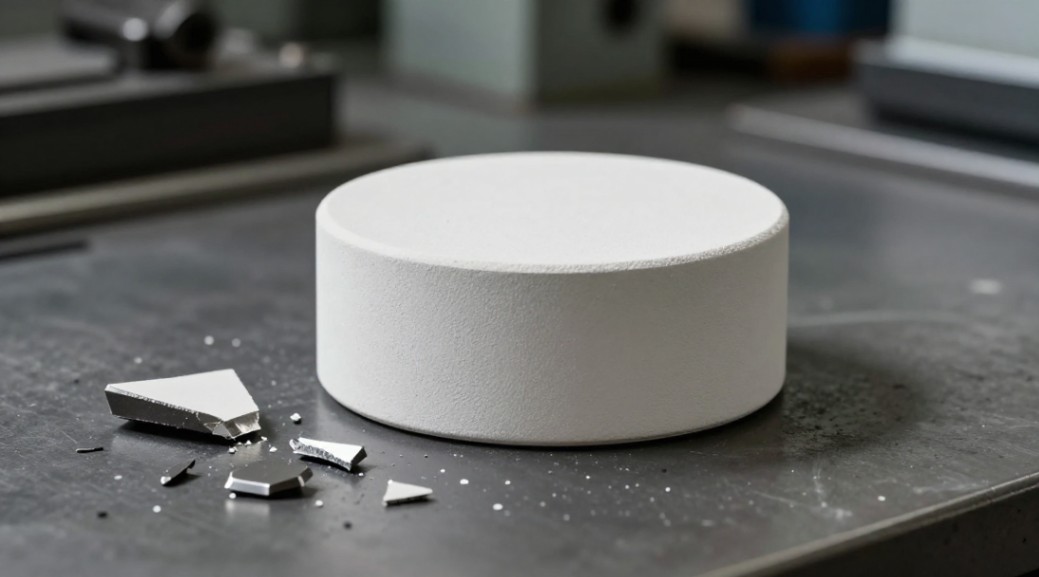
What is Aluminum Oxide Ceramic?
Aluminum oxide ceramic (Al2O3) is a high-performance technical ceramic manufactured by firing refined alumina powder into a dense, polycrystalline structure. It is not a single material but a family defined by its dominant crystalline phase, alpha-alumina. Its defining trait is not one superlative property, but a masterful balance of high hardness, excellent electrical insulation, outstanding wear resistance, and supreme chemical inertness. While silicon carbide ceramic offers higher thermal conductivity and boron nitride ceramic provides lubricity, alumina delivers a reliable, cost-effective package few materials can match.
The Anatomy of an Industrial Pillar
Talk is cheap. Data defines performance. The utility of alumina becomes stark when compared against other engineering ceramics.
| Property / Characteristic | Aluminum Oxide (96-99.5%) | Silicon Carbide (Sintered) | Boron Nitride (Hot-Pressed) | Why It Matters |
|---|---|---|---|---|
| Primary Strength | Wear Resistance & Cost | Thermal Conductivity & Strength | Thermal Shock & Lubricity | Dictates the best application fit. |
| Vickers Hardness (HV) | 1,500 – 1,800 | 2,500 – 2,900 | ~200 (very soft) | Alumina resists abrasion from most minerals and metals. |
| Flexural Strength (MPa) | 300 – 450 | 400 – 600 | 80 – 120 | Sufficient for most mechanical seals and wear plates. |
| Thermal Conductivity (W/mK) | 20 – 35 | 80 – 140 | 30 – 60 (in-plane) | Good, not great. Limits use in ultra-high-power heat sinks. |
| Key Limitation | Brittleness | Higher Cost | Oxidation above 900°C | Every material has a trade-off. For alumina, it’s fracture toughness. |
Manufacturing: From Powder to Precision Component
The journey defines the outcome. High-purity alumina powder is the starting point. The choice of forming process – dry pressing, isostatic pressing, injection molding, or slip casting – depends entirely on the component’s geometry and tolerance requirements. A simple alumina tile for a wear liner uses dry pressing. A complex, thin-walled semiconductor wafer handling arm demands injection molding. After forming, the “green” part is fired (sintered) at temperatures approaching 1700°C. This process densifies the material, creating the final microstructure. Machining, often with diamond grinding tools, achieves the final precision. As one veteran process engineer told me, “With alumina, you design for the sinter. If you fight the shrinkage, you lose.”
Where Aluminum Oxide Ceramic Reigns Supreme
Its applications are a testament to its balanced portfolio. You find it in the unsexy, critical places where failure is not an option.
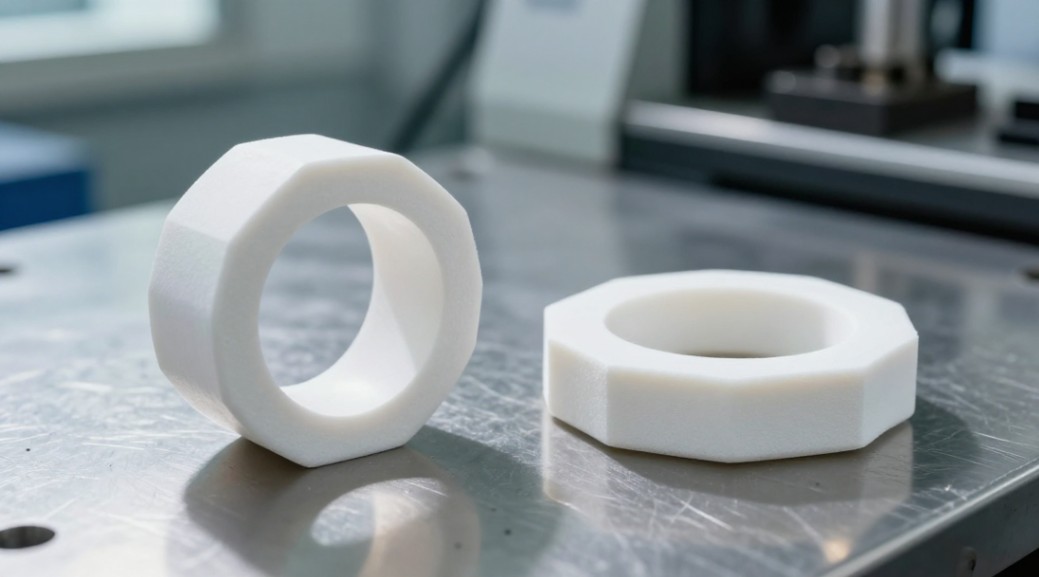
- Wear Parts & Seals: Pump seals, valve seats, liners for coal chutes. It outlasts steel by orders of magnitude in abrasive environments.
- Electronics Substrates: The foundational plate for thick-film and thin-film circuits. Its high electrical resistivity and smooth surface are perfect.
- Cutting Tools: Often coated or used in composites for machining hardened metals and superalloys.
- Medical Components: Hip joint bearings, dental implants. Its bio-inertness is crucial.
- Thermal Management: While not the top conductor like aluminum nitride ceramic, its lower cost makes it ideal for many LED substrates and power device carriers.
Engineering with Alumina: The Non-Negotiable Rules
Designing with aluminum oxide ceramic requires a specific mindset. You must respect its brittleness. Avoid sharp internal corners. Specify generous radii. Understand that its tensile strength is a fraction of its compressive strength. Always design to put it under compression. Tolerancing is also critical; post-sinter machining is expensive. Specify tight tolerances only where absolutely necessary. For hermetic metal-ceramic seals, the coefficient of thermal expansion match is paramount – a problem long solved for packages like kovar-alumina.
The Future: Refinement, Not Revolution
The future of aluminum oxide ceramic technology isn’t about displacing it with newer materials. It’s about refining its execution. Trends include narrower grain size distributions for higher strength, improved sintering aids for better transparency in sapphire-like forms, and advanced net-shape forming to minimize costly diamond machining. Its role as the default, reliable choice is secure. When your design calls for a material that simply must not wear out, must not conduct electricity, and must not react, you start with alumina. You then see if you truly need the exotic performance – and extra cost – of silicon nitride ceramic or boron carbide ceramic.
The Unshakeable Foundation
Aluminum oxide ceramic is the bedrock. It’s the material you specify when failure is economically or functionally catastrophic. Its value proposition is brutal simplicity: predictable performance at a justifiable cost. Before you explore the specialized realms of reaction-sintered silicon carbide ceramics for rocketry or a special coating for boron nitride ceramic crucibles, master the fundamentals that alumina provides. For a true assessment of whether this workhorse material is the optimal solution for your specific wear, insulation, or chemical handling challenge, the next step is a conversation grounded in your operating parameters. The material is unyielding. Your analysis should be just as rigorous.
Suppiler
Synthetic-chemical focus on the research and development, production and sales of ceramic products, serving the electronics, ceramics, chemical and other industries. Since its establishment in 2015, the company has been committed to providing customers with the best products and services, and has become a leader in the industry through continuous technological innovation and strict quality management.
Our products includes but not limited to Aluminum Nitride, Aluminum Oxide, Boron Carbide, Boron Nitride, Ceramic Crucible, ect. If you are interested in any type of these, please feel free to contact us.