Next-Generation Ceramics: Unlocking Superior Properties for Industry

The Aluminum Oxide Ceramic Dilemma: Why Your Part Might Be Failing
Have you ever specified a ceramic component, only to find it chips prematurely under load? Or perhaps your high-temperature insulation doesn’t withstand thermal cycling as expected. Many engineers face these failures. The root cause is often not the ceramic concept itself, but a mismatch between material selection and application demands. This guide provides a logical, step-by-step method for specifying aluminium oxide ceramic, helping you avoid costly mistakes by selecting the correct grade, purity, and manufacturing process.
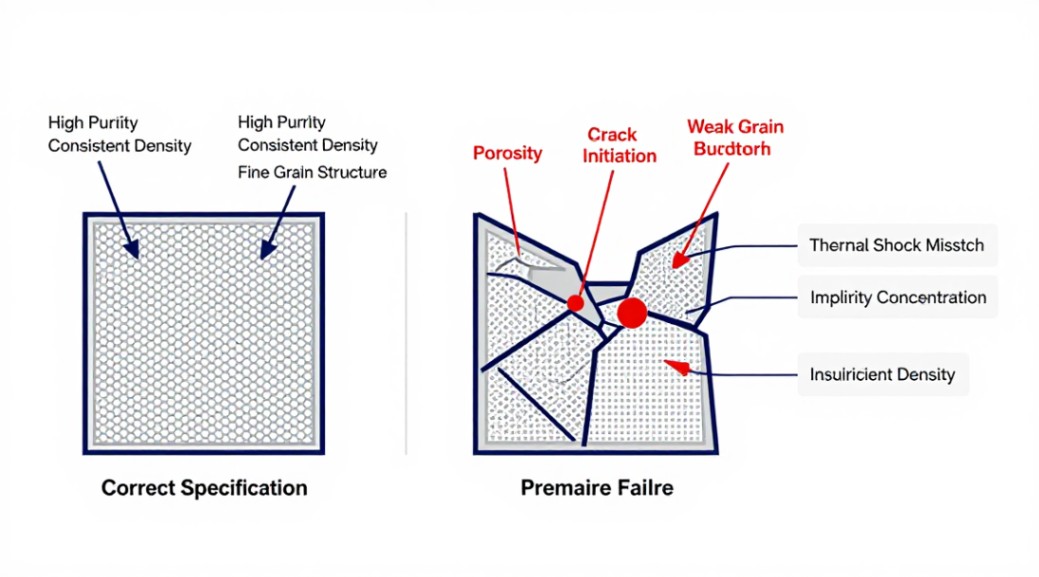
Frequently Asked Questions on Aluminum Oxide Ceramic
What exactly is aluminum oxide ceramic?
Aluminium oxide ceramic (Al₂O₃), commonly called alumina, is a technical ceramic manufactured from refined bauxite. It is a crystalline material produced via high-temperature sintering. Its basic composition is over 90% aluminium oxide, with other oxides like silica or magnesia sometimes added to influence properties.
What are the standout properties of alumina ceramic?
It offers a unique combination. You get exceptional hardness and wear resistance. It maintains dimensional stability at high temperatures. Crucially, it provides excellent electrical insulation and very high dielectric strength. These properties are intrinsic to its stable crystal structure.
How do common alumina grades like 96% and 99.5% differ?
The purity directly dictates performance. 99.5% alumina delivers higher hardness, better wear resistance, superior corrosion resistance, and higher operating temperatures. 96% alumina offers a cost-effective balance, with good mechanical properties suitable for many industrial wear parts and electrical insulators. Choose 99.5% for maximum performance in aggressive environments; select 96% for cost-sensitive, high-volume components.
When should I choose aluminium oxide ceramic over other materials?
Select it for applications requiring a blend of high hardness, electrical insulation, and thermal stability. Use it for wear parts like seals and liners, electronic substrates, and biocompatible medical components. It outperforms metals where wear, corrosion, or electrical isolation are primary concerns.
What are the main limitations of alumina?
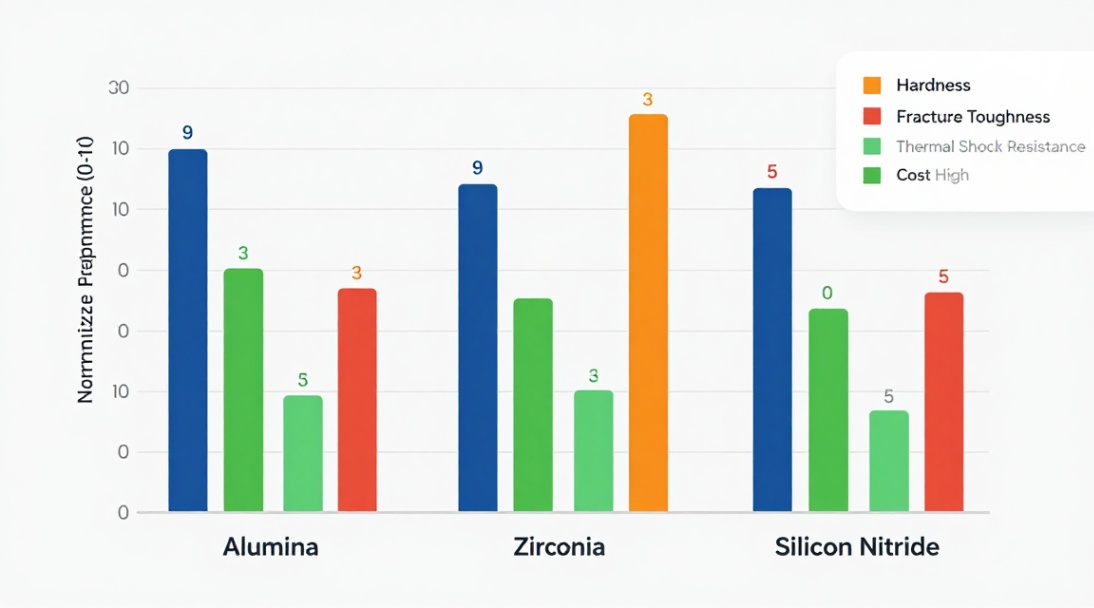
Its primary limitation is brittleness. It has low fracture toughness compared to metals or zirconia ceramic. It also exhibits lower thermal shock resistance than materials like silicon carbide ceramic or silicon nitride ceramic. Avoid using it in applications with severe impact or rapid, large temperature fluctuations unless specially designed.
How does alumina compare to zirconia or silicon nitride?
This is a critical comparison. Zirconia ceramic provides much higher fracture toughness (less brittle) and can be stronger, but at a higher cost. Silicon nitride ceramic offers superior thermal shock resistance and higher strength at elevated temperatures. However, both typically have lower hardness and wear resistance than high-purity alumina. Alumina remains the default choice for supreme wear and electrical insulation.
A Step-by-Step Guide to Specifying Aluminum Oxide Ceramic
Follow this logical process to ensure you select the right alumina ceramic for your project. Deviating from these steps leads to component failure.
Step 1: Define the Primary Functional Demand
Start with a single, non-negotiable requirement. Is it extreme abrasion? Is it high-voltage insulation at 500°C? Is it chemical inertness? This primary function anchors all subsequent choices. Never begin with a generic material desire.
Step 2: List All Environmental and Mechanical Stresses
- Operating temperature range and rate of change.
- Type of wear (abrasion, erosion, adhesion).
- Presence of corrosive chemicals or solvents.
- Required dielectric strength and volume resistivity.
- Any applied mechanical load, including impact potential.
Step 3: Select the Alumina Grade Based on Steps 1 & 2
Apply clear logic. For maximum wear, corrosion resistance, and high-temperature capability (>1500°C), specify 99.5% or higher purity alumina. For general wear parts, electrical insulators, or thermally stable components where cost is a factor, 96% alumina is likely sufficient.
Step 4: Choose the Manufacturing Process for Your Geometry
The shape dictates the process. Simple, axisymmetric shapes like tubes or rods use dry pressing. Complex, high-tolerance shapes require injection molding. For large, near-net-shape blocks with uniform properties, specify isostatic pressing.
Step 5: Validate Against Key Alternatives
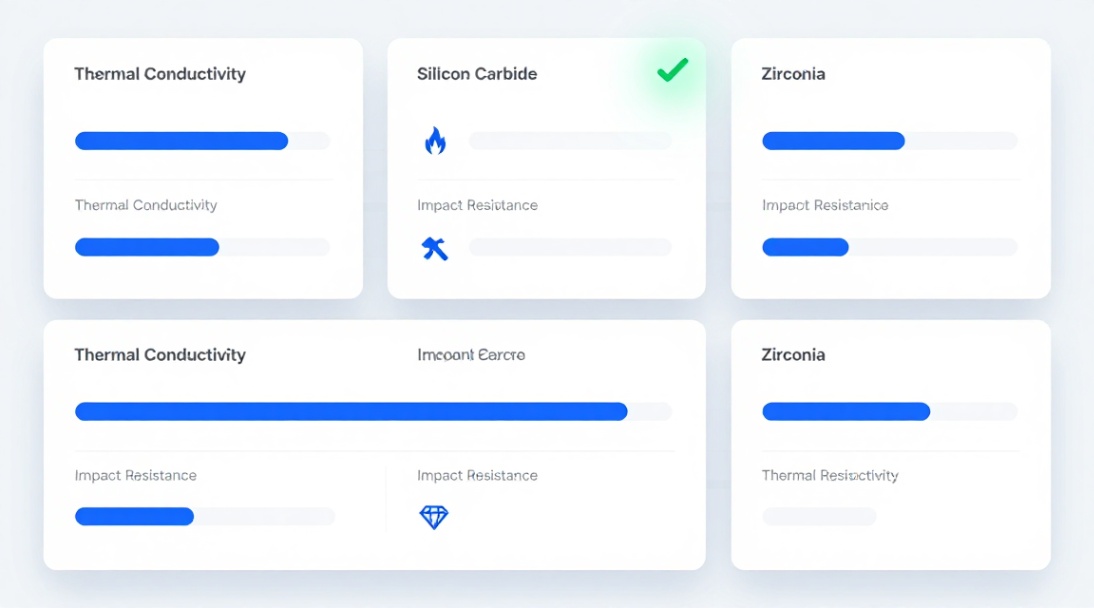
Perform a final check. Ask: Would silicon carbide ceramic offer better thermal conductivity? Would zirconia ceramic survive the impact load? If the answer is no, your alumina selection is sound. If yes, re-evaluate steps 1-3.
Making the Final Decision
Successful implementation of aluminum oxide ceramic hinges on disciplined specification. Start with the primary function, not the material. Objectively assess the environment. Match the purity to the performance need. Let the component geometry guide the manufacturing method. Finally, logically challenge your choice against key competitors like silicon nitride or boron carbide ceramic. This rational process transforms alumina from a generic choice into a precision-engineered solution for your most demanding applications.
Suppiler
Synthetic-chemical focus on the research and development, production and sales of ceramic products, serving the electronics, ceramics, chemical and other industries. Since its establishment in 2015, the company has been committed to providing customers with the best products and services, and has become a leader in the industry through continuous technological innovation and strict quality management.
Our products includes but not limited to Aluminum Nitride, Aluminum Oxide, Boron Carbide, Boron Nitride, Ceramic Crucible, ect. If you are interested in any type of these, please feel free to contact us.