Next-Generation Ceramics: Unlocking Superior Properties for Industry

The Counterintuitive Truth About Aluminium Oxide Ceramic
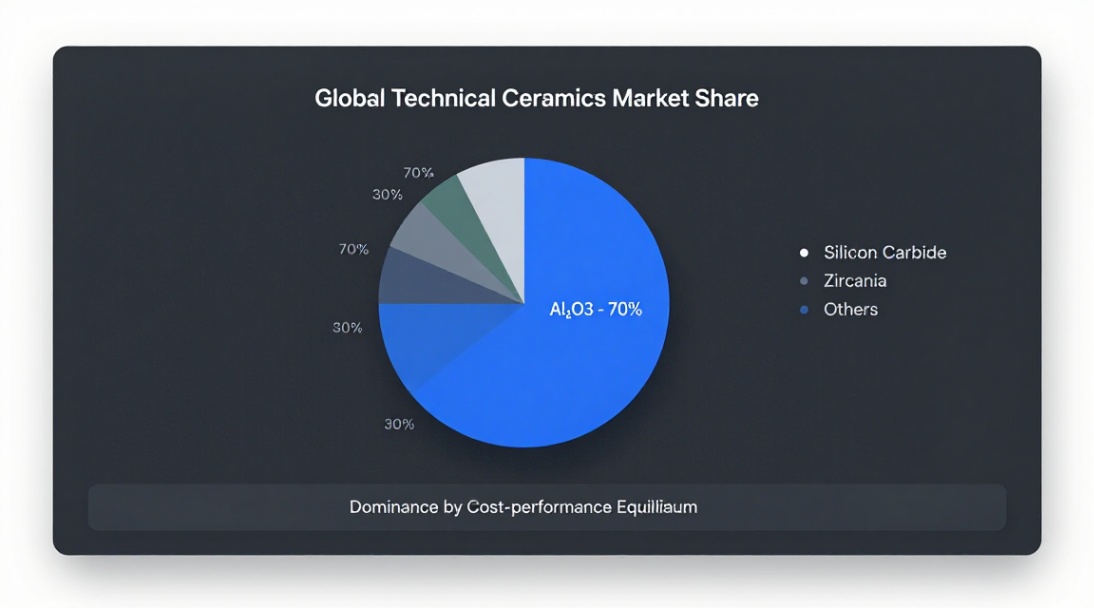
Despite a global focus on newer, ultra-high-temperature materials, aluminum oxide ceramic (Al2O3) comprises over 70% of the global technical ceramics market share. This dominance stems not from novelty, but from a proven cost-performance equilibrium that newer materials struggle to match. Engineers continually return to its reliability.
Q&A: Material Selection Face-Off
What exactly is aluminium oxide ceramic?
Aluminum oxide ceramic, or alumina, is a compound of aluminium and oxygen (Al2O3). It’s not a simple clay product but a high-purity, engineered material. Manufacturers synthesize fine, pure powders. They then form and sinter them into dense, crystalline structures. This process yields superior properties.
Why do engineers choose alumina? Its primary advantages.
- Exceptional Hardness & Wear Resistance: Only diamond and boron carbide (B4C) consistently outrank it. It resists abrasion far better than any metal.
- Superb Thermal Stability: Maintains mechanical strength and shape up to ~1700°C, ideal for furnace components and wear parts in hot environments.
- Excellent Electrical Insulation: Its high dielectric strength makes it the standard for substrates, insulators, and spark plug bodies.
- Cost-Effectiveness: Raw material availability and mature processes like dry pressing and isostatic pressing make it the most economical high-performance ceramic.
- Biocompatibility: High-purity grades (99.5%+) are chemically inert and biocompatible, used in hip joints and dental implants.
Where does aluminum oxide ceramic fall short? Key limitations.
- Brittleness (Low Fracture Toughness): Susceptible to catastrophic failure from impact or sharp stress concentrations. Silicon nitride ceramic (Si3N4) offers much higher toughness.
- Lower Thermal Conductivity: A poor choice for applications needing heat dissipation, like high-power semiconductor bases. Here, aluminum nitride ceramic (AlN) is superior.
- Machining & Shape Complexity: Its extreme hardness makes post-sintering machining expensive. While injection molding enables complex shapes, cost and dimensional tolerances can be restrictive.
- Thermal Shock Resistance: Inferior to materials like silicon carbide (SiC) or mullite. Rapid temperature swings can cause cracking.
Alumina vs. Silicon Carbide: Which for severe environments?
This is a classic battle. For applications like seal faces, nozzles, and ballistic armor, the choice is clear.
Choose Aluminium Oxide Ceramic When: You need high hardness and electrical insulation at a lower cost. It excels in wear plates, thread guides, and electrical insulators where extreme thermal conductivity is not required.
Choose Silicon Carbide When: You face extreme temperatures (>1400°C), need superior thermal conductivity, or require exceptional thermal shock resistance and chemical inertness. Processes like reaction-sintered silicon carbide or pressureless sintered silicon carbide are common.
Alumina vs. Silicon Nitride: Which is tougher?
For high-stress, dynamic applications like bearings, cutting tools, and turbine components, silicon nitride is the champion. Community forums echo this. Many engineers on Reddit and technical subreddits note that for rolling contact fatigue, silicon nitride’s fracture toughness and lower density make it ‘the only choice’ for high-speed bearings.
Choose Aluminum Oxide Ceramic When: High hardness and cost are the primary drivers for static or sliding wear parts. It remains the standard for many cutting tool inserts.
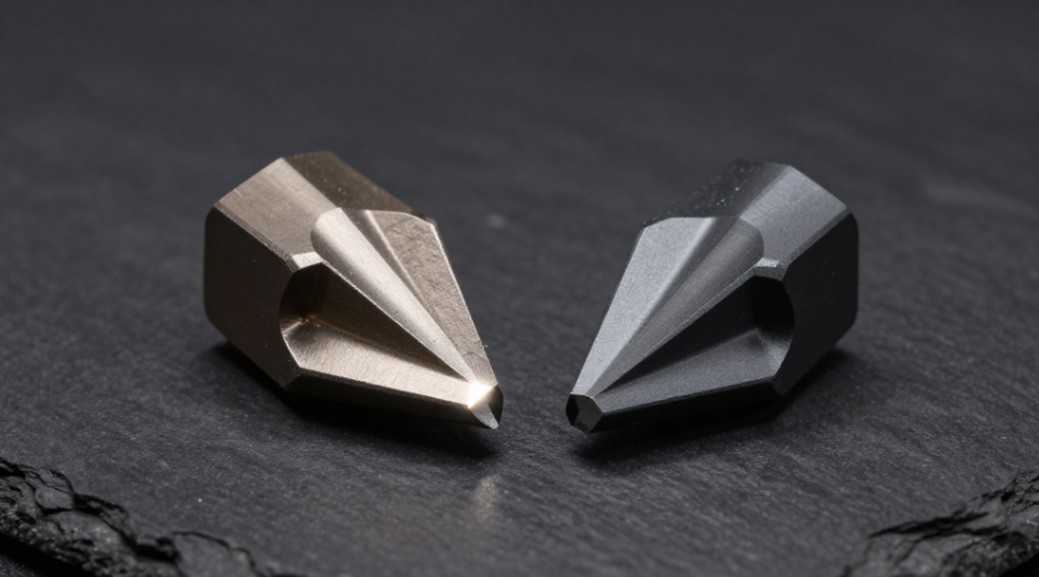
Choose Silicon Nitride When: You need the highest fracture toughness and thermal shock resistance among non-oxide ceramics for demanding mechanical applications.
How does purity (96% vs 99.5%+) affect performance?
This is a critical cost-performance lever. 96% alumina offers excellent mechanical properties and electrical insulation for most industrial wear parts. Moving to 99.5% or 99.9% purity significantly increases hardness, wear resistance, and corrosion resistance. It also improves dielectric strength and surface finish. Use high-purity grades for critical medical implants, advanced semiconductor processing equipment, and high-frequency electronic substrates.
What are the real-world application rules of thumb?
- Industrial Wear Parts: Liners, nozzles, seals. Use 96% alumina for cost balance. Consider zirconia-toughened alumina for higher impact resistance.
- Electrical & Electronic Substrates: Always use 99.5%+ purity for optimal dielectric strength and thermal management.
- Cutting Tools & Abrasives: Often use alumina composites (like Al2O3-TiC) for metal cutting. Pure alumina grains are key in grinding wheels and sandpaper.
- Severe Chemical Environments: High-purity alumina outperforms most metals and polymers. For molten metals, specialized materials like coated boron nitride ceramic crucibles may be better.
Designing with alumina: What must you remember?
Design for ceramic, not metal. Avoid sharp corners and sudden section changes to reduce stress concentrations. Specify generous tolerances. Understand that grinding is the primary surface finishing technique; complex features are best formed during shaping, not machined later. Partner with your fabricator early in the design phase.
The Unbiased Verdict & Your Next Step
Aluminum oxide ceramic is not the ‘best’ material in every category. It is the most practical and widely proven. For sheer hardness, boron carbide wins. For toughness, choose silicon nitride. For thermal management, look at aluminum nitride. Alumina’s strength is its balanced portfolio and unrivaled cost efficiency for its performance envelope.
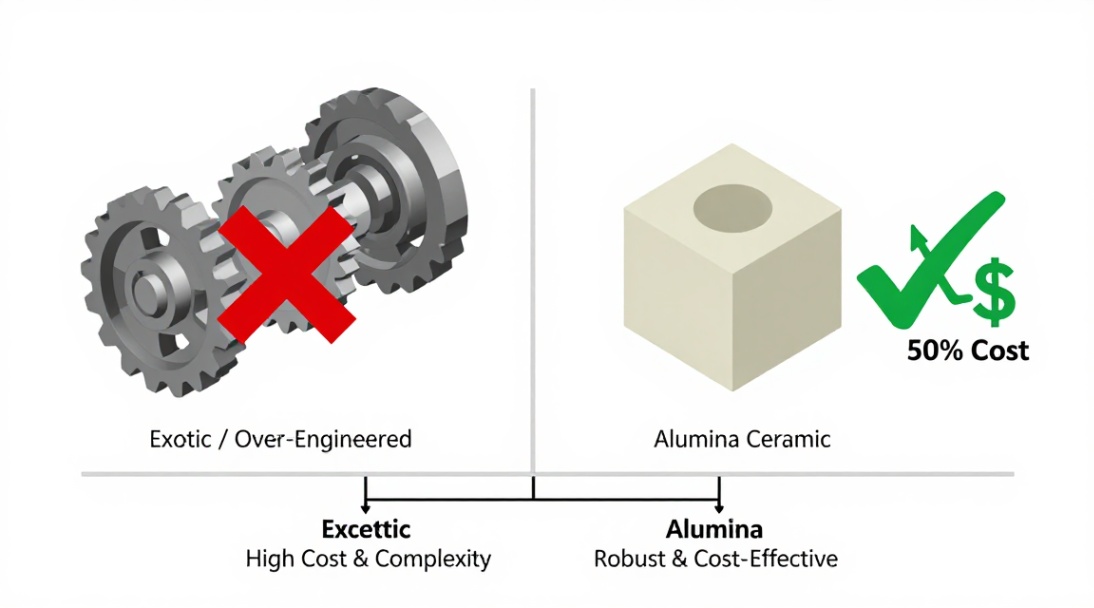
Stop guessing. Prototype. The difference between a successful component and a failed one lies in real-world testing under your specific conditions. Many failures originate from selecting an ‘exotic’ material when alumina would have sufficed at half the cost.
Request a material evaluation kit and technical consultation today. Our engineers will provide you with samples of 96% and 99.5% aluminium oxide ceramic alongside comparable silicon carbide and silicon nitride grades. You can test them in your facility. Submit your application parameters and receive a free, data-backed material selection report within 48 hours.
Suppiler
Synthetic-chemical focus on the research and development, production and sales of ceramic products, serving the electronics, ceramics, chemical and other industries. Since its establishment in 2015, the company has been committed to providing customers with the best products and services, and has become a leader in the industry through continuous technological innovation and strict quality management.
Our products includes but not limited to Aluminum Nitride, Aluminum Oxide, Boron Carbide, Boron Nitride, Ceramic Crucible, ect. If you are interested in any type of these, please feel free to contact us.