Next-Generation Ceramics: Unlocking Superior Properties for Industry

Stop Designing With Alumina Ceramics Before Reading This
Stop assuming all aluminum oxide ceramic is the same. That single mistake costs industries millions annually in premature failures. As a 20-year veteran of ceramic engineering, I’ve seen the same errors repeated. This isn’t a gentle primer. It’s a warning. Here are the critical mistakes you must avoid.
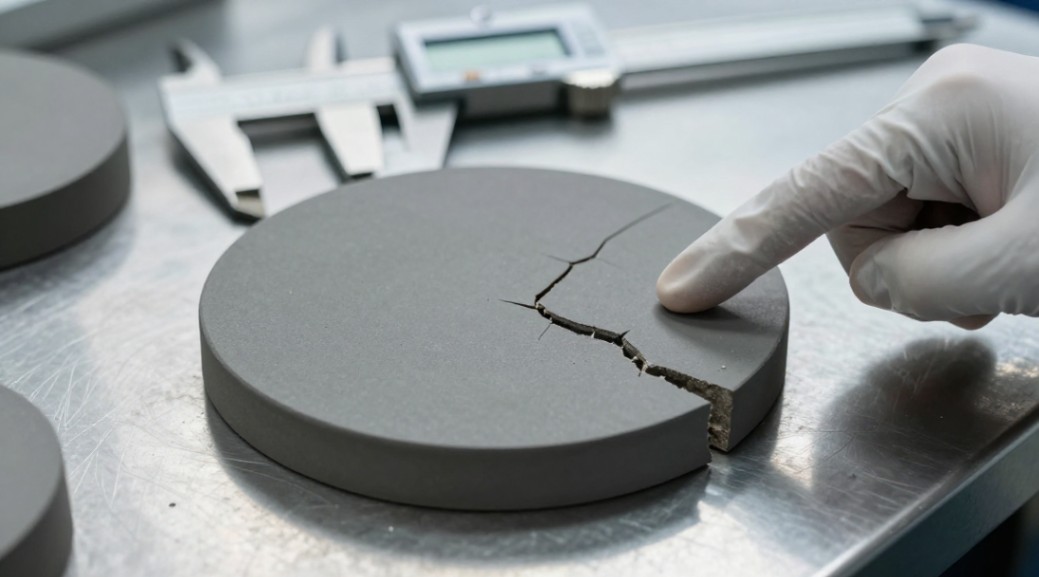
1. Don’t Treat Alumina Like a Magic Bullet for Every High-Temperature Job. When does it fail?
It fails when you ignore thermal shock. Aluminium oxide ceramic has high temperature stability, but its thermal expansion can be a liability. Industry loves its 1700°C+ melting point. But rapid temperature cycling causes stress fractures. For extreme thermal cycling, silicon nitride ceramic or silicon carbide ceramic often outperform alumina. I’ve seen heater tubes shatter because a designer prioritized chemical resistance over thermal shock rating.
2. Don’t Blindly Specify “High Purity” Without Understanding the Trade-Off.
99.5%+ pure alumina is brittle. The common assumption is that higher purity equals better performance. Wrong. For mechanical applications, a 96% or 99% grade often provides superior fracture toughness. The glassy phase in lower-purity grades can blunt crack propagation. Pure alumina is exceptional for electrical insulation, but for a wear plate or ball valve seat, that extra purity makes it a ticking time bomb. Specify purity based on function, not prestige.
3. Don’t Overlook Surface Finish in Wear Applications. Roughness Kills.
A polished surface is non-negotiable. Aluminum oxide ceramic is legendary for hardness and wear resistance. But if the mating surface is rough, you create a grinding paste. This accelerates wear on the opposing material and can generate damaging heat. The ceramic itself is hard, but the system fails. Always specify a surface finish (Ra) appropriate for the application-often sub-micron for seals and bearings.
4. Don’t Assume It’s Chemically Inert in Every Environment. Here’s the Catch.
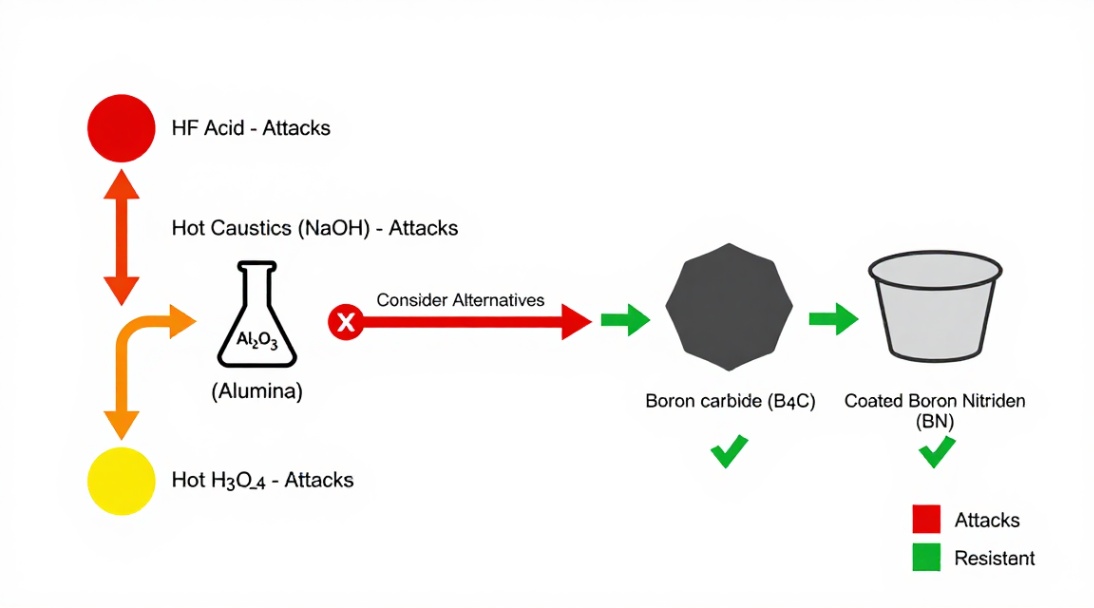
It dissolves in hot, concentrated phosphoric acid and molten caustics. The marketing says “chemically inert.” The reality is more nuanced. Aluminum oxide ceramic excels against most acids and solvents. But it has specific, severe vulnerabilities. For example, hydrofluoric acid and strong alkalis at high temperatures will attack it aggressively. For these environments, consider boron carbide ceramic or a specialized special coating for boron nitride ceramic crucibles. Know your exact chemical cocktail.
5. Don’t Use It as a Structural Load-Bearing Member Without Redundant Support.
Alumina is strong in compression but weak in tension and bending. Its high strength is misleading. Design it to be loaded in compression whenever possible. Avoid cantilevered designs. I insist on using metal housings or supports to carry the tensile and bending loads, letting the ceramic handle compression and wear. This hybrid approach is non-negotiable for reliable wear parts.
6. Don’t Ignore the Manufacturing Process. Sintering Defects Are Invisible Until Failure.
The difference between a good part and a scrap heap is process control. Pressureless sintered silicon carbide ceramics have their own protocols, but for alumina, density and grain size are everything. Improper sintering leads to microscopic pores. Under high voltage or mechanical load, these pores become failure initiation points. Work only with fabricators who provide microstructural analysis, not just a certificate of composition.
7. Don’t Design for Electronics Without Considering the Dielectric Constant’s Impact.
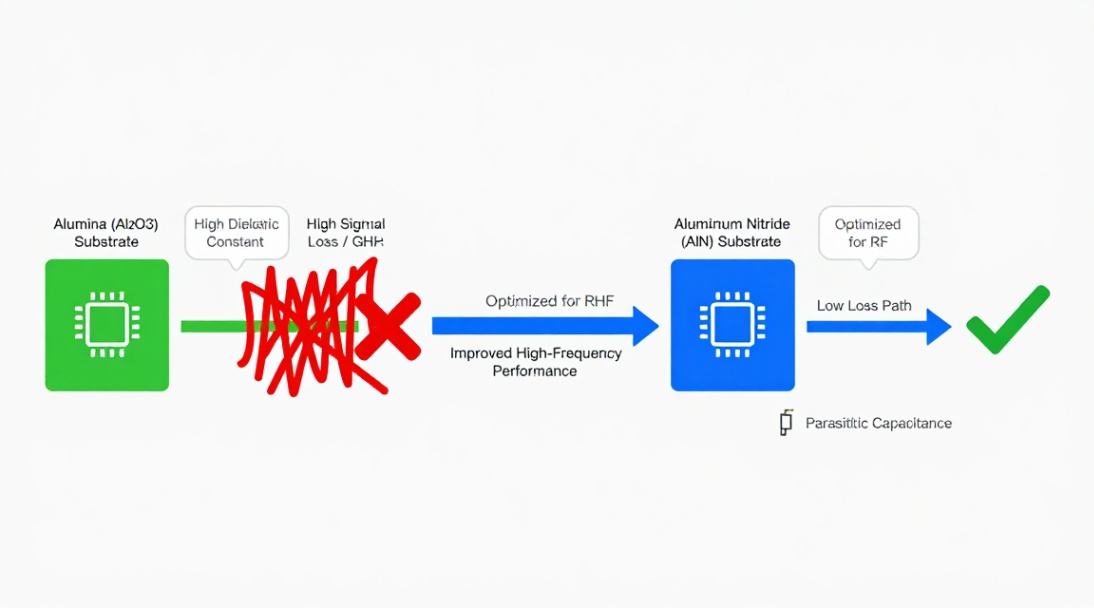
High purity alumina substrates are industry standard. But its relatively high dielectric constant can be a problem for high-frequency circuits. For RF applications above a few GHz, the signal loss and parasitic capacitance become significant. This is where materials like aluminum nitride ceramic (for high thermal conductivity) or specialized glass-ceramics shine. Choosing alumina out of habit can cap your circuit’s performance.
Your Next Step: Audit, Don’t Assume
Challenge every assumption about aluminum oxide ceramic. Map its properties-electrical insulation, corrosion resistance, specific hardness-directly to your environmental and load case. Compare it ruthlessly to alternatives like zirconia for toughness or silicon carbide ceramic for thermal conductivity. The right choice is never generic. For a true performance audit of your component, consult with an engineer who understands the gritty details of microstructure, not just a datasheet. That’s where real reliability is born.
Suppiler
Synthetic-chemical focus on the research and development, production and sales of ceramic products, serving the electronics, ceramics, chemical and other industries. Since its establishment in 2015, the company has been committed to providing customers with the best products and services, and has become a leader in the industry through continuous technological innovation and strict quality management.
Our products includes but not limited to Aluminum Nitride, Aluminum Oxide, Boron Carbide, Boron Nitride, Ceramic Crucible, ect. If you are interested in any type of these, please feel free to contact us.