Next-Generation Ceramics: Unlocking Superior Properties for Industry

The Reality Check on Aluminum Oxide Ceramic
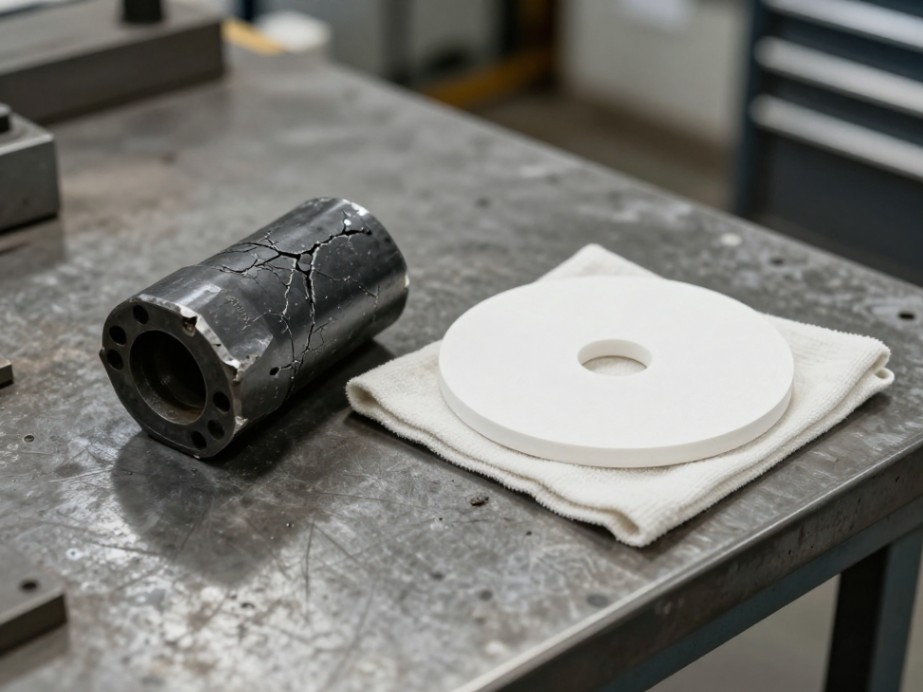
A foreman once handed me a blackened, chipped component. ‘We need something tougher,’ he said, pointing to a failed steel part. I handed him back a simple white disc of aluminum oxide ceramic. He laughed. ‘This?’ he asked. Six months later, his machine ran longer, hotter, and with less downtime. The story isn’t about magic. It’s about understanding a material so brutally effective that its simplicity is its greatest disguise. Forget exotic, high-priced alternatives. The real engineering challenge often lies in mastering the fundamentals.
The Unfiltered Questions You’re Actually Asking
What is aluminum oxide ceramic, really?
It is Al2O3 in its most stubborn, crystalline form. Think of common sand. Now, imagine forging it into a synthetic sapphire lattice through intense heat—sintering it until porosity vanishes. The result isn’t a fancy new-age material. It is geological armor, engineered atom by atom.
Why choose aluminum oxide ceramic over steel or plastic?
You choose it when failure is not an option. When abrasion grinds steel to dust, aluminum oxide ceramic stands firm. When acids dissolve plastics, this material shrugs. Its hardness is legendary. Its chemical inertness is near absolute. This isn’t an upgrade. It’s a paradigm shift from consumable parts to permanent fixtures.
Is all aluminum oxide ceramic the same?
Absolutely not. This is the critical trap. The purity level—from 85% to 99.9% alumina—dictates everything. 85% grade is a workhorse for wear plates. 99.9% is a lab-grade insulator rivaling single-crystal sapphire. Using the wrong grade guarantees failure. Higher purity means higher cost, better properties, and significantly more challenging machining.
How does it compare to silicon carbide ceramic or boron nitride ceramic?
Let’s be blunt. Aluminum oxide ceramic is the all-rounder. It wins on cost and general wear. Silicon carbide ceramic offers superior thermal conductivity and extreme temperature strength. Boron nitride ceramic is your lubricious, non-wetting specialist. Want a single answer? You’re asking the wrong question. The best material solves the specific problem, not the catalog description.
What are the biggest design mistakes with alumina parts?
Designing it like metal. This is the number one error. Aluminum oxide ceramic is strong in compression but unforgiving under tension or impact. Sharp corners are stress concentrators—failure points. You must design with generous radii, avoid press fits, and plan for its lack of ductility. Properly designed, it’s nearly indestructible. Poorly designed, it’s expensive confetti.
The Real-World Playbook: Where Theory Meets Grit
Forget textbook applications. Here’s where aluminum oxide ceramic silently dominates.
Electrical Insulation That Doesn’t Quit
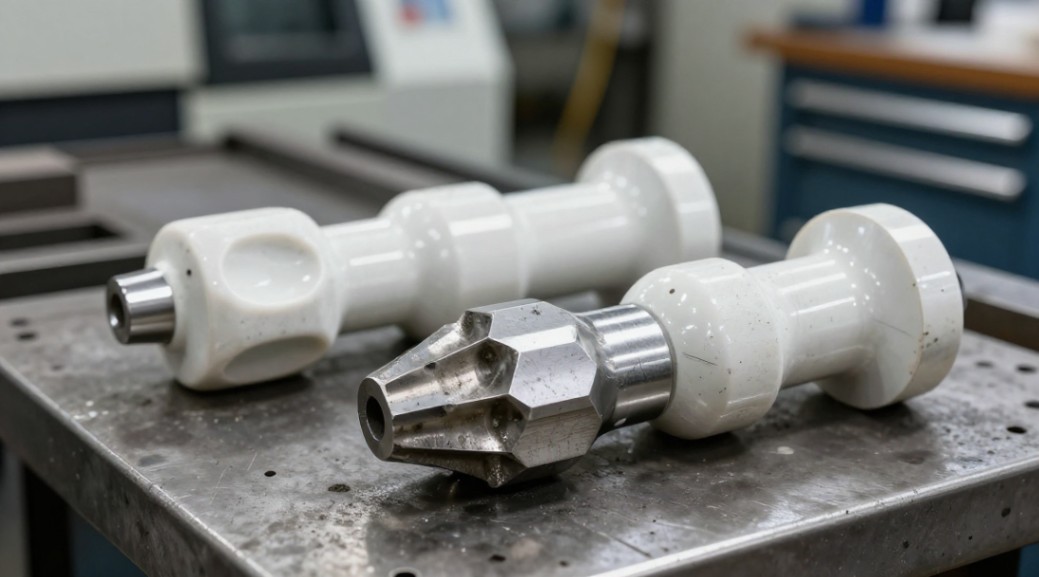
High-purity alumina substrates form the backbone of power electronics. They manage heat, isolate thousands of volts, and do it for decades. Compare this to organic boards that degrade. The choice becomes obvious when reliability trumps all.
The Invisible Wear Champion
In slurry pumps, mining equipment, and packaging lines, unseen alumina liners and seals outlast their metal counterparts by orders of magnitude. The downtime they prevent is the real value. This is where evaluating a component’s total lifecycle cost, not its initial price tag, reveals the true advantage of advanced ceramics.
A Surprising Ally in Medical Technology
Its biocompatibility is perfect. Hip joint bearings, dental implants, surgical tool tips—alumina’s inert nature prevents immune reactions. It is polished to a mirror finish that glides with minimal friction. In the body, its stability is its greatest virtue.
Looking Forward: The Unseen Evolution
The future isn’t about replacing alumina. It’s about enhancing it. Nano-engineered grain boundaries promise even greater strength. Functional surface coatings can add specific properties like enhanced lubricity or catalytic activity. The core material remains the trusted foundation. Innovation builds upon its proven shoulders.
Your Next Logical Step
Stop comparing datasheet numbers in a vacuum. Define your actual operating environment: stress type, chemical exposure, thermal cycle, and acceptable wear rate. Then, talk to an engineer who thinks in materials, not just parts. Sometimes, the optimal solution isn’t the most exotic silicon nitride ceramic or zirconia. Often, it’s the masterful application of the fundamental—aluminum oxide ceramic, engineered to its limit. The right specification turns a simple ceramic into your most reliable component.
Suppiler
Synthetic-chemical focus on the research and development, production and sales of ceramic products, serving the electronics, ceramics, chemical and other industries. Since its establishment in 2015, the company has been committed to providing customers with the best products and services, and has become a leader in the industry through continuous technological innovation and strict quality management.
Our products includes but not limited to Aluminum Nitride, Aluminum Oxide, Boron Carbide, Boron Nitride, Ceramic Crucible, ect. If you are interested in any type of these, please feel free to contact us.